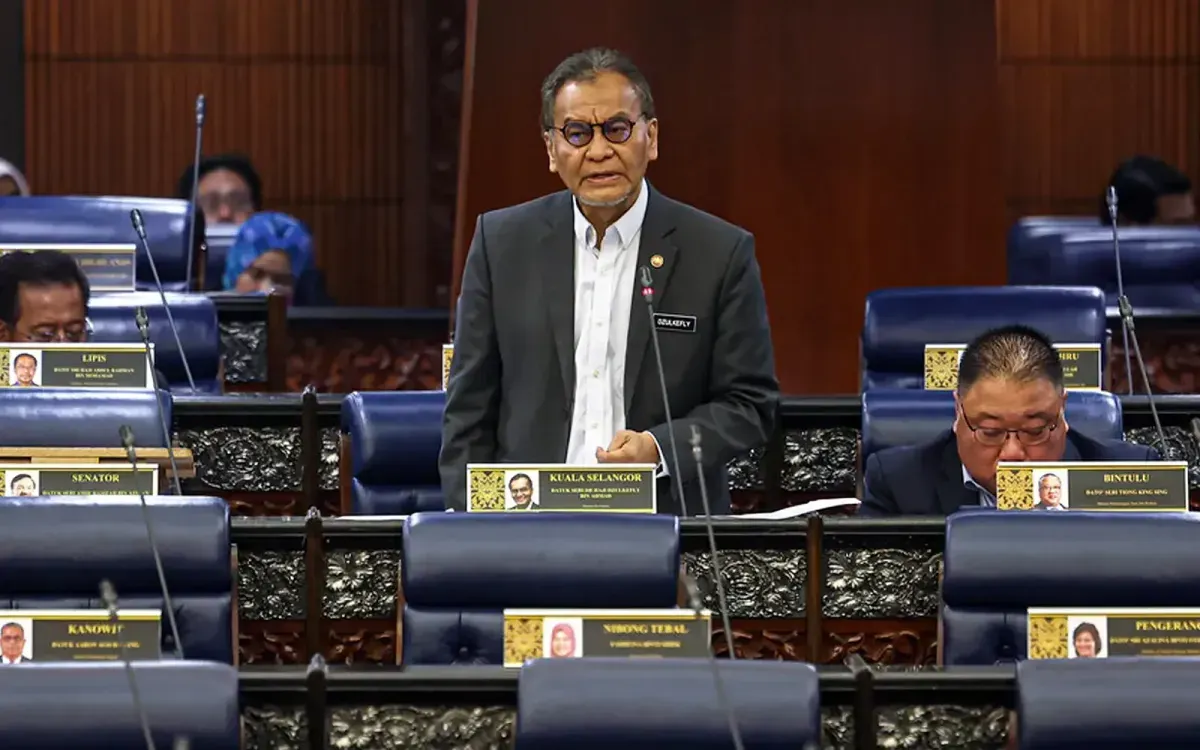
According to a report by Freemalaysia today, Malaysian Health Minister Dzulkefly Ahmad has denied Deputy Minister Lukanisman Awang Sauni's comments that pressure from the tobacco and e-cigarette industries led the government to cancel its plan to ban people born after 2007 from smoking and using e-cigarettes.
Zulkifli stated in parliament that the exclusion of the GEG provision from the Public Health Anti-Tobacco Bill was not influenced by industry lobbying.
The Deputy Minister's facts and statements are all incorrect... We had initially wanted to include the GEG clause, but the Attorney General's Chambers (AGC) raised constitutional issues.
The minister acknowledged that some industry representatives and lobbyists have met with members of Parliament on this issue. However, he believes that "assuming that this means industry representatives and lobbyists have influenced government and cabinet decisions is inappropriate and wrong."
Last Thursday (March 14th), Deputy Minister Lukaniemans stated that pressure from the tobacco and e-cigarette industries has influenced the "decisions" of the bill, but did not provide further details.
After Member of Parliament Halimah Ali of the National Union called on the government to have more determination in combating lobbying from the tobacco and e-cigarette industries, Lucanisman stated that the government "needs the cooperation and support of all parties." He referenced the lessons learned from the Public Health (Tobacco) Act, which initially included provisions banning the use of tobacco and e-cigarettes by Generation Z individuals born after 2007. "Pressure from the industry, industry members entering parliament and meeting with MPs. This influenced the decision," the deputy minister told the lower house.
Former Health Minister Khairy Jamaluddin first proposed the bill in July 2022, but faced resistance from some members of parliament. The Health Parliamentary Committee was tasked with addressing these issues. The bill was resubmitted to the Health Parliamentary Committee last June following the 15th general election.
The Attorney General Ahmad Terrirudin Salleh stated that the GEG provision was unconstitutional, leading to its removal from the tobacco law. However, the then Health Minister Zaliha Mustafa mentioned that the government may consider reinstating it in the future if necessary.
The revised bill was passed by Congress in November of last year, and received approval from the Senate the following month.
We welcome news tips, article submissions, interview requests, or comments on this piece.
Please contact us at info@2firsts.com, or reach out to Alan Zhao, CEO of 2Firsts, on LinkedIn
Notice
1. This article is intended solely for professional research purposes related to industry, technology, and policy. Any references to brands or products are made purely for objective description and do not constitute any form of endorsement, recommendation, or promotion by 2Firsts.
2. The use of nicotine-containing products — including, but not limited to, cigarettes, e-cigarettes, nicotine pouchand heated tobacco products — carries significant health risks. Users are responsible for complying with all applicable laws and regulations in their respective jurisdictions.
3. This article is not intended to serve as the basis for any investment decisions or financial advice. 2Firsts assumes no direct or indirect liability for any inaccuracies or errors in the content.
4. Access to this article is strictly prohibited for individuals below the legal age in their jurisdiction.
Copyright
This article is either an original work created by 2Firsts or a reproduction from third-party sources with proper attribution. All copyrights and usage rights belong to 2Firsts or the original content provider. Unauthorized reproduction, distribution, or any other form of unauthorized use by any individual or organization is strictly prohibited. Violators will be held legally accountable.
For copyright-related inquiries, please contact: info@2firsts.com
AI Assistance Disclaimer
This article may have been enhanced using AI tools to improve translation and editorial efficiency. However, due to technical limitations, inaccuracies may occur. Readers are encouraged to refer to the cited sources for the most accurate information.
We welcome any corrections or feedback. Please contact us at: info@2firsts.com