
Morgan Stanley Downgrades Imperial Brands Target Price

Business by 2FIRSTS.ai
Nov.24.2023
Morgan Stanley Downgrades Imperial Brands Target Price
JP Morgan has lowered its price target for Imperial Brands (LON:IMB) from $29.40 to $28.15, maintaining a hold rating.

According to a report by MarketBeat, JP Morgan has lowered its price target for Imperial Brands (LON:IMB) from $29.40 to $28.15 in a report released on Monday. The company currently has a buy rating on the stock.


We welcome news tips, article submissions, interview requests, or comments on this piece.

Please contact us at info@2firsts.com, or reach out to Alan Zhao, CEO of 2Firsts, on LinkedIn


Notice

1.  This article is intended solely for professional research purposes related to industry, technology, and policy. Any references to brands or products are made purely for objective description and do not constitute any form of endorsement, recommendation, or promotion by 2Firsts.

2.  The use of nicotine-containing products — including, but not limited to, cigarettes, e-cigarettes, nicotine pouchand heated tobacco products — carries significant health risks. Users are responsible for complying with all applicable laws and regulations in their respective jurisdictions.

3.  This article is not intended to serve as the basis for any investment decisions or financial advice. 2Firsts assumes no direct or indirect liability for any inaccuracies or errors in the content.

4.  Access to this article is strictly prohibited for individuals below the legal age in their jurisdiction.


Copyright


This article is either an original work created by 2Firsts or a reproduction from third-party sources with proper attribution. All copyrights and usage rights belong to 2Firsts or the original content provider. Unauthorized reproduction, distribution, or any other form of unauthorized use by any individual or organization is strictly prohibited. Violators will be held legally accountable.

For copyright-related inquiries, please contact: info@2firsts.com


AI Assistance Disclaimer


This article may have been enhanced using AI tools to improve translation and editorial efficiency. However, due to technical limitations, inaccuracies may occur. Readers are encouraged to refer to the cited sources for the most accurate information.

We welcome any corrections or feedback. Please contact us at: info@2firsts.com

Why Does JPMorgan Favor BAT Over Philip Morris Despite Forecasting Slower Growth of 3.9% Versus 6.2%?
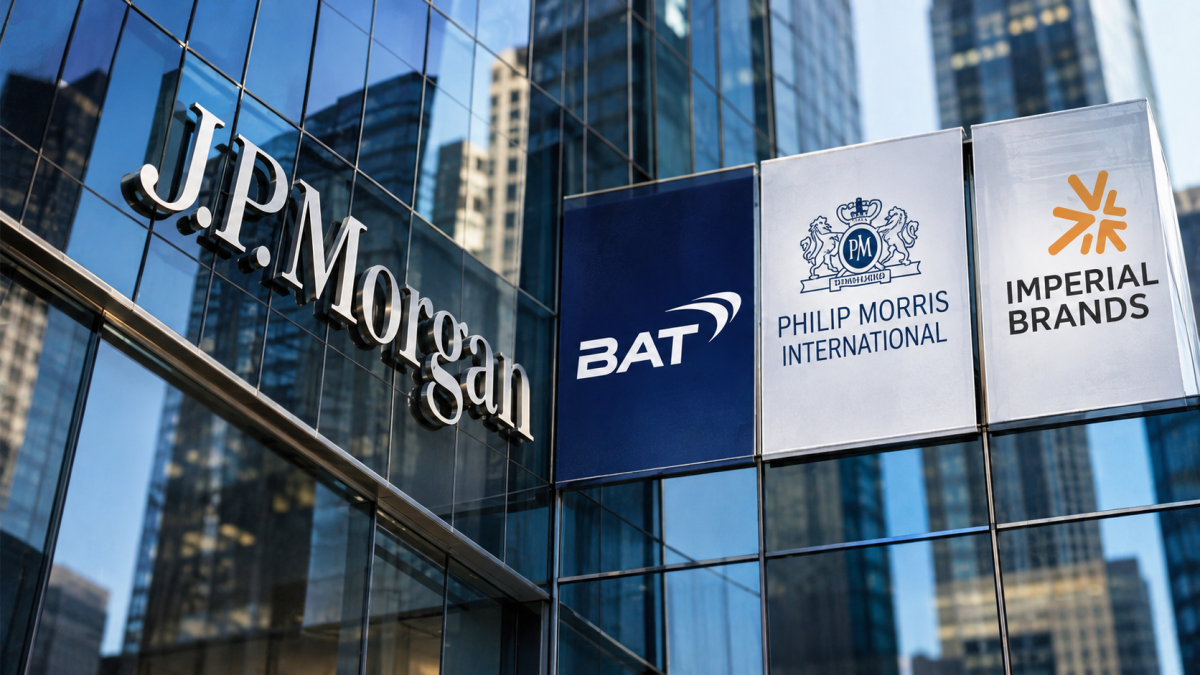
JPMorgan resumed equity research coverage of British American Tobacco (BAT), Philip Morris International (PMI) and Imperial Brands in November 2026, assigning BAT an Overweight rating and the other two companies Neutral ratings. The bank forecasts like-for-like sales growth of 3.9% for BAT and 6.2% for PMI in 2027, but estimates the two companies will trade at approximately 11 times and 21 times 2027 earnings, respectively. JPMorgan cited BAT's improving position in US nicotine pouches and vaping products as a driver of its investment outlook. BAT reported a 220% constant-currency increase in US modern oral nicotine revenue in the first half of 2026, while PMI's ZYN US shipments returned to growth in the third quarter. Imperial expects NGPs to represent 4% to 5% of sales and has expanded its oral portfolio through acquisitions.
Capital Markets
Nov.12
Turning Point Brands Q3 Modern Oral Net Sales Rise 103% to $74.4 Million as Attributable Profit Falls 81%
Turning Point Brands (TPB) reported third-quarter 2026 Modern Oral net sales of $74.4 million on November 9, up 102.9% year over year and representing 49.2% of consolidated net sales. Total company net sales rose 27.0% to $151.1 million, while net income attributable to TPB declined 81.4% to $3.93 million. The company is expanding the US retail presence of its FRE and ALP nicotine pouch brands and expects its Modern Oral chain-store footprint to grow by more than 70% during 2026. Selling, general and administrative expenses increased 69.1% to $75.3 million, while PMTA-related expenses reached approximately $3.15 million and manufacturing start-up costs totaled about $593,000. ALP plans to open a branded pop-up in New York City's SoHo neighborhood on November 13, alongside a marketing campaign extending into January 2027. TPB owns 50% of ALP but consolidates the venture in its financial statements.
company
Nov.11
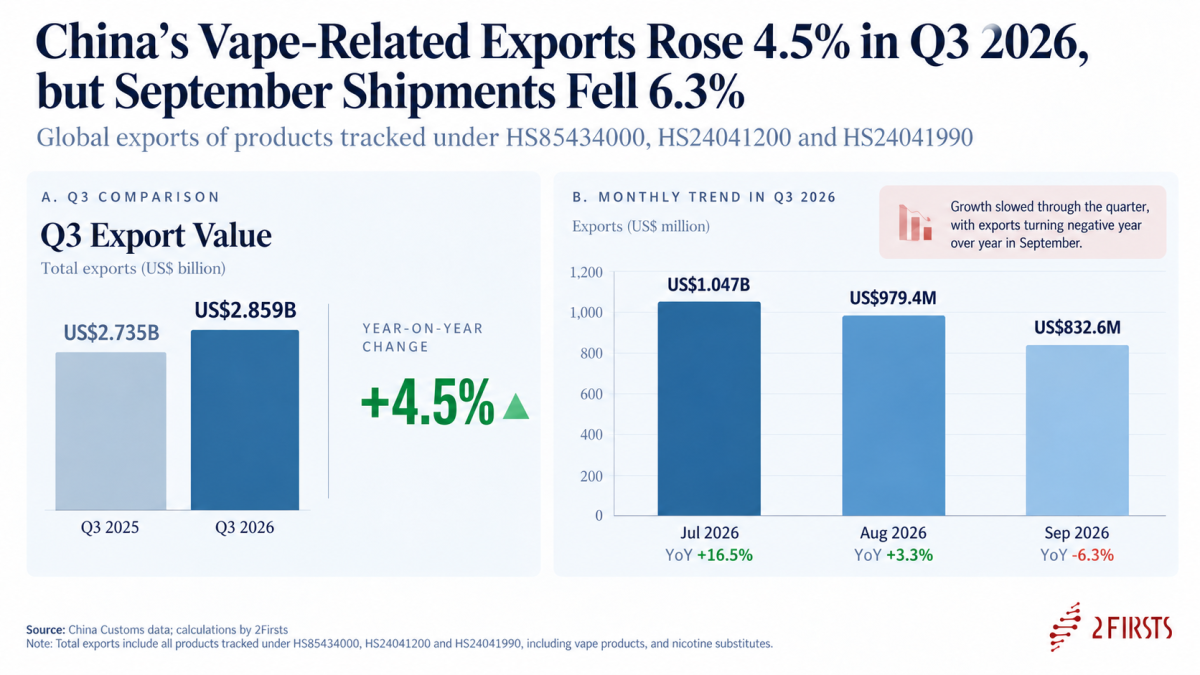
China’s Vape-Related Exports Rose 4.5% in Q3 2026 as 21.6% Growth in Shipments to the UK Offset a Decline in Shipments to the US
China's vape-related exports rose 4.5% year over year to $2.86 billion in the third quarter of 2026, led by stronger shipments to the United Kingdom as exports to the United States declined. UK-bound shipments increased 21.6%, adding $81.9 million, while US exports fell 5.2%, or $53.6 million. Growth weakened through the quarter, with September exports down 6.3% globally and 37.8% to the US. Nicotine-containing vape products accounted for more than 82% of the quarterly net increase, while device exports were nearly flat. Nine-month exports totaled $7.82 billion, up 4.0%.
DATA
Oct.26
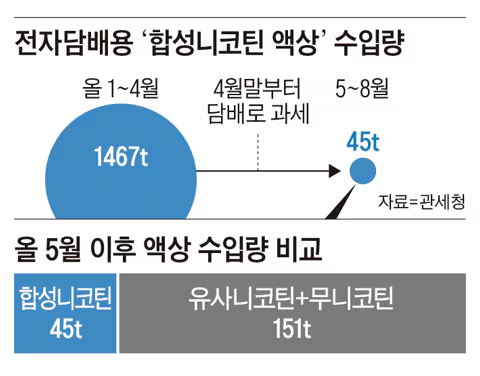
South Korea's Synthetic Nicotine Tax Take Estimated at Just 1.3% of Forecast as Imports Plunge Nearly 97%
After synthetic nicotine was placed under tobacco regulation on April 24, 2026, South Korea’s tax collections from synthetic-nicotine vaping products fell far short of government projections. The Chosun Ilbo reported on November 18 that Ministry of Health and Welfare data showed national health promotion charges on synthetic-nicotine liquid e-cigarettes totaled 765 million won from April 24 through September. Using statutory rates, the newspaper estimated combined major taxes and charges at about 2.622 billion won—on a monthly basis roughly 1.3% of an earlier forecast after temporary tax reductions. Customs data showed synthetic-nicotine imports dropped from about 1,467 metric tons in January–April to 45 metric tons in May–August, a nearly 97% decline. Imports of nicotine-analog and nicotine-free liquids totaled 151 metric tons in May–August, exceeding synthetic-nicotine imports in the same period, though both categories were also below January–April volumes.
Regulations
Nov.19
AIR Global Starts Debt Refinancing Four Months After Nasdaq Listing With About $400 Million Notes Expected
AIR Limited, a wholly owned subsidiary of AIR Global, has launched an offering of U.S. dollar-denominated senior unsecured notes, with proceeds primarily intended to repay its existing term loan and revolving credit facility. AIR has not disclosed the final size, maturity or coupon; Refinitiv, citing Moody's, reported an expected issuance of approximately $400 million and a Ba3 rating. AIR had about $412.4 million outstanding under the two bank facilities at June 30 and net debt of $344.8 million. In the first half of 2026, AIR's Al Fakher-led flavored shisha molasses business generated about 99% of company revenue, while New Growth Categories including Crown Switch produced $2.2 million in revenue and remained loss-making on an adjusted EBITDA basis.
Sep.23
2Firsts Interview | Cigarette Sales Fall as Smokeless Alternatives Gain in U.S. Convenience Stores, NACS Says
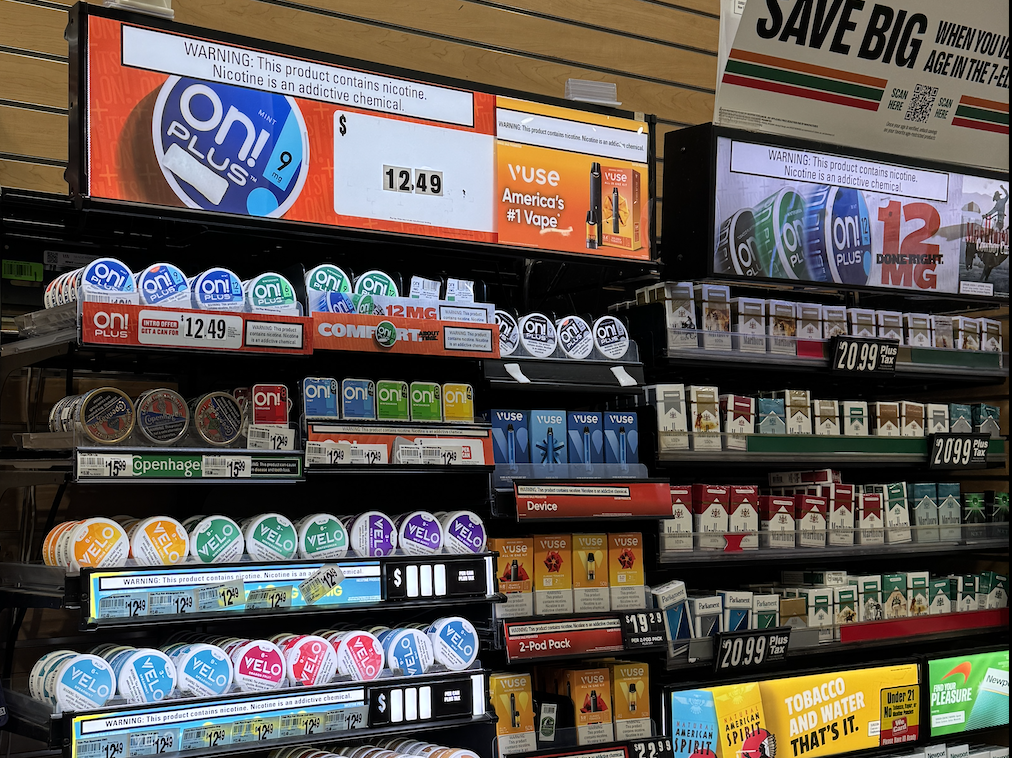
Ahead of the 2026 NACS Show, 2Firsts interviewed Chris Rapanick, NACS managing director of research, on changes reshaping the U.S. convenience-store tobacco and nicotine market. NACS data show cigarette sales declining while smokeless alternatives, including nicotine pouches, continue to grow. The interview also examines higher OTP margins, shifting backbar space, weaker store traffic, regulatory uncertainty and NACS’ outlook for 2027, offering a retailer-side view of one of the world’s largest nicotine markets.
Interview
Oct.03