Over a Thousand Illegal E-cigarette Products Seized in Merseyside

Regulations by 2FIRSTS.ai
Dec.11.2023
Over a Thousand Illegal E-cigarette Products Seized in Merseyside
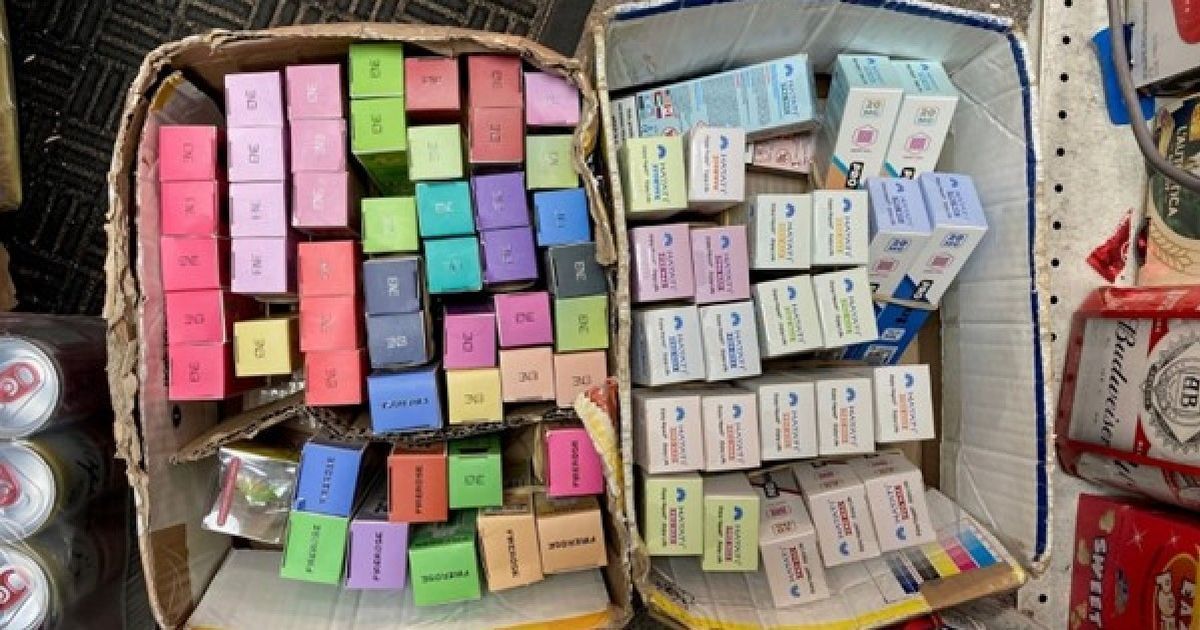
Over 1,000 illegal e-cigarette products were seized from shops in Merseyside, UK during a joint operation by local police and trading standards.

According to a report by the British media outlet liverpoolecho on December 7th, over a thousand illegal e-cigarette products were discovered in shops in certain areas of Merseyside, England.


In a joint operation, Merseyside Police teamed up with Knowsley Trading Standards to conduct a covert investigation into several shops in Kirkby. During a day-long operation, a total of 1,129 e-cigarette products were seized, which were found to be in violation of Regulation 36 of the 2016 Tobacco and Related Products Regulations.


According to UK law, the nicotine content in disposable e-cigarettes must not exceed 2% (20mg/ml), and their capacity must not exceed 2 milliliters, allowing for approximately 600 puffs.


In addition, these products can only be sold to individuals over the age of 18. Photos released by the police show that the confiscated e-cigarettes were packed in several bags.


We welcome news tips, article submissions, interview requests, or comments on this piece.

Please contact us at info@2firsts.com, or reach out to Alan Zhao, CEO of 2Firsts, on LinkedIn


Notice

1.  This article is intended solely for professional research purposes related to industry, technology, and policy. Any references to brands or products are made purely for objective description and do not constitute any form of endorsement, recommendation, or promotion by 2Firsts.

2.  The use of nicotine-containing products — including, but not limited to, cigarettes, e-cigarettes, nicotine pouchand heated tobacco products — carries significant health risks. Users are responsible for complying with all applicable laws and regulations in their respective jurisdictions.

3.  This article is not intended to serve as the basis for any investment decisions or financial advice. 2Firsts assumes no direct or indirect liability for any inaccuracies or errors in the content.

4.  Access to this article is strictly prohibited for individuals below the legal age in their jurisdiction.


Copyright


This article is either an original work created by 2Firsts or a reproduction from third-party sources with proper attribution. All copyrights and usage rights belong to 2Firsts or the original content provider. Unauthorized reproduction, distribution, or any other form of unauthorized use by any individual or organization is strictly prohibited. Violators will be held legally accountable.

For copyright-related inquiries, please contact: info@2firsts.com


AI Assistance Disclaimer


This article may have been enhanced using AI tools to improve translation and editorial efficiency. However, due to technical limitations, inaccuracies may occur. Readers are encouraged to refer to the cited sources for the most accurate information.

We welcome any corrections or feedback. Please contact us at: info@2firsts.com

U.S. Convenience Stores Rebalance Backbar as Nicotine Pouches Outpace Cigarettes
As cigarette volumes continue to decline, U.S. convenience-store operators are reconfiguring backbar space to accommodate modern oral nicotine products such as nicotine pouches. Industry data show nicotine pouches have become one of the fastest-growing nicotine categories while generating higher margins for retailers.
Jun.12
VEEV Arrives in South Korea, Completing PMI’s IQOS-ZYN-VEEV Portfolio
Philip Morris Korea has officially launched its VEEV e-vapor brand in South Korea, introducing both the VEEV inPRIME device and VEEBI inPRIME pods. The launch further expands PMI’s smoke-free portfolio in Korea, alongside its IQOS heated tobacco products and ZYN nicotine pouches.
Jun.16
Special Report | Russia, Ukraine and Belarus Launch Fresh Push to Rein in Vaping
Russia, Ukraine and Belarus are tightening vape regulation through different tools, from Ukraine’s stronger enforcement push and Belarus’s proposed advertising restrictions to Russia’s new GOST standard and regional sales-ban mechanism. As black-market concerns persist, some Russian experts argue that China’s tightly controlled but legalised model — built around licensing, traceability and taxation — may offer a more effective alternative to blanket prohibition.
Jul.15
NielsenIQ and Goldman Sachs Data Show Smokeless Was the Only Growing Major U.S. Nicotine Category
NielsenIQ and Goldman Sachs data show U.S. smokeless nicotine product sales rose more than 8% year over year in the 52 weeks ended May 30, making it the only major nicotine category to record growth.
Market
Jun.23
Bringing Tax and Insurance Into Nicotine Regulation: Insights From a Tobacco Harm-Reduction Report
A smoke-free nicotine policy report argues that tobacco harm reduction should move beyond product bans and health warnings into tax policy, insurance pricing and risk-based regulation. While some projections remain open to debate, the report highlights a wider challenge: nicotine products, technologies and consumer behavior have changed sharply over the past decade, and regulatory systems may need new tools to better align tobacco control with harm-reduction goals.
Jun.08
Vape Industry Group Loses Alabama Court Fight as State Tightens Rules on Imported Products
The Alabama Supreme Court affirmed a lower court’s refusal to issue a preliminary injunction blocking the state’s 2025 electronic nicotine delivery systems law, allowing rules requiring covered products to be U.S.-made or FDA-authorized to remain in effect.
Jul.10