Convenience Store Norton Closed for Selling Illegal Tobacco

Regulations by 2FIRSTS.ai
Dec.08.2023
Convenience Store Norton Closed for Selling Illegal Tobacco
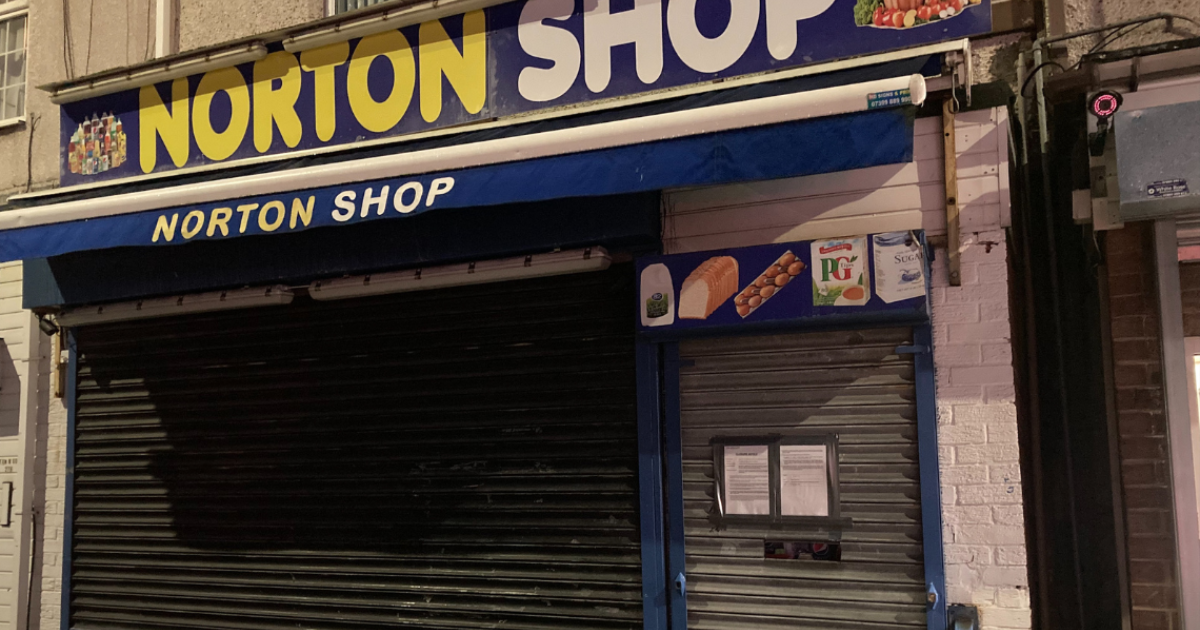
A convenience store called Norton has been ordered to close after allegedly selling fake and illegal tobacco to children.

According to a report by Stockton, a convenience store called Norton has been ordered to close on December 7th due to allegations of selling counterfeit and illegal tobacco products to children. This legal order was officially issued on Wednesday, December 6th, by the Teesside Magistrates' Court for the Norton store located on Norton Road. It is valid for three months and will be enforced by the Stockton-on-Tees Borough Council.


During the trial of the convenience store, the court highlighted that a pack of cigarettes was being sold for only 5 pounds, significantly below the average market price. These tobacco packages lacked identification numbers and did not adhere to standardized packaging, thereby violating the regulations outlined in the 2015 Tobacco Product Standardized Packaging Act. Additionally, they did not display the required health warning labels as mandated by law.


Norma Stephenson, a member of the Stockton-Tes District Council's Community and Community Safety Cabinet, expressed:


The outcome of this case is reassuring, especially considering that it involves the sale of illegal tobacco to children. We maintain a zero-tolerance stance towards the sale of counterfeit and illegal tobacco, and offenders will be dealt with severely.


The chief of the Stockton Community Police Department, Dan Heron, stated that illegal tobacco is causing real harm to our community, not only in terms of underage tobacco purchases but also impacting legitimate businesses. Illegal tobacco is often used to directly fund organized crime.


This task is part of "Operation Cece," a joint effort by the National Trade Standards and Customs Administration to combat illegal tobacco sales.


Lord Michael Bichard, Chairman of the National Trading Standards Committee in the UK, has stated that the illicit tobacco trade is causing harm to local communities and affecting law-abiding honest businesses.


We welcome news tips, article submissions, interview requests, or comments on this piece.

Please contact us at info@2firsts.com, or reach out to Alan Zhao, CEO of 2Firsts, on LinkedIn


Notice

1.  This article is intended solely for professional research purposes related to industry, technology, and policy. Any references to brands or products are made purely for objective description and do not constitute any form of endorsement, recommendation, or promotion by 2Firsts.

2.  The use of nicotine-containing products — including, but not limited to, cigarettes, e-cigarettes, nicotine pouchand heated tobacco products — carries significant health risks. Users are responsible for complying with all applicable laws and regulations in their respective jurisdictions.

3.  This article is not intended to serve as the basis for any investment decisions or financial advice. 2Firsts assumes no direct or indirect liability for any inaccuracies or errors in the content.

4.  Access to this article is strictly prohibited for individuals below the legal age in their jurisdiction.


Copyright


This article is either an original work created by 2Firsts or a reproduction from third-party sources with proper attribution. All copyrights and usage rights belong to 2Firsts or the original content provider. Unauthorized reproduction, distribution, or any other form of unauthorized use by any individual or organization is strictly prohibited. Violators will be held legally accountable.

For copyright-related inquiries, please contact: info@2firsts.com


AI Assistance Disclaimer


This article may have been enhanced using AI tools to improve translation and editorial efficiency. However, due to technical limitations, inaccuracies may occur. Readers are encouraged to refer to the cited sources for the most accurate information.

We welcome any corrections or feedback. Please contact us at: info@2firsts.com

U.S. Appeals Court Says BAT Must Face Class Action Over Cigarette Labels
A U.S. appeals court ruled that British American Tobacco (BAT) must continue facing a consumer class action lawsuit over cigarette labels. The ruling allows the case to proceed but does not determine that BAT violated the law or is liable for damages. The case highlights ongoing legal risks facing major tobacco companies related to product labeling, consumer disclosures and product liability claims.
Jul.31
Alaska Warns 1,500 Tobacco Retailers Over Unauthorized Vapes and Nicotine Pouches
Alaska Attorney General Stephen J. Cox has sent notices to more than 1,500 tobacco retailers and distributors warning them against selling vape and nicotine pouch products that lack authorization from the U.S. Food and Drug Administration (FDA). According to the Alaska Department of Law, businesses were advised to verify products against FDA authorization databases and avoid selling unauthorized nicotine products. The action highlights how state-level enforcement is increasingly extending federal product authorization requirements to retail channels.
Jul.24
Changing Assumptions in U.S. Cigar Consumption: 2Firsts Interviews Cigar Educator Mechelle Merkerson
U.S. premium cigar culture is shifting toward education, broader choice and deeper links to craftsmanship and origin, cigar educator Mechelle Merkerson told 2Firsts. She sees boutique brands, women consumers and production-region experiences making knowledge central to cigar participation. For global brands, retailers and emerging markets such as China, education may help turn curiosity into sustained engagement.
Special Report
Jul.06
South Korean Lawmaker Jeong Jin-wook Pushes Synthetic Nicotine Vape Probe, Highlighting Supply Chain and Tax Concerns
South Korean lawmaker Jeong Jin-wook has again called for stronger government action against liquid synthetic nicotine vape manufacturers and sellers, alleging that some businesses may have avoided regulation through product labeling changes and corporate restructuring. According to Newsworks, JNILBO and other Korean reports, Jeong has held his third press conference on the issue, calling for a government-wide investigation. The dispute involves whether synthetic nicotine products should fall under tobacco regulations, tax implications and supply-chain transparency. South Korean government agencies have previously said some estimates of potential tax losses cannot be verified due to limited sales data.
Jul.27
Senate Democrat Wyden Probes Trump Administration Vape Policy Shift, Seeks Records From HHS and Reynolds American
U.S. Senator Ron Wyden, the Democratic ranking member of the Senate Finance Committee, has launched an investigation into flavored vape policy changes and requested records from the Department of Health and Human Services (HHS), Reynolds American and Botanic Tonics. The investigation focuses on a timeline involving Reynolds American’s $5 million donation to MAGA Inc. in April 2026 and subsequent vape policy developments. Wyden said the review aims to examine potential links between political donations, corporate communications and government decisions. The investigation does not represent a finding of wrongdoing.
Innovation
Aug.07 by 2Firsts Perspectives
WIRED Investigation: Chinese-Made Vapes Turn to 6-Methyl-Nicotine and Other Analogs, Challenging U.S. Regulation
U.S. technology and investigative publication WIRED has examined how nicotine analogs are emerging as a new challenge for the country’s vape regulatory framework. The article argues that after the U.S. expanded federal oversight of nicotine products in 2022, some manufacturers began using nicotine-like compounds such as 6-methyl-nicotine that may fall outside existing definitions. Researchers cited by WIRED said some nicotine analogs could be more potent than traditional nicotine, although human health impacts remain unclear. U.S. policymakers are considering broader definitions of nicotine to bring these compounds under federal oversight.
Jul.27