Foreword
After experiencing explosive growth over the past five years, the global e-cigarette industry has reached a historical crossroads. Policy risks are intensifying, risks related to social responsibility are frequently surfacing, the prospects for product innovation are unclear, and excessive low-level competition has distorted the industry value chain; additionally, corporate debt crises are becoming prominent. Facing these challenges requires thought, action, and the courage to face risks, and sometimes, the readiness to accept failure. When these attributes converge in a group, it forms one — entrepreneurs.
As a media and consultancy responsible for reporting on the global vaping industry, 2Firsts initiated a series of interviews with CEOs from vaping enterprises. We aim to dialogue with global vaping entrepreneurs, convey their thoughts on significant industry issues, their judgments on future development trends, and more importantly, their confidence in the development of the global industry. I believe this will be the most excellent content 2Firsts has provided to global readers so far.
Industries rise and fall, companies succeed and fail, but the spirit of entrepreneurship will illuminate the industry's path forward.
— 2Firsts Co-founder and CEO, Alan Zhao
OXVA CEO Justin's Odyssey:
From SEA Rising Star to Global Open-System Leader
By 2Firsts
Editor's Note: Justin Lai identifies himself as an idealist. From a media perspective, both he and his company resemble a unique and single-minded sprinter.
Within a mere four years, he has transformed Shenzhen OXVA Technology Co., Ltd. (referred to as OXVA) and its subsidiary OXVA into a case study of success contrary to the mainstream industry trends. In these four years, his sprinting gained him multiple tags such as "Southeast Asia Rising Star," "Middle East Number One," and "Open System Leader," breaking the limitations of each tag continually.
Both Justin Lai and his company OXVA seem challenging to define by their current successes. If we categorize the founders of well-established e-cigarette companies that seized the early industry opportunities post-2003 as the "first wave of e-cigarette entrepreneurs," then Justin Lai started OXVA at the end of 2019, can be considered part of the second (or even third) wave of e-cigarette entrepreneurs.
Unlike his predecessors who moved forward synchronously with a group, Justin Lai nearly has no contemporaries, nor does he benefit from the booming industry's preferential margins. As a rational loner, he states, "I engage in highly certain enterprises. I only enter fields where I'm confident and competitive." Yet, he affirms, "The e-cigarette industry is still in its early stages, and I anticipate future development to multiply several times over."
With a background as a product manager, OXVA’s CEO Justin Lai still exudes the tension and aura of a product manager. Throughout our two-hour-long interview, he often deconstructs problems with product logic, insisting,
"If a product lacks product strength, we will not pursue it,"
"We never undertake projects with low-profit margins. Too many product launches indicate a loss of direction..."
"You can't find your future in someone else's trend..."
Founded at the end of 2019, OXVA and its e-cigarette brand OXVA have rapidly developed in four years, achieving the top market share in Southeast Asia's open system market and quickly becoming the leader in the Middle East. They have forcefully entered Europe's highly mature market as well. Justin Lai also expresses his strong confidence in becoming the global number one by the end of 2024.
In a fiercely competitive e-cigarette market undergoing transformation, category iteration, and even overcapacity, what's the secret and uniqueness behind OXVA's success? 2Firsts exclusively interviewed Mr. Justin Lai to explore these questions.

From "Southeast Asia Rising Star" to "Open System Leader"
2Firsts: OXVA has enjoyed a speedy four-year rise and has often been described as creating miracles against industry cycles, earning titles such as "Southeast Asia Little Overlord." As the founder and key operator, how do you view OXVA’s role and position within the industry?
Justin Lai: By the end of this year, we are confident of becoming the number one in the open system field.
In 2022, OXVA catered to the consumer trend of shifting from large to small body e-cigarette products, becoming an instant hit.
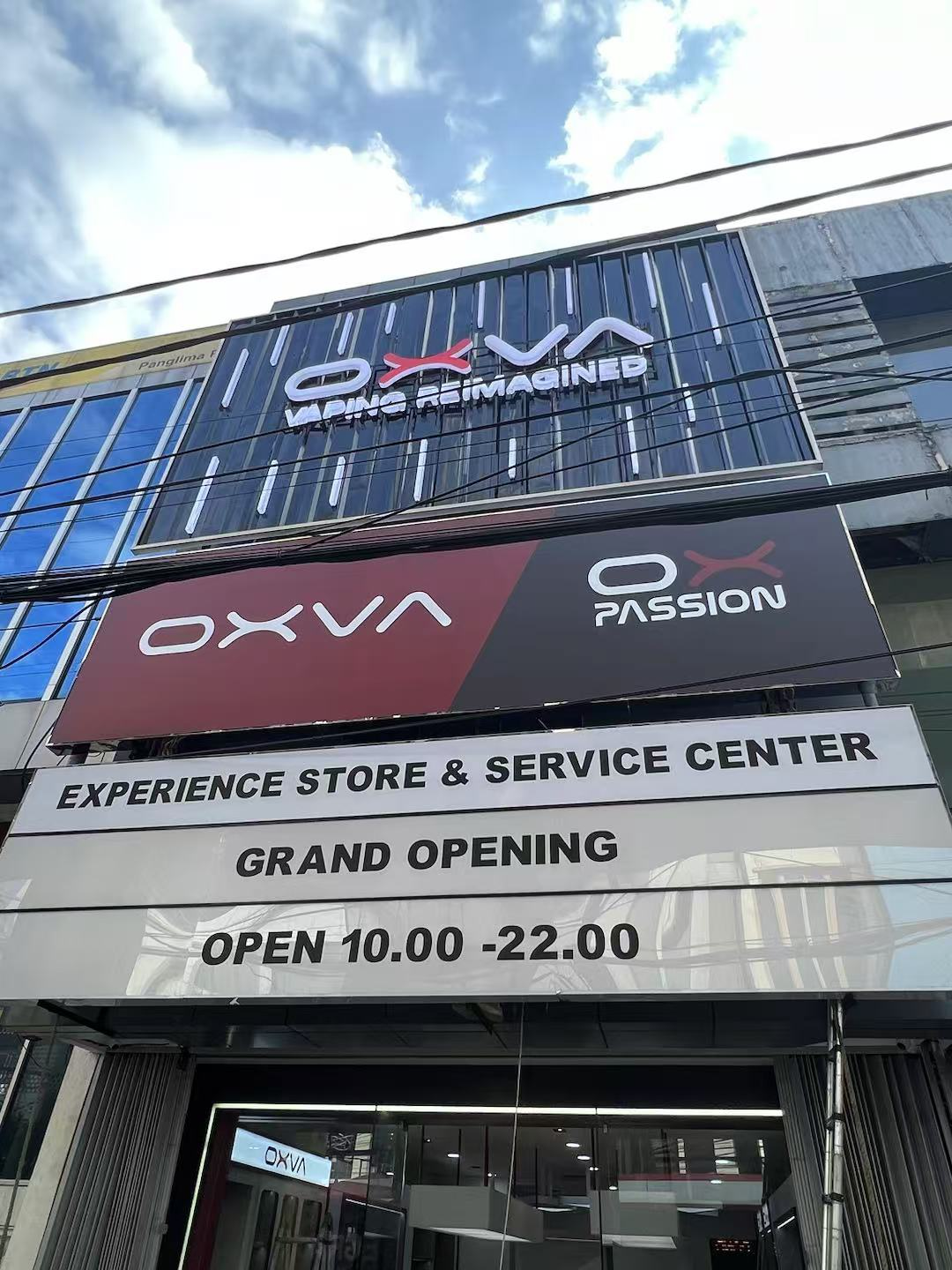
Before 2023, peers viewed OXVA as the "Southeast Asia Rising Star." In the open system field, OXVA undeniably holds the top position in the Southeast Asian market with significant market shares in the Philippines and Indonesia.
In 2022, our team began venturing into the Middle East and European markets, and we are now the number one in the open system market in the Middle East. Reflecting on OXVA’s more than four-year journey, although we started late and some peers doubted our prospects, we have now risen.
Choosing “Open System” Track: "I Only Enter Fields Where I'm Confident and Competitive"
2Firsts: You founded OXVA in late 2019, during the initial wave of disposable e-cigarette popularity, and OXVA’s rapid progress coincided with the disposable boom. Amidst such a "major trend" and "cycle," why did you choose "open system" as your startup track and unwaveringly stick to it to become a leader in this field? What product philosophy and beliefs kept you sprinting?
Justin Lai: Firstly, the surge and boom of disposable e-cigarettes did not cause the total market volume of open systems to decline. The industry had a watershed moment before disposable e-cigarettes rose, during which open systems dominated. Only later did disposable e-cigarettes begin to capture a larger market share. But the total market volume of open systems did not decrease.
Indeed, this merely reflects current category relations. I do not believe open systems can replace closed systems in the future.
Choosing the open system track aligns with my previous industry accumulation and rational working style. Before founding OXVA, I was a product manager at Geekvape, with experience and knowledge in the open system field. Around 2020, my team and I did not fully understand disposable e-cigarettes. We believed that designing an outstanding disposable e-cigarette product required considerable time to learn. I did not think entering the disposable e-cigarette field would be an instant success.
As a steady and highly rational person, I engage in highly certain enterprises. I only enter fields where I'm confident and competitive, deeming it advantageous to leverage our strengths in open systems to create excellent products. Time has proven that we have capitalized on competitors' weaknesses, with OXVA quickly seizing the high ground.
Changing "Open System Leader" Tag: We Aim to Cover All Categories
2Firsts: The choice of category track has always been a crucial factor for enterprise development in the e-cigarette industry. Each round of category iteration projects various impacts on individual enterprises, with some growing rapidly and others getting left behind. As an innovator, OXVA chose the "open system" track against the "disposable boom" and swiftly became number one in Southeast Asia and the Middle East, approaching global leadership in the open system category. How do you view the e-cigarette category development trend? What will OXVA's category strategy be? Will there be new major moves, or will you stick to the "open system" track?
Justin Lai: From an industry-wide perspective, I believe the future market will not differentiate between open system brands, closed system brands, or disposable brands. In two years, I anticipate all e-cigarette companies to have overlapping categories. Specifically, for our product strategy, OXVA will formally step into the all-category market. In this year's fourth quarter, everyone will see OXVA’s closed system e-cigarette product line, gradually altering the "open system leader" image we'd built.
Zooming into specific products, I predict that the future market will predominantly feature closed system e-cigarettes. To be more specific, in the closed system e-cigarettes variations, the "2+10" scheme in the UK market currently holds an absolute advantage and offers high value for money. If it can meet local regulatory demands while enhancing user experience, it will become the mainstream solution in the future.
Why is this? Underlying product logic lies with the consumer. Analyzing closely, we see that in the closed system e-cigarettes, the cost of e-liquid is relatively low. This means that the physical build of e-cigarettes can be of higher quality. Reviewing e-cigarettes’ development history, I notice that consumers' expectations for quality and experience have significantly risen. To meet these expectations, improving cost and price is a necessary path.
Current Overcapacity and Future Growth Potential
2Firsts: Currently, the e-cigarette industry faces intensifying competition. The international market competition is impacting upstream brands, manufacturing, and supply chains. Some enterprises have begun liquidation and exit this year. How do you perceive the current industry state, and does it influence your judgment of the industry? Are you still optimistic about the e-cigarette industry?
Justin Lai: I have been in the e-cigarette industry for over ten years, hearing predictions of a bleak future every couple of years. This year too, some peers expressed pessimism when chatting with me, but I remain optimistic about the e-cigarette industry. At the end of 2019, I ventured out to start OXVA and led the OXVA project. We felt incredibly lucky to step into the e-cigarette "golden pit." I still believe the e-cigarette industry is in its early stages. The current market share of e-cigarettes remains low, with potential for exponential growth.
Considering the current industry situation, intensified competition even leading to some firms exiting seems an inevitable process. Many industries face overcapacity. In the e-cigarette sector, RELX drew significant capital influx over the past few years, and now, the disposable e-cigarette boom has drawn many to venture in for a slice of the pie. This reflects a necessary progression of the e-cigarette market, leading to a new balance of supply and demand. The market perpetually cycles through overcapacity, clearing, resource scarcity, and back to overcapacity.
Currently, the industry is at an overcapacity stage. So, the market needs to clean out, eliminating some entities and exiting others, reaching a new supply-demand balance.
Product Power VS Channel Power
2Firsts: As you said, given the overcapacity adjustment period, competition has intensified to a point where it demands survival of the fittest to reduce capacity. What advantages must enterprises possess to win this round, and which types are likely to be eliminated?
Justin Lai: From an enterprise perspective, I believe it comes down to building core competitiveness. The future market will concentrate on companies with robust competitiveness and strength, boasting top talent and clear product strategies. Many opportunistic enterprises might gradually be phased out.
2Firsts: Currently, in terms of competition, we observe some enterprises focusing on channel investments, even adopting a consignment model. Others bet heavily on the product side, hoping new product developments will win market success. What's your view on the significance of channel and product dimensions in competition? What's OXVA’s strategy?
Justin Lai: Often discussed is whether product strength or channel power is more important. I believe you don't need to discuss it; it inherently has fixed thinking. A product's communication path starts from the manufacturer to the distributor, then to the store, and finally to the consumer. The store-to-consumer phase is the most crucial. Store owners will undoubtedly place high-conversion products where consumers can easily see them.
Therefore, products that survive in the market have high sales conversion rates. In a fully competitive market, distributors cannot forcefully push a product. They may succeed temporarily, but long-term, it’s unsustainable. A successful product push stems from its inherent high conversion rate, aligning with business logic and enabling sustained conversions at minimal cost. So the core lies not in consignment but in building product power.
If a product lacks product strength, we will not pursue it. Even if a distributor expresses demand, we wouldn't do it because we are always user-oriented, and products are ultimately sold to e-cigarette users.
Creating product strength relies on gathering genuine, effective, and comprehensive information from consumers. Moreover, the product decision-making mechanism in a company is crucial to presenting and implementing advanced product ideas. Therefore, the key to making great products lies in thoroughly analyzing user needs.
"Too Many Product Launches Indicate a Loss of Direction"
2Firsts: We have observed many new products emerging over the past year; the market exhibits a myriad of e-cigarette products. Some enterprises clearly adopt a high-frequency, mass-launch strategy to accumulate market opportunities through quantity. Do you think this results from collective industry anxiety? Do you and your company share similar sentiments? What's your new product development volume and pace?
Justin Lai: Every e-cigarette company needs to survive. If a product fails, another must be launched immediately to gain a sense of security through continual new product deliveries. However, I believe that if an e-cigarette company launches too many products, it signifies a loss of direction. It lacks a definitive direction and seeks to "bloom everywhere," reducing uncertainty anxiety through quantity advantage.
How does OXVA operate? Generally, we assess the current situation. If faced with five possible paths, I might choose three and launch four or five products. But if offering ten new products along one path for customers to select, I believe it's erroneous. Designing e-cigarette products along a single direction should yield a relatively optimized configuration through collective discussion and logical deduction.
Comparatively, OXVA introduces fewer products than other e-cigarette companies in the industry. Among large open system brands, we have the least variety of products.
"In Someone Else's Trend, You Can't Find Your Own Future"
2Firsts: How do you view the currently popular large-screen e-cigarettes?
Justin Lai: Screen innovation now offers an outlet for homogenized e-cigarettes. I believe GEEKBAR's recently launched star-screen (GEEKBAR PULSE X) is a noteworthy innovation, bringing new thoughts to our team. We’ll value more communication with screen suppliers to create better products. New visual effects are always welcomed, and large screens represent a trend for a period. However, OXVA doesn't aim to follow that trail by creating even larger screens, as the winning probability is very low.
Our thought process always seeks the next trend. A product's explosive growth fundamentally stems from leading a trend. Once representing a trend, the product becomes unstoppable, but I don't believe in chasing or heading towards it. Instead, I consider innovation a disruption of existing products. You can't find your own future in someone else's trend; that's their future.
I believe a full-screen design won't be a stable shape due to users' visual novelty waning over time and the cost or dimension increase from larger screens. Eventually, a turning point will occur in the large-screen trend of e-cigarette products.
"Currently, No Plans to Build a Factory"
2Firsts: Since its invention, the e-cigarette industry has undergone more than twenty years of development, creating exceptional entrepreneurs and their companies. Unlike the first generation of entrepreneurs mainly focused on factory production, you’ve created a "leader" or a "unicorn" company in just four years, concentrating on branding aspects. What is OXVA’s current production model? After achieving notable success, will you shift focus to manufacturing? Will you consider building your own factory?
Justin Lai: Currently, we have four OEM partners, primarily producing OXVA products and viewing us as their lifeline. They are industry veterans with over ten years of experience, adept in management and systems.
OXVA products are OEM-manufactured but controlled entirely by OXVA. The product quality is managed from start to finish by OXVA, not by the OEMs. Currently, we do not plan to build our factory. We might consider acquiring a factory purely for reserves, without shifting our focus to in-house production management and operation. Building a factory is not as simple as imagined; outstanding factory managers and production talent are crucial. Currently, OXVA lacks such expertise, and I engage in highly certain enterprises. Future factory setups, if required, would adopt a co-building approach, with OXVA providing investment but not managing the factory.
Upstream and Downstream Ecosystem: "Everyone Must Earn Profit for a Healthy Ecosystem"
2Firsts: The e-cigarette industry is shifting from a previously high-profit seller's market to an intensifying buyer's market. Without high-profit margins as a "lubricant," competition transmits from the market to upstream, including brands, manufacturing, and suppliers. How does OXVA define its relationship with upstream and downstream enterprises, and how do you optimize this ecosystem's sustainability?
Justin Lai: As an idealist, the term “No business without trickery” is jarring to me. It reflects short-sighted behavior. Long-term development requires more cooperation, benefiting others commercially ensures ongoing partnerships.
OXVA is a company that pursues simplicity and purity. Essentially, we sell e-cigarettes, but we are also a product-centric enterprise. Our duty is to strive to create the best e-cigarette products.
We never promise suppliers the impossible.
We never engage in projects with too low profit margins. Low profits mean that I can only offer relatively limited salaries to my employees, which is not conducive to attracting talent internally; externally, I also have to consider whether my suppliers can obtain satisfactory profits. If profits are too low, it will inevitably put pressure on suppliers, and the greater the pressure on suppliers, the higher the probability of product quality issues.
In terms of products, we adhere to a boutique strategy. Our product lifecycle is very long. While OXVA sells e-cigarettes, suppliers continue to produce, which can reduce losses caused by downtime.
Additionally, in our view, the supply chain and products mutually empower each other. For example, our XLIM PRO, which should be the best-selling single product in the open e-cigarette category in 2023; looking at this year's sales, it is definitely the industry's best-selling single product. This product is interesting because its success has made zinc alloy patching popular again. This is the reverse empowerment of a good product to the supply chain.
In 2022, OXVA's XLIM was very "hot" in sales in some countries in the Middle East and Europe. In 2023, we launched XLIM PRO, which quickly became the sales champion. Before this, the main material for e-cigarette bodies was aluminum, which created a smooth metal texture. Using zinc alloy material allows for groove designs, enabling patching and giving a more high-end visual effect.

Before the advent of XLIM PRO, zinc alloy patching might have been on the verge of "extinction" because of its high manufacturing cost. We were not the inventors of zinc alloy patching, but XLIM PRO brought it back into mainstream design. Now everyone is using it (zinc alloy patching), and almost every open e-cigarette brand has such (zinc alloy patched) products, which has become a standard in the category.
Some zinc alloy material suppliers told us that the XLIM PRO product saved them. Of course, an important factor in this process is that suppliers improved the zinc alloy process and brought down the cost price, so it was a process of overcoming difficulties together, which is mutually reinforcing.
My core team and I always adhere to the principle of mutual benefit and symbiosis. This philosophy runs through every link of the contract factory, supply chain, customers, and within the company itself. First is equal respect in personality; OXVA does not allow for an arrogant stance in front of them. Additionally, once problems arise, OXVA takes the initiative to solve them together with suppliers. Then, in terms of payment, OXVA is always prompt. Most crucially, we ensure their profits because I believe that everyone must make money for the entire ecosystem to be healthy.
2Firsts invites global entrepreneurs to join the interview series. If you wish to share your thoughts and engage with global readers through 2Firsts, please contact: Alan@2firsts.com.

Disclaimer
This article is provided solely for professional research, industry discussion, and informational purposes. Any references to brands, companies, products, technologies, or policies are made for factual reporting and analytical purposes only, and do not constitute endorsement, recommendation, promotion, or advertising by 2Firsts.
Nicotine-containing products, including but not limited to cigarettes, e-cigarettes, heated tobacco products, and nicotine pouches, carry significant health risks. Readers are responsible for complying with all applicable laws and regulations in their respective jurisdictions, including age restrictions and access limitations.
The information contained in this article should not be regarded as investment, legal, medical, regulatory, or commercial advice. While 2Firsts strives to ensure the accuracy and reliability of its content, it does not assume liability for any direct or indirect loss arising from errors, omissions, inaccuracies, or reliance on the information contained herein.
This article is not intended for individuals below the legal age for accessing tobacco or nicotine-related information in their jurisdiction.
Copyright Notice
This article is either original content produced by 2Firsts or content reproduced, translated, summarized, or adapted from third-party sources with attribution where applicable. The intellectual property rights of the original content remain with 2Firsts or the respective original rights holders.
No individual or organization may copy, reproduce, distribute, republish, modify, translate, or otherwise use this content without prior authorization. Any unauthorized use may result in legal action.
For copyright-related inquiries, corrections, or removal requests, please contact: info@2firsts.com.
AI-Assisted Translation and Editing Notice
Portions of this article may have been translated, edited, or reviewed with the assistance of artificial intelligence tools to improve efficiency and readability. Due to the limitations of AI-assisted translation and editing, discrepancies, omissions, or inaccuracies may exist when compared with the original source.
Where applicable, readers are advised to refer to the original source for the most complete and accurate information. If you identify any errors or believe that any content infringes upon your rights, please contact us at info@2firsts.com, and we will review and address the matter promptly.