WVS | OXVA: Launched E-liquid Brand Last Month, Main "Battlefields" are South-East Asia and UK

World Vape Show by 2FIRSTS, edited by Sophia Lv
Jun.18.2024
WVS | OXVA: Launched E-liquid Brand Last Month, Main "Battlefields" are South-East Asia and UK
World Vape Show held in Dubai from June 12 to 14, showcasing OXVA's EMEA market expansion and challenges.

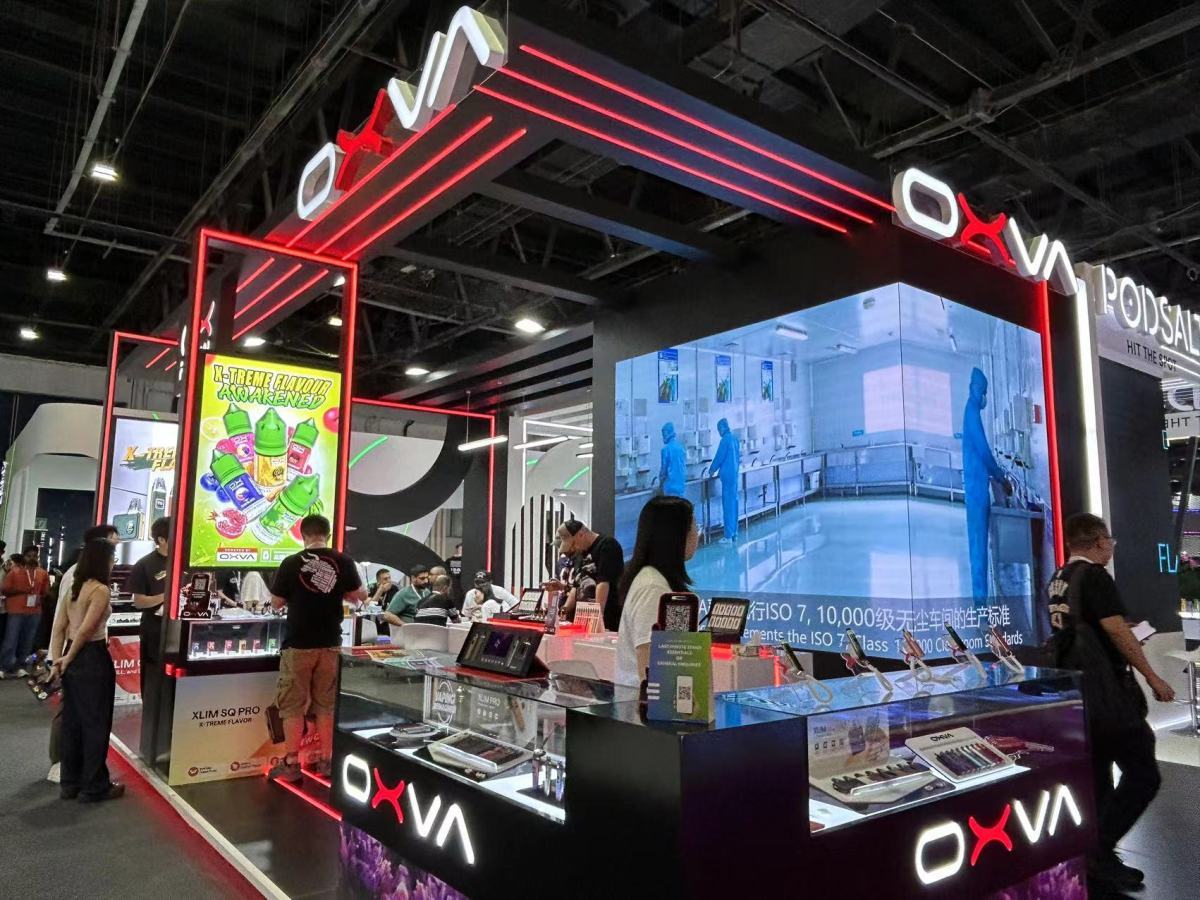
From June 12th to 14th, the World Vape Show was held at the Dubai World Trade Centre. During this time, representatives from 2FIRSTS met with Robin, the EMEA Regional Manager of the well-known open system brand OXVA, to discuss their recent development and trends.


Robin explained that OXVA began its development in the Southeast Asian market, initially establishing a strong market foundation in countries such as the Philippines, Indonesia, and Vietnam. The brand then expanded to the European and Middle Eastern markets, with successful performances in countries such as the United Kingdom, Germany, Poland, Spain, France, and the Middle East. However, its development in the American market has been relatively average.


Speaking about the development of OXVA in the UK market, Robin said that by the end of 2022, competitors in the UK market encountered some issues, leading customers to seek alternatives, which provided an opportunity for OXVA. The company seized the opportunity, actively promoted its products, and gradually gained acceptance from end customers, thus gradually rising in the UK market. Currently, the UK has become a "base" for OXVA.


In order to keep up with market trends, OXVA officially launched its own e-liquid brand last month, offering different packaging and flavors to cater to different markets.


When discussing the challenges they face, Robin mentioned the pressure from compliance and competitors. For example, competitors in the same industry may offer more favorable policies or increase their marketing efforts. Additionally, dealer and consumer loyalty is not high, as they tend to prefer trying new, better products.


Regarding regulatory issues in the Middle East market, Robin stated that many markets in the Middle East prohibit the sale of e-cigarettes entirely. Even in markets where sales are permitted, there are numerous restrictions in place. Additionally, the logistics situation in the Middle East market is often chaotic and unstable, leading to higher prices.


When talking about their views on open systems with various features such as games, Robin believes that while many companies are innovating, it's more of a gimmick for product promotion. He believes that the core competitiveness of products still lies in characteristics closely related to vaping experience, such as quality, taste, battery life, and so on.


We welcome news tips, article submissions, interview requests, or comments on this piece.

Please contact us at info@2firsts.com, or reach out to Alan Zhao, CEO of 2Firsts, on LinkedIn


Notice

1.  This article is intended solely for professional research purposes related to industry, technology, and policy. Any references to brands or products are made purely for objective description and do not constitute any form of endorsement, recommendation, or promotion by 2Firsts.

2.  The use of nicotine-containing products — including, but not limited to, cigarettes, e-cigarettes, nicotine pouchand heated tobacco products — carries significant health risks. Users are responsible for complying with all applicable laws and regulations in their respective jurisdictions.

3.  This article is not intended to serve as the basis for any investment decisions or financial advice. 2Firsts assumes no direct or indirect liability for any inaccuracies or errors in the content.

4.  Access to this article is strictly prohibited for individuals below the legal age in their jurisdiction.


Copyright


This article is either an original work created by 2Firsts or a reproduction from third-party sources with proper attribution. All copyrights and usage rights belong to 2Firsts or the original content provider. Unauthorized reproduction, distribution, or any other form of unauthorized use by any individual or organization is strictly prohibited. Violators will be held legally accountable.

For copyright-related inquiries, please contact: info@2firsts.com


AI Assistance Disclaimer


This article may have been enhanced using AI tools to improve translation and editorial efficiency. However, due to technical limitations, inaccuracies may occur. Readers are encouraged to refer to the cited sources for the most accurate information.

We welcome any corrections or feedback. Please contact us at: info@2firsts.com

STIIIZY Redesign Fails to Escape PAX Labs Patent Import Ban as Section 337 Case Also Involves China ALD
U.S. Customs and Border Protection ruled that STIIIZY had not shown that the redesigned cannabis-vape products covered by its latest request fall outside an ITC limited exclusion order tied to PAX Labs patents. CBP accepted some of STIIIZY’s claim-construction and non-infringement arguments, but the company did not address two additional claims in the same patent. Earlier STIIIZY redesigned cartridges and certain associated components imported with them had received separate CBP clearance.
Sep.16
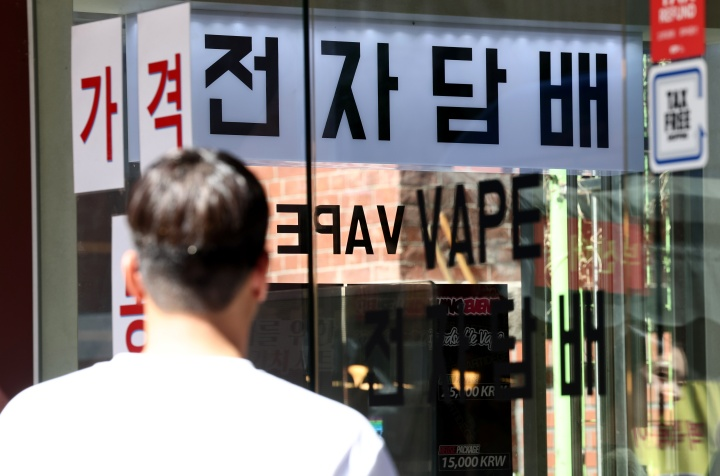
South Korea Constitutional Court Upholds Volume-Based E-Liquid Tax, With Challenged Rates at KRW 370 and KRW 628 per Milliliter
South Korea's Constitutional Court has upheld fixed taxes on nicotine-containing e-cigarette liquids based on solution volume, ruling that challenged provisions imposing KRW 370 per milliliter in individual consumption tax and KRW 628 per milliliter in tobacco consumption tax do not violate the Constitution. The cases stemmed from historical disputes involving importers that reported nicotine as being extracted from tobacco stems rather than leaves. South Korea has since broadened its tobacco definition to include synthetic nicotine, while current tax laws provide reduced rates for certain products not derived from tobacco.
Sep.18
Russia's Vape Ban Decisions Reach 17 Regions With 39 More Considering Laws, Putting Over 3,000 St. Petersburg Retail Outlets in Focus
Russia's regional vape retail restrictions are expanding. State Duma Speaker Vyacheslav Volodin said on November 7 that 17 regions had adopted decisions to ban vape sales, while another 39 were preparing or considering similar legislation. On November 12, lawmakers in Leningrad Oblast and the Republic of Karelia adopted bans scheduled to begin on March 1, 2027. A day earlier, St. Petersburg unanimously approved a five-year ban proposal in its first reading. The city has 615 specialist vape shops and more than 2,400 other retail outlets selling vaping products alongside other goods. Under Federal Law No. 186-FZ, enacted in June 2026, Russian regions may prohibit retail sales of electronic nicotine delivery systems and related liquids between March 2027 and March 2032. The legislation also restricts licensed suppliers from delivering covered products to retail premises in regions where bans apply.
Regulations
Nov.13
North Carolina Tightens Vape Product Directory Enforcement, Expands State and Local Powers as Violators Face Fines, Product Seizures and License Suspension or Revocation
North Carolina has expanded enforcement of its vapor product directory rules, authorizing more state and local law enforcement participation and establishing a task force led by the State Bureau of Investigation. The legislation requires at least one unannounced compliance inspection annually for retailers, distributors and wholesalers handling covered products. Penalties effective October 1, 2026, include civil fines of $500–$750 for a first violation and $1,000–$1,500 for repeated violations within 12 months, along with potential license suspension or revocation. Manufacturers may face penalties of $10,000 per unlisted product. The measures strengthen the product directory system established in 2024.
Regulations
Oct.28
Product | BAT Launches VELO WRKS Nicotine Pouches in Sweden, Introducing Dual-Compartment Cans With Two Flavours
British American Tobacco (BAT)'s VELO brand launched the VELO WRKS nicotine pouch range in Sweden on November 2, 2026. The initial release features three Dual Can variants, each containing two separate flavours in a dual-compartment container. Each can holds 20 slim pouches with 8mg of nicotine per pouch and retails for SEK 52.99. According to VELO, the first release, Drop 1, is limited to 75,000 cans and will remain available until February 2027 or while stocks last. VELO positions WRKS as a platform for testing new product concepts and has introduced an online consumer feedback survey. EU trademark records show BAT applied to register VELO WRKS in March 2026 under Class 34, covering nicotine pouches, e-cigarettes, heated tobacco products and other tobacco-related goods.
product
Nov.03
South Korea Extends Vape Rules to Unmanned Stores After Bringing Synthetic Nicotine Under Tobacco Law
South Korea's Ministry of Gender Equality and Family said on September 14 that it plans to designate unmanned e-cigarette stores as businesses where minors are prohibited from entering or working. Operators would be required to verify customers' ages and display notices restricting access by minors. The proposal is open for public comment through October 6. The move follows an April expansion of South Korea's statutory tobacco definition that brought products made with natural or synthetic nicotine under the Tobacco Business Act. Nicotine-free liquids and products using nicotine analogues such as 6-methylnicotine, however, remain an emerging regulatory issue.
Sep.21