PMI Launches IQOS ILUMA in Emerging Markets

PMI by 2FIRSTS.ai
Dec.01.2023
PMI Launches IQOS ILUMA in Emerging Markets
Philip Morris International (PMI) has launched IQOS ILUMA in multiple emerging markets and a limited edition IQOS ILUMA STARDRIFT in mature markets.

Recently, Philip Morris International (PMI) launched its heated tobacco product IQOS ILUMA in multiple emerging markets worldwide, as well as a limited edition version called IQOS ILUMA STARDRIFT with innovative design features in several mature markets.

PMI Launches IQOS ILUMA in Emerging Markets
IQOS ILUMA | Image source: crnobelo


PMI has introduced IQOS ILUMA in seven different countries in emerging markets, spanning Europe, Asia, and the Americas. These countries include Bulgaria, Malaysia, Bosnia and Herzegovina, Macedonia, Montenegro, Guatemala, and Morocco. It is noteworthy that Macedonia, Bosnia and Herzegovina, Montenegro, and Bulgaria are located in southeastern Europe, in close proximity to PMI's factory in Italy.
PMI Launches IQOS ILUMA in Emerging Markets
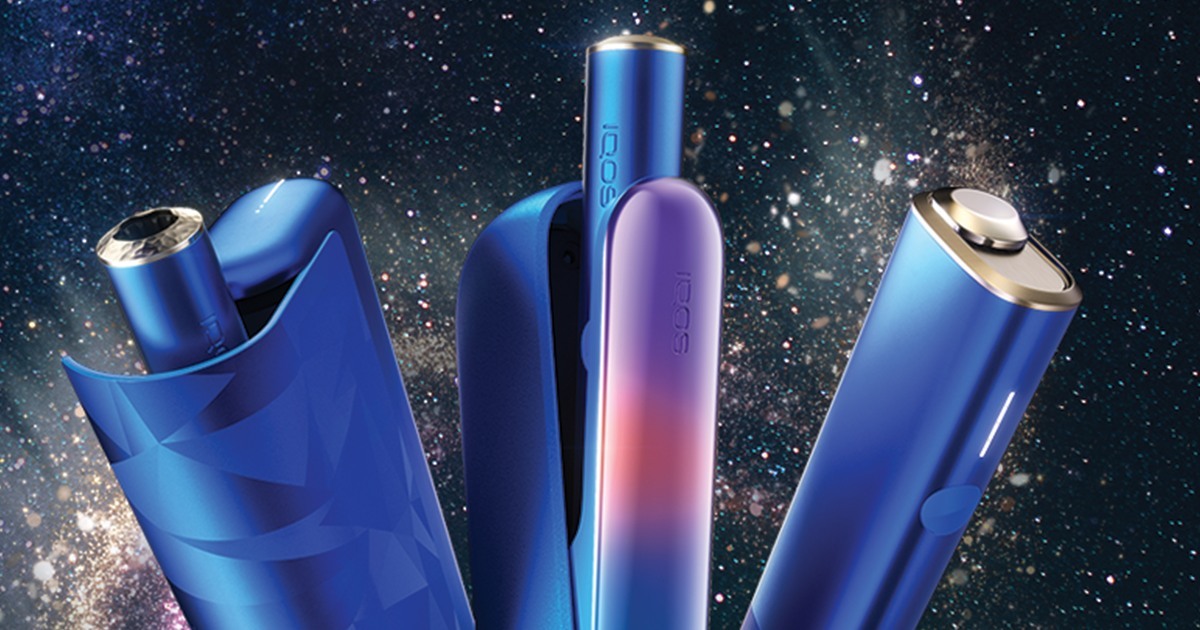
IQOS ILUMA STARDRIFT | Image source: Okmagazine


Meanwhile, IQOS ILUMA STARDRIFT has also been launched in mature markets such as South Korea, Spain, and Romania.


Philip Morris International (PMI) is focusing on the US market and has recently submitted a premarket tobacco product application (PMTA) and a modified risk tobacco product application (MRTPA) for IQOS ILUMA to the Food and Drug Administration (FDA) in late October. This move is an important step towards the official launch of their product in the US market.


Furthermore, PMI is currently seeking trademark registration for "VEEV One Ultra" and "VEEV Now Ultra" at the Korean Patent Office, indicating that the company may have plans to launch its vape product VEEV in the Korean market in the future.


In its latest quarterly report, PMI announced a remarkable achievement of surpassing $9 billion in net income for the first time, with the success of IQOS being one of the key factors. The report reveals that the shipment volume of heated tobacco products, including e-cigarettes, increased by 18% compared to the previous quarter. PMI is actively driving innovation and market expansion to bolster its performance globally.


We welcome news tips, article submissions, interview requests, or comments on this piece.

Please contact us at info@2firsts.com, or reach out to Alan Zhao, CEO of 2Firsts, on LinkedIn


Notice

1.  This article is intended solely for professional research purposes related to industry, technology, and policy. Any references to brands or products are made purely for objective description and do not constitute any form of endorsement, recommendation, or promotion by 2Firsts.

2.  The use of nicotine-containing products — including, but not limited to, cigarettes, e-cigarettes, nicotine pouchand heated tobacco products — carries significant health risks. Users are responsible for complying with all applicable laws and regulations in their respective jurisdictions.

3.  This article is not intended to serve as the basis for any investment decisions or financial advice. 2Firsts assumes no direct or indirect liability for any inaccuracies or errors in the content.

4.  Access to this article is strictly prohibited for individuals below the legal age in their jurisdiction.


Copyright


This article is either an original work created by 2Firsts or a reproduction from third-party sources with proper attribution. All copyrights and usage rights belong to 2Firsts or the original content provider. Unauthorized reproduction, distribution, or any other form of unauthorized use by any individual or organization is strictly prohibited. Violators will be held legally accountable.

For copyright-related inquiries, please contact: info@2firsts.com


AI Assistance Disclaimer


This article may have been enhanced using AI tools to improve translation and editorial efficiency. However, due to technical limitations, inaccuracies may occur. Readers are encouraged to refer to the cited sources for the most accurate information.

We welcome any corrections or feedback. Please contact us at: info@2firsts.com

Indonesia's Influential Islamic Body MUI Urges Vape Permit Freeze, Raising Uncertainty for 200 Manufacturers
Indonesia's Ulema Council (MUI) published Fatwa No. 131/2026 on November 9, declaring electronic cigarette use, production and trade haram under Islamic religious rules. The council urged the Industry Ministry to prohibit the issuance of vape industry permits and review licensing policies, while calling on the president and parliament to enact a comprehensive ban. On November 10, the Constitutional Court heard a challenge to provisions of the 2023 Health Law seeking a prohibition on vape production, importation, distribution and use. The Health Ministry said on November 11 it was studying stronger restrictions, including a possible ban on circulation, while industry association APVI called for tighter oversight rather than a total ban. Indonesia's Industry Ministry previously estimated the sector comprises about 200 companies, Rp31 trillion ($1.7 billion) in cumulative investment and approximately 100,000 supply-chain jobs. No nationwide statutory ban has been enacted.
Regulations
Nov.12
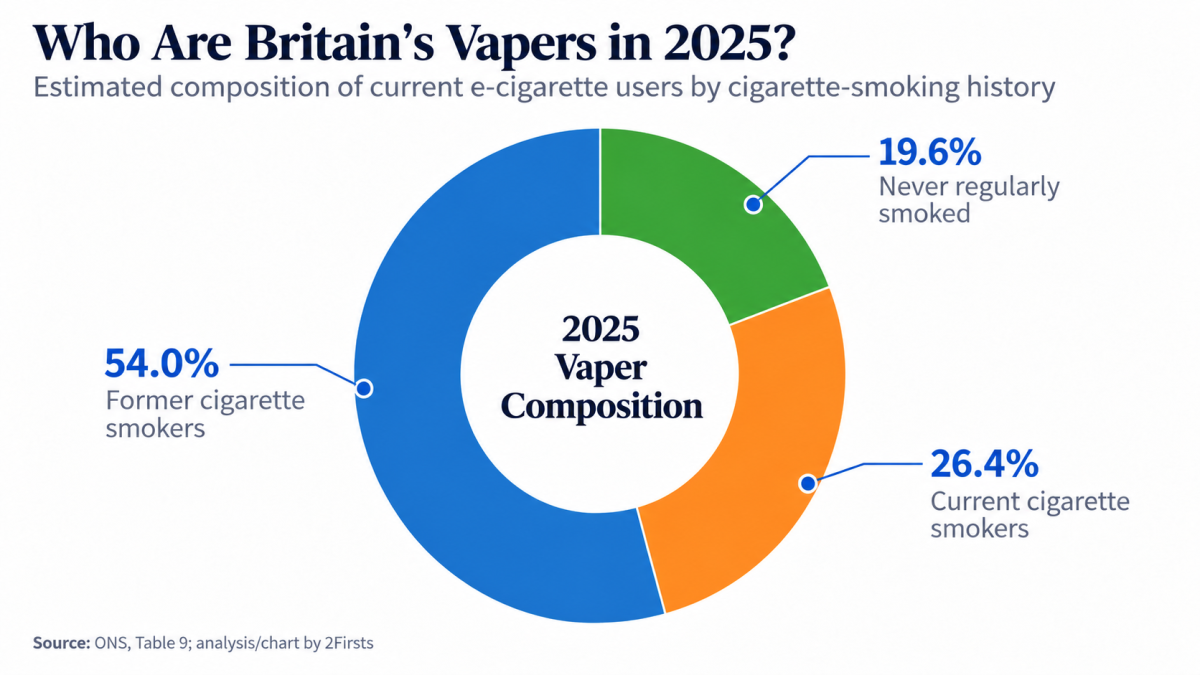
Latest UK ONS Data: 54% of Vapers Are Former Cigarette Smokers, 26% Also Smoke and 20% Never Smoked Regularly
Former cigarette smokers accounted for an estimated 54% of current e-cigarette users in Great Britain in 2025, while 26% also smoked cigarettes and 20% had never regularly smoked, according to a 2Firsts analysis of Office for National Statistics (ONS) data. Among former cigarette smokers who currently vape, approximately 81% used e-cigarettes daily, compared with about 50% of dual users. The ONS found that 33.8% of current cigarette smokers also vaped in 2025, up from 10.6% in 2014. Approximately 1.1 million adults who had never regularly smoked cigarettes used e-cigarettes, representing 2.9% of that population, compared with 0.2% in 2014. The figures highlight differences in the composition, frequency of use and long-term trends across Britain's vaping population.
DATA
Oct.14
Wisconsin Vape Directory One Year On: Retailer Reports Four Store Closures and 70% Staff Cuts
Wisconsin's electronic vaping device directory has been fully enforced for more than a year, and local vape retailers say the reduced range of eligible products has contributed to declining sales, store closures and layoffs. Johnny Vapes owner Ben Hall said he has closed four of seven locations and cut about 70% of his staff. State law bars the sale of vaping devices not listed on the Wisconsin Department of Revenue directory and allows penalties of $1,000 per day for each unlisted device sold or offered for sale. In April 2026, the U.S. Court of Appeals for the Seventh Circuit allowed enforcement of the law to continue.
Regulations
Oct.10
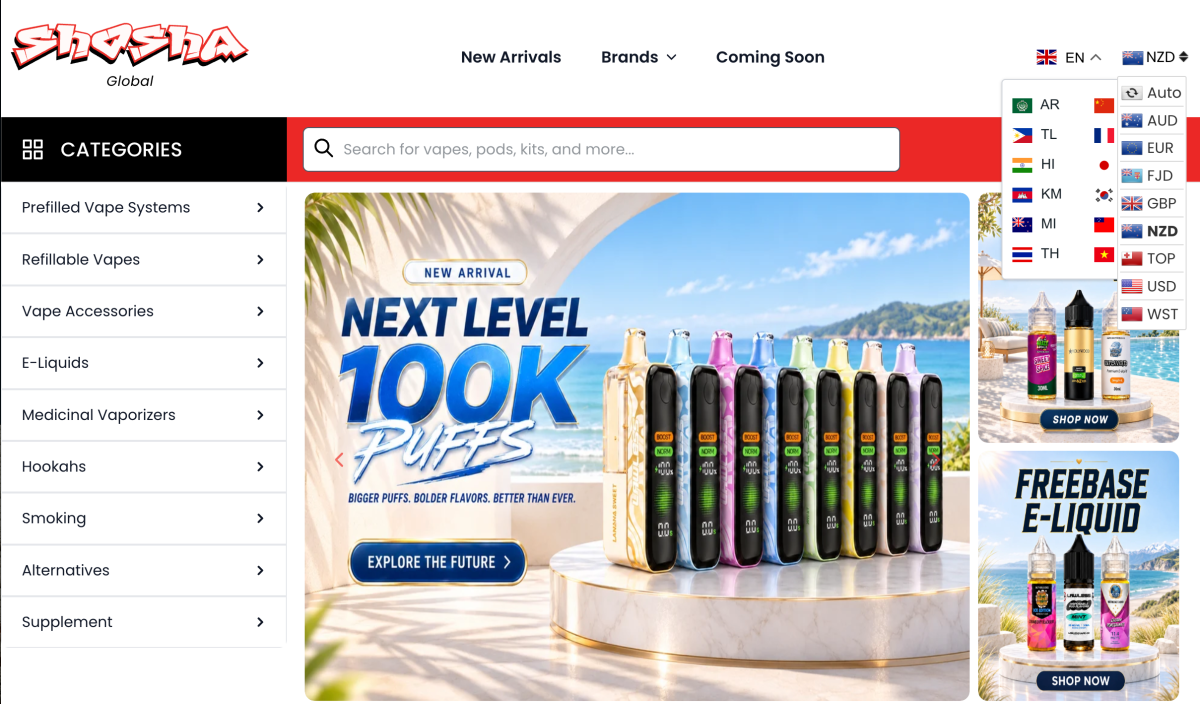
New Zealand's Largest Vape Retailer Shosha Faces Advertising Probe Over Offshore Website and Local Fulfilment
New Zealand's Ministry of Health is reviewing its previous assessment of Shosha Global, an international website associated with vape retailer Shosha, after researchers found that the site displayed vaping products while fulfilling orders to New Zealand addresses. Radio New Zealand reported on November 13 that test purchases arrived within three days and shipping documents showed dispatch from Auckland. The researchers also found a store-stock tool listing only New Zealand locations and social media posts carrying local warning labels and cultural references. Shosha, which operates more than 125 stores in New Zealand, says Shosha Global serves overseas customers through an international partnership established in July 2025. No final regulatory finding against the website has been announced.
Regulations
Nov.17
Why Does JPMorgan Favor BAT Over Philip Morris Despite Forecasting Slower Growth of 3.9% Versus 6.2%?
JPMorgan resumed equity research coverage of British American Tobacco (BAT), Philip Morris International (PMI) and Imperial Brands in November 2026, assigning BAT an Overweight rating and the other two companies Neutral ratings. The bank forecasts like-for-like sales growth of 3.9% for BAT and 6.2% for PMI in 2027, but estimates the two companies will trade at approximately 11 times and 21 times 2027 earnings, respectively. JPMorgan cited BAT's improving position in US nicotine pouches and vaping products as a driver of its investment outlook. BAT reported a 220% constant-currency increase in US modern oral nicotine revenue in the first half of 2026, while PMI's ZYN US shipments returned to growth in the third quarter. Imperial expects NGPs to represent 4% to 5% of sales and has expanded its oral portfolio through acquisitions.
Capital Markets
Nov.12
Ukraine Raises Excise Stamp Fees for Tobacco, Heated Tobacco and Vape Liquids by 30.5% as Parliament Backs E-Excise Delay to 2027
Ukraine's Cabinet of Ministers adopted Resolution No. 1259 on October 15, 2026, increasing excise stamp production fees for tobacco products and e-cigarette liquids by approximately 30.5%, from UAH 0.1643 to UAH 0.2144 per stamp. Fees for alcoholic beverages rose by about 30.2%. Separately, Ukraine's parliament passed Bill No. 15532 on October 13, proposing to postpone the full implementation of electronic excise stamps and traceability for alcohol, tobacco and e-cigarette liquids from November 1, 2026, to July 1, 2027. Parliament cited additional testing, configuration and integration requirements. The bill was sent to the president for signature on October 19.
Regulations
Oct.21