Philippines to Implement Graphic Health Warnings on E-cigarettes, Violators Face up to 6 Years in Prison

Regulations by 2FIRSTS.ai
Apr.25.2024
Philippines to Implement Graphic Health Warnings on E-cigarettes, Violators Face up to 6 Years in Prison
Philippines to require graphic health warnings on e-cigarettes and vaping products starting May 2024, with hefty fines for non-compliance.

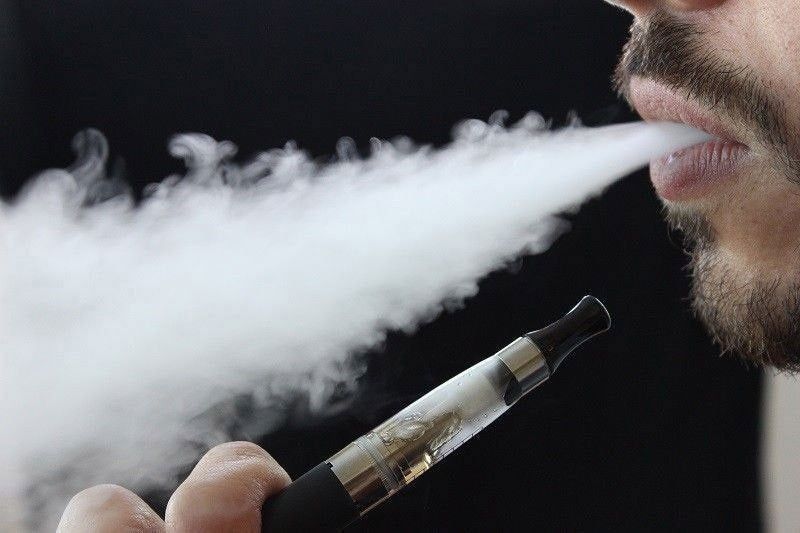
According to a report by Philippine media outlet Philstar on April 25th, the Department of Health in the Philippines has announced that e-cigarettes or vaping products in the Philippines market will soon be required to display graphic health warnings, similar to tobacco products.


The Ministry of Health has released the first set of graphic health warning templates (GHW) for use with nicotine aerosols, tobacco products without nicotine, and new tobacco products.


The Ministry of Health announced in a bulletin, "This new set of graphic and text health warning templates will come into full effect on May 12, 2024."


Manufacturers, importers, distributors, and retailers of vaporized nicotine, nicotine-free, and new tobacco products who fail to comply with the graphic health warnings will face fines ranging from 2 million (34,591 USD) to 5 million (86,478 USD) Philippine pesos. The Department of Health stated that violators may also face up to six years in prison and have their licenses revoked. Without proper graphic health warnings, the Bureau of Internal Revenue may also prohibit or seize vaporized nicotine and non-nicotine products. Foreign violators will also be deported for non-compliance with graphic health warning requirements.


The Health Department is urging the public to report any violations of the regulations on health warning requirements directly to the Ministry of Trade and Commerce.


We welcome news tips, article submissions, interview requests, or comments on this piece.

Please contact us at info@2firsts.com, or reach out to Alan Zhao, CEO of 2Firsts, on LinkedIn


Notice

1.  This article is intended solely for professional research purposes related to industry, technology, and policy. Any references to brands or products are made purely for objective description and do not constitute any form of endorsement, recommendation, or promotion by 2Firsts.

2.  The use of nicotine-containing products — including, but not limited to, cigarettes, e-cigarettes, nicotine pouchand heated tobacco products — carries significant health risks. Users are responsible for complying with all applicable laws and regulations in their respective jurisdictions.

3.  This article is not intended to serve as the basis for any investment decisions or financial advice. 2Firsts assumes no direct or indirect liability for any inaccuracies or errors in the content.

4.  Access to this article is strictly prohibited for individuals below the legal age in their jurisdiction.


Copyright


This article is either an original work created by 2Firsts or a reproduction from third-party sources with proper attribution. All copyrights and usage rights belong to 2Firsts or the original content provider. Unauthorized reproduction, distribution, or any other form of unauthorized use by any individual or organization is strictly prohibited. Violators will be held legally accountable.

For copyright-related inquiries, please contact: info@2firsts.com


AI Assistance Disclaimer


This article may have been enhanced using AI tools to improve translation and editorial efficiency. However, due to technical limitations, inaccuracies may occur. Readers are encouraged to refer to the cited sources for the most accurate information.

We welcome any corrections or feedback. Please contact us at: info@2firsts.com

South Korea’s National Assembly Passes Law Classifying E-Cigarettes as Tobacco Products with Full Equivalent Regulation
South Korea’s National Assembly recently passed a comprehensive package of 79 bills that, among other measures, formally classifies liquid vapes — e-cigarette products using nicotine-containing e-liquids — as tobacco products. These products will now be subject to the same taxation, sales restrictions and advertising controls as traditional cigarettes, and the vaping industry in South Korea is expected to face significant adjustments in compliance costs, market access and business strategy.
Dec.03
China Opens 2026 National E-Cigarette Standards Project for Public Submissions
The State Administration for Market Regulation (SAMR) and the State Tobacco Monopoly Administration (STMA) jointly announced the launch of the 2026 National Standardization Project for E-cigarettes. The initiative, coordinated by the National Technical Committee on Standardization of E-cigarettes, aims to enhance the industry’s regulatory framework through new standards on manufacturing, storage, distribution, and evaluation.
Nov.27 by 2FIRSTS.ai
$200 Million Investment to Advance Smokeless Product Manufacturing at Reynolds
Reynolds American Inc. announced it will create 200 new manufacturing positions in 2026 at its Tobaccoville, North Carolina, Operations Center, bringing total new roles added over the past two years to more than 1,000. The company added 800 jobs between 2024 and 2025. These roles will support the continued growth of Velo Plus nicotine pouches and Reynolds’ expanding multi-category portfolio, aligned with its mission to build a smokeless world.
Dec.11 by 2FIRSTS.ai
South Korea’s Parliament Reconsiders Bill to Regulate Synthetic Nicotine as Tobacco
South Korea’s National Assembly is once again reviewing a bill to classify synthetic nicotine as a tobacco product under the Tobacco Business Act. The proposal aims to close regulatory loopholes that allow untaxed, unregulated nicotine liquids — often used by minors — to circulate freely. Lawmakers expect the bill to pass during the current session amid growing public and civic pressure.
Nov.26 by 2FIRSTS.ai
U.S. vape firms appeal Mississippi synthetic-nicotine ban, citing FDA authority preemption
A coalition of U.S. vape industry groups has appealed a Mississippi law banning the sale of e-cigarette products containing synthetic nicotine, arguing the statute effectively conditions sales on FDA authorization and unlawfully encroaches on federal regulatory authority. The law took effect in July 2025 and has already begun to be enforced.
Dec.17 by 2FIRSTS.ai
Russia’s Public Chamber official opposes “generational ban” on tobacco sales, citing rights concerns
Vladislav Grib, deputy secretary of the Public Chamber of the Russian Federation, said a “generational ban” on cigarette sales—restricting sales based on year of birth—would not resolve smoking and would instead lead to human rights violations. He argued older cohorts would buy and share, and the approach would split citizens into two categories.
Jan.08 by 2FIRSTS.ai