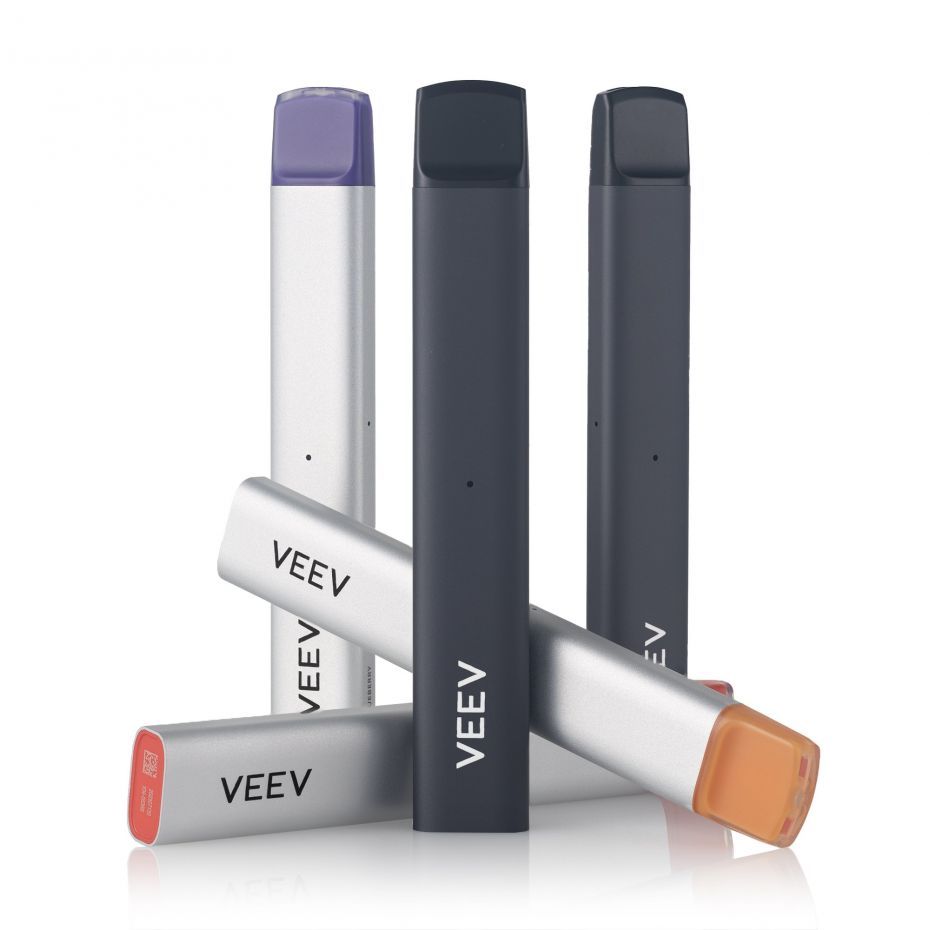
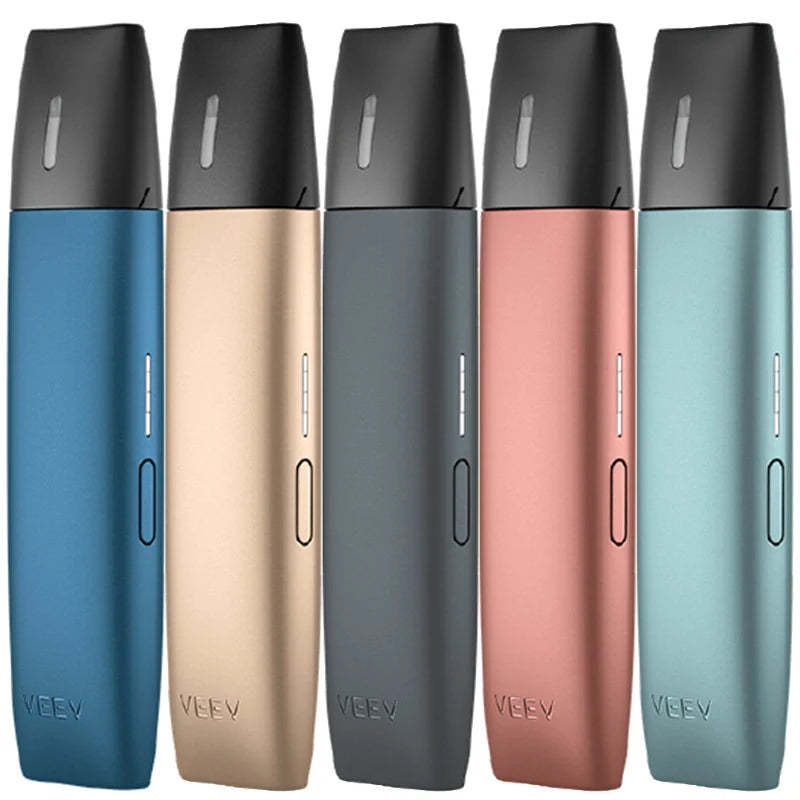
According to the German media Nouvelles, Philip Morris International (PMI) has decided to launch its vape brand VEEV in Germany, thereby competing with major Chinese manufacturers as well as the rival product Vuse from British American Tobacco (BAT). Although PMI had already included e-cigarettes in its product line several years ago and sold them in other countries such as Poland, the Czech Republic, and Greece, it had never sold e-cigarettes in Germany.
PMI's Chief Spokesperson, Torsten Albig, stated in a media interview, "We have made extensive and intensive efforts at the government level to ban the sale of disposable e-cigarettes, but to no avail. Therefore, we have decided to enter this market as well."
Among teenagers and young people, disposable e-cigarettes are particularly popular. However, the German Federal Ministry of Food and Agriculture appears to be considering banning the use of mint as an ingredient in e-cigarettes in order to reduce the possibility of e-cigarettes gaining market share. However, policymakers in other European countries have responded more uniformly to this issue. For example, countries like France and Belgium will ban the sale of disposable e-cigarettes starting next year.
PMI is planning to launch a rechargeable e-cigarette while also selling disposable products. "But this should only be a test product," Albig explained.
PMI's current sales policy is to offer a free VEEV charging device with the purchase of three disposable e-cigarettes. This promotion is taking place at participating retailers and the company's IQOS stores. Altria announced that VEEV will be introduced in stores located in major cities that previously only sold heated tobacco products.
However, he also admitted that the introduction of e-cigarettes is not just a response to policy loopholes.
He pointed out:
If we want to achieve our global goals as a group and have over two-thirds of our net revenue contributed by tobacco alternatives by 2030, we cannot afford to leave the German market.
In this country, PMI and its IQOS heated tobacco products only occupy a market share of 6%, slightly higher in major cities at just over 10%. Meanwhile, their Marlboro cigarettes hold a 25% market share.
PMI hopes to attract smokers with the e-cigarette VEEV and provide competitive pricing: the disposable version will be sold for 7.90 euros, while two refill pods for the reusable system will be priced at 8.90 euros.
Although competitors' disposable e-cigarettes are generally priced at ten euros or higher, PMI has decided to challenge their position. Alberg remains calm about the ban on using mint or flavorings in e-cigarettes. He said, "If that's how it is, then so be it. Our products are not meant to attract young people, but to satisfy cigarette smokers who are already accustomed to the taste of tobacco.
The World Health Organization has clearly stated that alternative tobacco products are not healthier than traditional tobacco. At the same time, scientists who receive funding from the tobacco industry for research are often suspected of lobbying for the tobacco industry.
We welcome news tips, article submissions, interview requests, or comments on this piece.
Please contact us at info@2firsts.com, or reach out to Alan Zhao, CEO of 2Firsts, on LinkedIn
Notice
1. This article is intended solely for professional research purposes related to industry, technology, and policy. Any references to brands or products are made purely for objective description and do not constitute any form of endorsement, recommendation, or promotion by 2Firsts.
2. The use of nicotine-containing products — including, but not limited to, cigarettes, e-cigarettes, nicotine pouchand heated tobacco products — carries significant health risks. Users are responsible for complying with all applicable laws and regulations in their respective jurisdictions.
3. This article is not intended to serve as the basis for any investment decisions or financial advice. 2Firsts assumes no direct or indirect liability for any inaccuracies or errors in the content.
4. Access to this article is strictly prohibited for individuals below the legal age in their jurisdiction.
Copyright
This article is either an original work created by 2Firsts or a reproduction from third-party sources with proper attribution. All copyrights and usage rights belong to 2Firsts or the original content provider. Unauthorized reproduction, distribution, or any other form of unauthorized use by any individual or organization is strictly prohibited. Violators will be held legally accountable.
For copyright-related inquiries, please contact: info@2firsts.com
AI Assistance Disclaimer
This article may have been enhanced using AI tools to improve translation and editorial efficiency. However, due to technical limitations, inaccuracies may occur. Readers are encouraged to refer to the cited sources for the most accurate information.
We welcome any corrections or feedback. Please contact us at: info@2firsts.com