US Potential Delay on Menthol Cigarettes Ban to 2024

Regulations by 2FIRSTS.ai
Dec.04.2023
US Potential Delay on Menthol Cigarettes Ban to 2024
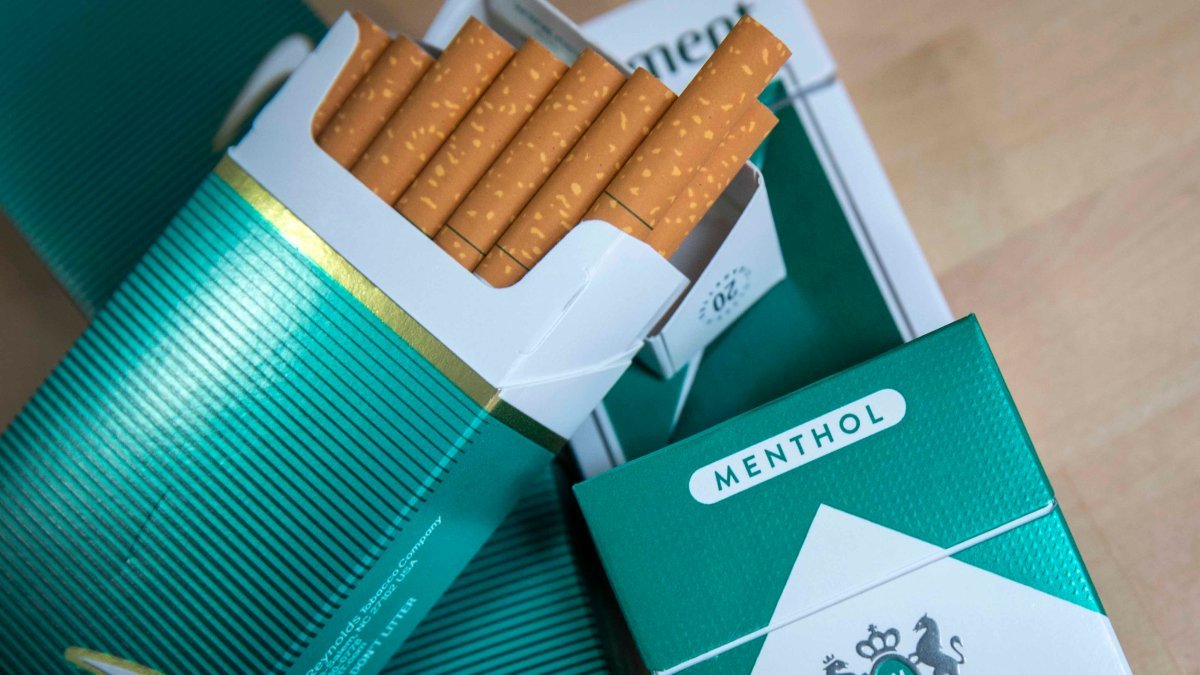
The long-awaited ban on menthol cigarettes may be delayed until 2024, according to anonymous officials from public health organizations.

According to a report by NBC News, officials from two national public health organizations dedicated to removing menthol cigarettes from the market have expressed that the long-awaited menthol cigarette ban may not be announced by the end of this year, but instead, it could be delayed until 2024.


These two officials requested anonymity to discuss this decision before any official announcement from the Biden administration. They hinted that this delay could be announced as early as next week.


Officials from the public health organization express concerns that the ban may be postponed until next year, or even delayed until after the November presidential elections.


One official expressed deep concerns, stating that the ban may not be implemented before the 2024 elections.


This official stated, "In election years, everything becomes more challenging as people are more prone to distractions."


The White House declined to comment.


We welcome news tips, article submissions, interview requests, or comments on this piece.

Please contact us at info@2firsts.com, or reach out to Alan Zhao, CEO of 2Firsts, on LinkedIn


Notice

1.  This article is intended solely for professional research purposes related to industry, technology, and policy. Any references to brands or products are made purely for objective description and do not constitute any form of endorsement, recommendation, or promotion by 2Firsts.

2.  The use of nicotine-containing products — including, but not limited to, cigarettes, e-cigarettes, nicotine pouchand heated tobacco products — carries significant health risks. Users are responsible for complying with all applicable laws and regulations in their respective jurisdictions.

3.  This article is not intended to serve as the basis for any investment decisions or financial advice. 2Firsts assumes no direct or indirect liability for any inaccuracies or errors in the content.

4.  Access to this article is strictly prohibited for individuals below the legal age in their jurisdiction.


Copyright


This article is either an original work created by 2Firsts or a reproduction from third-party sources with proper attribution. All copyrights and usage rights belong to 2Firsts or the original content provider. Unauthorized reproduction, distribution, or any other form of unauthorized use by any individual or organization is strictly prohibited. Violators will be held legally accountable.

For copyright-related inquiries, please contact: info@2firsts.com


AI Assistance Disclaimer


This article may have been enhanced using AI tools to improve translation and editorial efficiency. However, due to technical limitations, inaccuracies may occur. Readers are encouraged to refer to the cited sources for the most accurate information.

We welcome any corrections or feedback. Please contact us at: info@2firsts.com

F1 Faces Renewed Pressure Over Tobacco and Nicotine Sponsorships as 67 Groups Target ZYN and VELO Ahead of Madrid Race
Ahead of the Formula 1 race in Madrid, 67 Spanish and international public-health, medical and consumer organizations have sent an open letter to F1 President and CEO Stefano Domenicali calling for an end to sponsorships linked to the tobacco and nicotine industry, including nicotine pouches, vaping products and heated tobacco. The letter focuses on Philip Morris International’s ZYN partnership with Ferrari and British American Tobacco’s long-running partnership with McLaren and exposure for VELO. The campaign follows a March letter in which more than 160 organizations worldwide made a similar request to Formula 1.
Sep.10
Russian Strikes Destroy JTI and Imperial Brands Ukraine Warehouses, With Losses Reaching Tens of Millions of Hryvnias
According to Ukrainska Pravda, Russian strikes on the Kyiv region during the night of Aug. 4-5, 2026, damaged warehouses storing products of Japan Tobacco International (JTI) and Imperial Brands Ukraine. JTI said a finished goods warehouse in Kyiv Oblast was destroyed, with no employees injured, and that it did not expect disruptions to retail supplies. Imperial Brands Ukraine said products stored at warehouses of distributors and retail partners were affected and estimated losses from the strikes at “tens of millions of Ukrainian hryvnias” (roughly hundreds of thousands of U.S. dollars).
JTI
Aug.07
Product | KT&G Brings LOOP Nicotine Pouches to South Africa, Supporting ASF’s Expansion Across Africa
KT&G has introduced nicotine pouch brand LOOP in South Africa, expanding its modern oral nicotine portfolio. Developed by Swedish company Another Snus Factory (ASF), LOOP is a tobacco-free nicotine pouch brand. KT&G and U.S. tobacco company Altria previously participated in ASF’s strategic development, and the South Africa launch represents a further step in LOOP’s international expansion.
Aug.06
FDA Unifies Tobacco Registration and Product Listing Form Across Product Categories
The U.S. FDA has consolidated two tobacco establishment registration and product listing forms into a redesigned Form FDA 3741 covering all regulated product categories, including e-cigarettes, heated tobacco products and nicotine pouches. The current requirements remain limited to domestic establishments. Separately, the FDA has proposed extending registration and product listing requirements to foreign manufacturers, signaling greater regulatory attention to manufacturing entities and product-level information across the tobacco and nicotine supply chain.
FDA
Sep.30
Germany Probes 7.6 Million Illegal Vape Case With Estimated €33.3 Million Tax Loss; Four Chinese Manufacturer Employees Under Investigation, Some Packaging in Enforcement Images Resembles FUMOT Products
German prosecutors and customs authorities are conducting a criminal investigation into an alleged cross-border organised vape network. Authorities say that between January 2024 and March 2025, four employees of an unnamed Chinese e-cigarette manufacturer allegedly built a network of sales agents and wholesalers that brought more than 7.6 million nicotine disposable vapes into Germany, causing an estimated €33.3 million in excise-tax losses. The manufacturer has not been named. Some products visible in enforcement images have packaging resembling products from FUMOT’s portfolio. European regulatory records from 2024, FUMOT’s public overseas-sales materials and records involving German vape importer and distribution company Zamu-Pro GmbH also show FUMOT/RandM products and German distribution activity during the period covered by the investigation.
Sep.21
Malaysia Police Seize RM12.7 Million in Illegal Vapes and Cigarettes as Probe Points to Sea Shipments From China
Police in Malaysia’s Selangor state seized illegal vape products and contraband cigarettes worth about RM12.7 million (approximately $3 million) in two enforcement operations. According to New Straits Times and The Star, the vape-related operation uncovered 131,036 boxes of vape products, 4,900 bottles of e-liquid and 25,510 vape devices, valued at about RM9.4 million. Police said preliminary investigations indicated that some illegal vape products entered Malaysia through sea shipments from China before moving through storage and distribution networks.
Aug.10