Protest Letter Urges Closure of E-Cigarette Store in Otani

Regulations by 2FIRSTS.ai
Dec.19.2023
Protest Letter Urges Closure of E-Cigarette Store in Otani
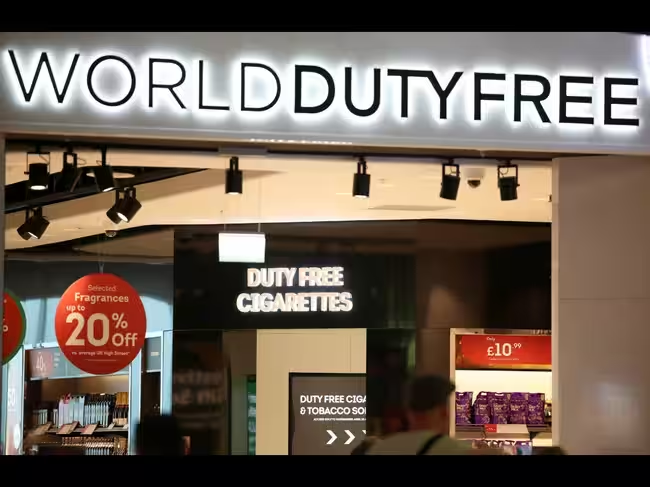
Residents of Otane, New Zealand, have submitted a protest against the establishment of an e-cigarette store in their town.

According to a report by nzherald, Kerry Low, a resident of Otani in New Zealand, has submitted a letter of protest to the Mayor of Whakatane, Alex Walker, opposing the establishment of an e-cigarette store in Otani. The Otani community has taken steps to prevent the sale of e-cigarette products in their town.


The Otani Community in the San Hu Ke Bay Area received a petition signed by 502 individuals opposing the establishment of an e-cigarette shop in the town and calling for its closure. Otani resident Kerry Low, after seeking advice, handed over the petition to the mayor, expressing concerns about the sale of e-cigarette products in town and their impact on the local youth.


Mayor Alex Walker stated that the local council has made decisions regarding the sale and supply of alcohol after consulting with the community, but they do not have the authority to regulate the sale of e-cigarette products in the same manner. However, they do have a legal obligation to promote community well-being and have the capability to provide valuable local context and knowledge.


We welcome news tips, article submissions, interview requests, or comments on this piece.

Please contact us at info@2firsts.com, or reach out to Alan Zhao, CEO of 2Firsts, on LinkedIn


Notice

1.  This article is intended solely for professional research purposes related to industry, technology, and policy. Any references to brands or products are made purely for objective description and do not constitute any form of endorsement, recommendation, or promotion by 2Firsts.

2.  The use of nicotine-containing products — including, but not limited to, cigarettes, e-cigarettes, nicotine pouchand heated tobacco products — carries significant health risks. Users are responsible for complying with all applicable laws and regulations in their respective jurisdictions.

3.  This article is not intended to serve as the basis for any investment decisions or financial advice. 2Firsts assumes no direct or indirect liability for any inaccuracies or errors in the content.

4.  Access to this article is strictly prohibited for individuals below the legal age in their jurisdiction.


Copyright


This article is either an original work created by 2Firsts or a reproduction from third-party sources with proper attribution. All copyrights and usage rights belong to 2Firsts or the original content provider. Unauthorized reproduction, distribution, or any other form of unauthorized use by any individual or organization is strictly prohibited. Violators will be held legally accountable.

For copyright-related inquiries, please contact: info@2firsts.com


AI Assistance Disclaimer


This article may have been enhanced using AI tools to improve translation and editorial efficiency. However, due to technical limitations, inaccuracies may occur. Readers are encouraged to refer to the cited sources for the most accurate information.

We welcome any corrections or feedback. Please contact us at: info@2firsts.com

Canada Faces Growing Debate as Youth Nicotine Pouch Use Reaches 34.8%
New Canadian research shows that 34.8% of people aged 17 to 27 have tried nicotine pouches, up more than fourfold from 7.6% in 2022. The findings come as Conservative politicians, Alberta’s government and the tobacco industry push Ottawa to relax current restrictions on pouch sales.
Jun.12
2Firsts Hosts U.S. Compliance Briefing on Building PMTA Support Capabilities Across the Nicotine Supply Chain
2Firsts held a U.S. compliance briefing in Shenzhen to help vaping, heated tobacco and nicotine pouch supply chain companies strengthen PMTA support capabilities. The event focused on supplier documentation, quality systems, traceability, TPMF/TPMP pathways, age verification and customer audit readiness as U.S. compliance expectations increasingly extend deeper into the nicotine supply chain.
Events
Jun.12
Turning Point Brands Reports Q1 2026 Net Sales of $124.3 Million as Modern Oral Net Sales Rise 133%
Turning Point Brands reported first-quarter 2026 results on May 7, covering the period ended March 31, 2026. Total consolidated net sales were $124.3 million, up 16.8% year on year. Gross profit was $68.3 million, up 14.6%, while net income fell 19.0% to $11.7 million. Adjusted EBITDA declined 6.5% to $25.9 million.
May.08 by 2FIRSTS.ai
 Arizona Rules Extend Across Alternative Nicotine Supply Chain, With Licensing From 2028
Arizona Rules Extend Across Alternative Nicotine Supply Chain, With Licensing From 2028
Arizona Governor Katie Hobbs has signed HB 4001, bringing alternative nicotine products under a new state regulatory framework that will require maker and distributor licensing from 2028 and ban packaging designs that could appeal to minors.
Regulations
Jun.23
Sweden Becomes First EU Country to Reach Smoke-Free Status as Daily Smoking Falls to 4.8%
According to the latest CAN report and multiple media reports, Sweden’s daily smoking rate fell to 4.8% in 2025, below the commonly used 5% smoke-free threshold, making it the first EU country to reach that benchmark.
News
Jun.05
Nicotine Beyond Tobacco? Cell Study Signals Emerging Shift in Production Systems
Researchers at the Chinese Academy of Sciences reconstructed nicotine biosynthesis in non-tobacco plants and yeast systems, highlighting how advances in synthetic biology could gradually reshape future nicotine production technologies and challenge regulatory frameworks built around tobacco-derived definitions.
Special Report
May.07