Rising Concerns Over Child E-Cigarette Use in Buckinghamshire

Aug.06.2024
Rising Concerns Over Child E-Cigarette Use in Buckinghamshire
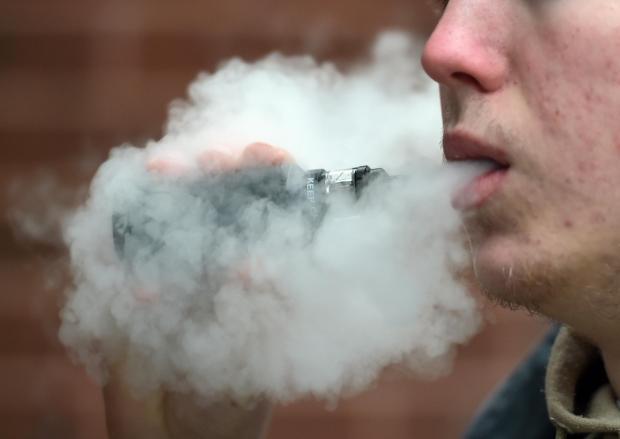
The number of children in Buckinghamshire using e-cigarettes is on the rise, raising concerns among health officials.

According to a report by Bucks Herald on August 5th, the number of children in Buckinghamshire, UK using e-cigarettes is showing a concerning increase.


The Buckinghamshire Tobacco Control Alliance stated that the number of children using e-cigarettes and smoking has not seen a "significant" increase in the past few years. However, the number of children using e-cigarettes is still showing a "noticeable upward trend" and the rate of usage is higher than that of tobacco.


The alliance stated in a new report that, "While e-cigarettes should continue to be an option for adult smokers looking to quit, the increasing use of e-cigarettes by children and young people nationwide and in Buckinghamshire is concerning.


According to Action on Smoking and Health, the number of children nationwide using e-cigarettes is on the rise.


According to the survey conducted by the organization, in 2023, 20.5% of individuals aged 11 to 17 had used e-cigarettes, compared to 15.7% the previous year. Despite it being illegal for children under 18 to use e-cigarettes, some children are still able to obtain them from stores, friends, family members, or other adults.


The alliance, including the Buckinghamshire County Council, has called on the government to tighten regulations and enforcement on e-cigarettes, particularly regarding flavoring, packaging, promotions in stores, and the repeated sale of e-cigarettes to children.


We welcome news tips, article submissions, interview requests, or comments on this piece.

Please contact us at info@2firsts.com, or reach out to Alan Zhao, CEO of 2Firsts, on LinkedIn


Notice

1.  This article is intended solely for professional research purposes related to industry, technology, and policy. Any references to brands or products are made purely for objective description and do not constitute any form of endorsement, recommendation, or promotion by 2Firsts.

2.  The use of nicotine-containing products — including, but not limited to, cigarettes, e-cigarettes, nicotine pouchand heated tobacco products — carries significant health risks. Users are responsible for complying with all applicable laws and regulations in their respective jurisdictions.

3.  This article is not intended to serve as the basis for any investment decisions or financial advice. 2Firsts assumes no direct or indirect liability for any inaccuracies or errors in the content.

4.  Access to this article is strictly prohibited for individuals below the legal age in their jurisdiction.


Copyright


This article is either an original work created by 2Firsts or a reproduction from third-party sources with proper attribution. All copyrights and usage rights belong to 2Firsts or the original content provider. Unauthorized reproduction, distribution, or any other form of unauthorized use by any individual or organization is strictly prohibited. Violators will be held legally accountable.

For copyright-related inquiries, please contact: info@2firsts.com


AI Assistance Disclaimer


This article may have been enhanced using AI tools to improve translation and editorial efficiency. However, due to technical limitations, inaccuracies may occur. Readers are encouraged to refer to the cited sources for the most accurate information.

We welcome any corrections or feedback. Please contact us at: info@2firsts.com

Bringing Tax and Insurance Into Nicotine Regulation: Insights From a Tobacco Harm-Reduction Report
A smoke-free nicotine policy report argues that tobacco harm reduction should move beyond product bans and health warnings into tax policy, insurance pricing and risk-based regulation. While some projections remain open to debate, the report highlights a wider challenge: nicotine products, technologies and consumer behavior have changed sharply over the past decade, and regulatory systems may need new tools to better align tobacco control with harm-reduction goals.
Jun.08
Japan’s Heated Tobacco Tax Changes Reshape Consumer Choices, Survey Reveals Impact of Price and Income
A consumer survey by Japanese heated tobacco information platform RELAZO found that rising tobacco prices and planned heated tobacco tax changes may influence smoking decisions among Japanese consumers. The survey covered 49,879 men and women aged 20 to 69 nationwide. It found that around 40% of respondents cumulatively indicated they may consider quitting when a pack reaches ¥600 (approximately US$4.1), while nearly 90% expressed potential quitting intentions at a ¥1,000 (approximately US$6.8) price level. The survey also found significant differences by income level, with lower-income respondents showing greater sensitivity to price increases.
Jul.24
South Korea’s New Vape Rules Raise Bar for E-Liquid Makers and China-Linked Supply Chains, Expert Says
South Korea’s new vape regulations are reshaping the e-liquid market, raising compliance requirements for manufacturers, retailers and overseas suppliers. In an interview with 2Firsts, Korean nicotine products specialist Sam Kim discusses licensing barriers, inventory impacts, China-linked supply chains, and emerging regulatory challenges around nicotine analogues, nicotine-free products and DIY mixing. The Korean case may offer broader insights as governments worldwide adapt to rapidly evolving nicotine products.
Jul.16
Former FDA Scientist Questions ZYN Review Over Pouch Material and Microplastic Risk
A former FDA toxicologist has questioned whether the agency fully assessed the material used in ZYN nicotine pouches before authorizing them for sale, raising concerns over possible microplastic exposure, according to STAT and The Examination.
Jul.16
Seita’s Julia Neumaier Says France Should Target Vape Access, Not Plain Packaging
Julia Neumaier, general manager of Seita, Imperial Brands’ French subsidiary, said France should focus vaping regulation on access control, age verification, online sales and distribution channels, rather than applying tobacco-style plain packaging to vaping products.
Jul.15
BofA Upgrades Imperial Brands, Says Market Overreacted to Australia Slump
Bank of America upgraded Imperial Brands to “buy” from “neutral,” saying investors have overreacted to the tobacco group’s Australian business downturn and that the share-price pullback has created a more attractive entry point.
Jul.16