Rising Incidents of E-Cigarette Explosions Cause Severe Burns in the US

Regulations by 2FIRSTS.ai
Jan.19.2024
Rising Incidents of E-Cigarette Explosions Cause Severe Burns in the US
Over 2000 incidents of e-cigarette explosions causing burns occurred in the US from 2015 to 2017, according to Nexstar.

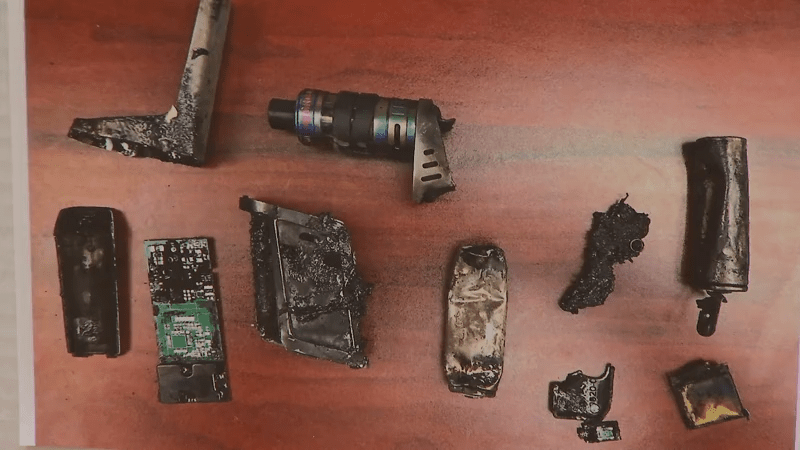
According to a report by American media Nexstar on January 18th, Kara Jude, the burn prevention coordinator at Clark Burn Center, highlighted that between 2015 and 2017, there were over 2000 incidents of burn injuries caused by e-cigarette explosions in the United States.


According to the Clark Burn Center, similar incidents occur three to four times per month. These explosions can result in third-degree burns on the hands, thighs, buttocks, and other areas of the body, requiring long-term treatment.


Carla Jude calls on parents to pay attention to educating children and refrain from using damaged e-cigarettes and cheap chargers, in order to reduce safety risks.


We welcome news tips, article submissions, interview requests, or comments on this piece.

Please contact us at info@2firsts.com, or reach out to Alan Zhao, CEO of 2Firsts, on LinkedIn


Notice

1.  This article is intended solely for professional research purposes related to industry, technology, and policy. Any references to brands or products are made purely for objective description and do not constitute any form of endorsement, recommendation, or promotion by 2Firsts.

2.  The use of nicotine-containing products — including, but not limited to, cigarettes, e-cigarettes, nicotine pouchand heated tobacco products — carries significant health risks. Users are responsible for complying with all applicable laws and regulations in their respective jurisdictions.

3.  This article is not intended to serve as the basis for any investment decisions or financial advice. 2Firsts assumes no direct or indirect liability for any inaccuracies or errors in the content.

4.  Access to this article is strictly prohibited for individuals below the legal age in their jurisdiction.


Copyright


This article is either an original work created by 2Firsts or a reproduction from third-party sources with proper attribution. All copyrights and usage rights belong to 2Firsts or the original content provider. Unauthorized reproduction, distribution, or any other form of unauthorized use by any individual or organization is strictly prohibited. Violators will be held legally accountable.

For copyright-related inquiries, please contact: info@2firsts.com


AI Assistance Disclaimer


This article may have been enhanced using AI tools to improve translation and editorial efficiency. However, due to technical limitations, inaccuracies may occur. Readers are encouraged to refer to the cited sources for the most accurate information.

We welcome any corrections or feedback. Please contact us at: info@2firsts.com

2Firsts “Decisive 2026” Concludes: Reviewing the 2025 U.S. Market and Mapping Compliance Pathways Ahead
2Firsts hosted “Decisive 2026” in Shenzhen, bringing together industry perspectives to examine major shifts in the U.S. new tobacco market in 2025 and their global implications. Sessions covered U.S. market dynamics, technical insights from recently PMTA-authorized products, an investor lens on tobacco capital markets, and 2025 news/product highlights. The event underscored a structural shift from “gray business” toward compliance and sustainable growth, expected to become clearer by 2026.
Jan.09
Tennessee’s “Tobacco Product Retail Licensing Act” Would Require New Licenses for Tobacco and Vapes
A newly introduced Tennessee bill, S.B. 2086, would create a statewide tobacco product retail licensing system, move oversight to the Tennessee Alcohol Commission, and impose fees and escalating penalties. The proposal also requires all tobacco product sales to occur as in-person, over-the-counter transactions at licensed locations—effectively banning direct-to-consumer shipping of cigars and potentially restricting curbside or phone-order pickup models.
Jan.28 by 2FIRSTS.ai
China Boton Group Resumes Trading, Soars 55.56% to 52-Week High; Signs Land Acquisition Agreement with Shenzhen Government - Reuters/AP
China Boton Group (HK.3318) resumed trading on December 10, opening at 2.800 HKD and surging 55.56%.
Dec.10 by 2FIRSTS.ai
UK government letter agrees nicotine pouches are lower risk than smoking and a harm reduction tool
In correspondence with 20isPlenty campaigners, the government agreed nicotine pouches are likely to pose lower health risks than smoking and confirmed they are a harm reduction tool, while warning about their high nicotine content, fast absorption and potential to be flavoured.
Jan.06 by 2FIRSTS.ai
Interpreting FDA’s on! PLUS Authorization: What the Agency’s Press Release Reveals About Its Nicotine Pouch Review Model
The U.S. Food and Drug Administration has confirmed that six on! PLUS nicotine pouch products have received Marketing Granted Orders (MGO) through the PMTA pathway. The authorizations were completed under the agency’s nicotine pouch review pilot program in “record time,” with the FDA citing lower levels of harmful constituents while stressing that the decision applies only to the specified products and does not mean they are safe or FDA approved.
Regulations
Dec.20
Russian Region Targets Youth Vaping and Night Alcohol Sales
The Speaker of the Legislative Assembly of Russia’s Nizhny Novgorod Region said efforts to curb night-time alcohol sales and the spread of e-cigarettes will continue in 2026. While illegal alcohol trade has largely been eliminated, youth vaping remains a major concern. Regional authorities are seeking federal approval to allow local governments to impose stricter restrictions on vape sales, alongside increased health education initiatives.
Dec.22 by 2FIRSTS.ai