Russian Duma Passes Law Equating E-cigarettes to Nicotine Products.

Dec.13.2024
Russian Duma Passes Law Equating E-cigarettes to Nicotine Products.
Russian State Duma passes law equating nicotine-free products to nicotine-containing ones, tightening regulations on heated tobacco mixtures.

According to a report by Duma TV on December 12th, the Russian State Duma has passed a law in its second and third readings equating smokeless products with nicotine-containing products.


The document has been revised to amend the "Law on Protecting Citizens' Health from the Harmful Effects of Environmental Tobacco Smoke, Tobacco Consumption, or Nicotine Product Consumption," advocating for all non-tobacco heating mixtures to be classified as nicotine products.


In addition, the retail sale of smokeless heating mixtures containing nicotine levels exceeding 3.5% is prohibited.


We welcome news tips, article submissions, interview requests, or comments on this piece.

Please contact us at info@2firsts.com, or reach out to Alan Zhao, CEO of 2Firsts, on LinkedIn


Notice

1.  This article is intended solely for professional research purposes related to industry, technology, and policy. Any references to brands or products are made purely for objective description and do not constitute any form of endorsement, recommendation, or promotion by 2Firsts.

2.  The use of nicotine-containing products — including, but not limited to, cigarettes, e-cigarettes, nicotine pouchand heated tobacco products — carries significant health risks. Users are responsible for complying with all applicable laws and regulations in their respective jurisdictions.

3.  This article is not intended to serve as the basis for any investment decisions or financial advice. 2Firsts assumes no direct or indirect liability for any inaccuracies or errors in the content.

4.  Access to this article is strictly prohibited for individuals below the legal age in their jurisdiction.


Copyright


This article is either an original work created by 2Firsts or a reproduction from third-party sources with proper attribution. All copyrights and usage rights belong to 2Firsts or the original content provider. Unauthorized reproduction, distribution, or any other form of unauthorized use by any individual or organization is strictly prohibited. Violators will be held legally accountable.

For copyright-related inquiries, please contact: info@2firsts.com


AI Assistance Disclaimer


This article may have been enhanced using AI tools to improve translation and editorial efficiency. However, due to technical limitations, inaccuracies may occur. Readers are encouraged to refer to the cited sources for the most accurate information.

We welcome any corrections or feedback. Please contact us at: info@2firsts.com

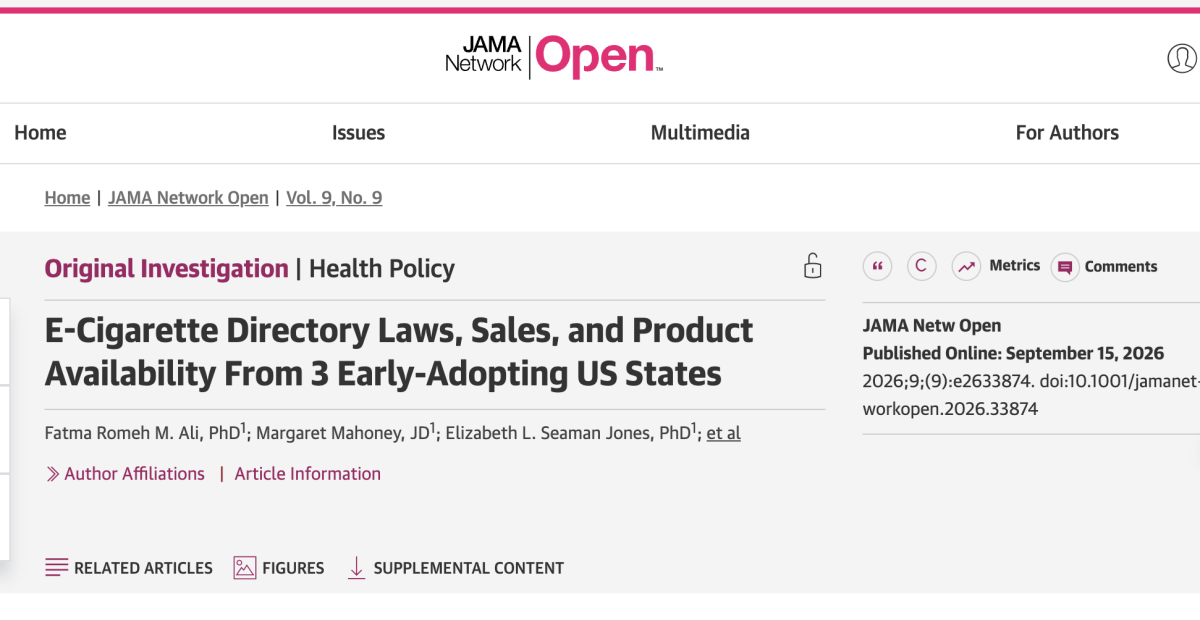
JAMA Study: U.S. Vape Directories Fail to Sustainably Curb Unlisted Sales as Product Shifts May Redistribute Brand Share 2Firsts Recommended
A study by CDC Foundation researchers found no sustained decline in e-cigarette sales across Alabama, Oklahoma and Louisiana, the first three U.S. states to implement e-cigarette directory laws. Louisiana initially saw a significant sales decline, followed by a rebound and a persistent reduction in product availability. Sales also shifted from nontobacco-flavored disposables toward prefilled cartridges, with Vuse Alto driving much of the increase in menthol cartridges. By April 2025, unlisted products still accounted for more than half of e-cigarette nicotine sales in all three states.
Sep.18
German Customs Seize 115,800 Vapes in €1.4 Million Tax Case
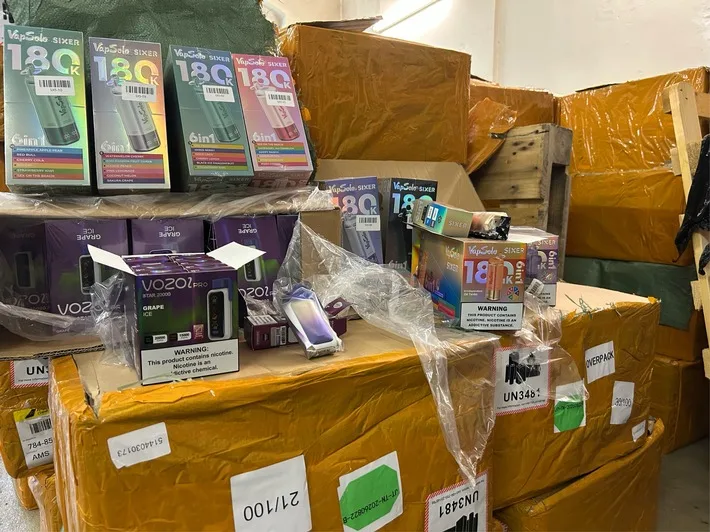
Germany's Magdeburg Main Customs Office seized 115,800 untaxed e-cigarettes containing a combined 4.366 million mL of e-liquid during four truck inspections between August 10 and September 4, 2026. The seizures prevented an estimated €1.397 million in tax losses and set a record for the customs office's jurisdiction. Criminal proceedings have been initiated against four truck drivers. The case follows a separate German investigation involving more than 7.6 million illicit vapes and an estimated €33.3 million in excise-tax losses.
Enforcement
Oct.13
Ukraine Raises Excise Stamp Fees for Tobacco, Heated Tobacco and Vape Liquids by 30.5% as Parliament Backs E-Excise Delay to 2027
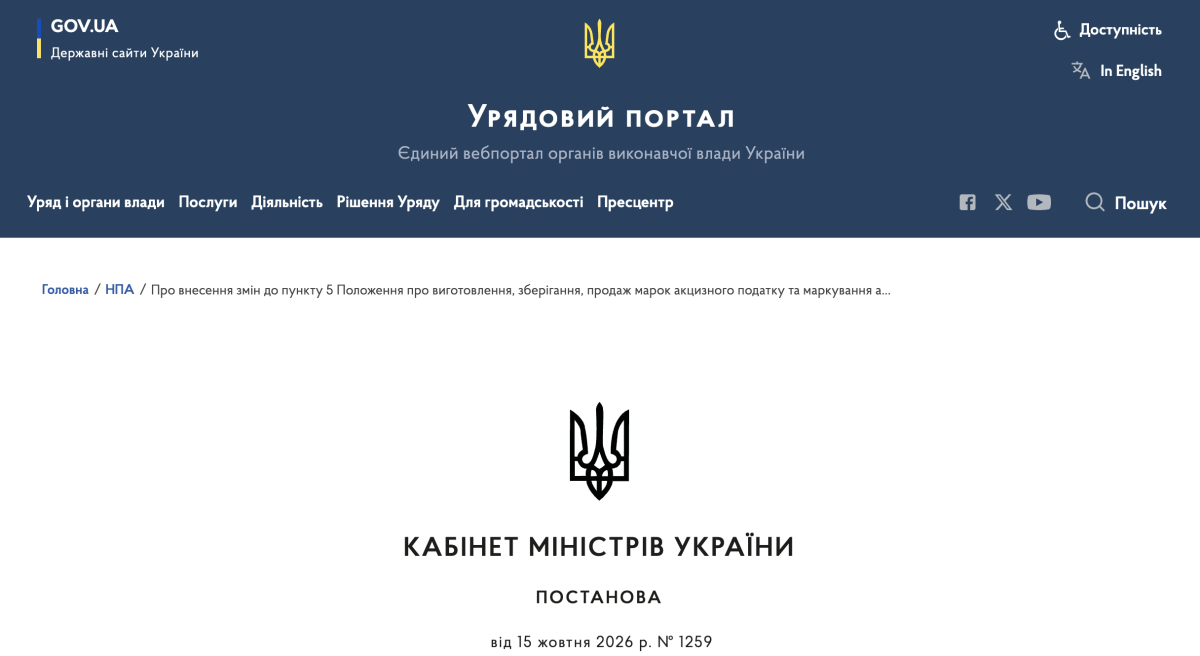
Ukraine's Cabinet of Ministers adopted Resolution No. 1259 on October 15, 2026, increasing excise stamp production fees for tobacco products and e-cigarette liquids by approximately 30.5%, from UAH 0.1643 to UAH 0.2144 per stamp. Fees for alcoholic beverages rose by about 30.2%. Separately, Ukraine's parliament passed Bill No. 15532 on October 13, proposing to postpone the full implementation of electronic excise stamps and traceability for alcohol, tobacco and e-cigarette liquids from November 1, 2026, to July 1, 2027. Parliament cited additional testing, configuration and integration requirements. The bill was sent to the president for signature on October 19.
Regulations
Oct.21
Special Report | Vape bans and tougher rules: the South Caucasus takes different paths
Azerbaijan's sweeping e-cigarette ban has raised concerns over enforcement errors and the emergence of illicit sales, while neighboring Armenia is tightening technical rules and preparing higher excise taxes. Georgia, meanwhile, has resisted calls for broader vape restrictions and introduced preferential taxes for some domestically produced cigarettes. The divergent approaches across the South Caucasus highlight a regional policy dilemma: how to curb nicotine use and protect public health without encouraging black markets or creating unintended economic consequences for businesses and consumers.
Nov.03
South Korea Imports 12,126 Kg of Nicotine Analogues From April to August After Bringing Synthetic Nicotine Under Tobacco Law
South Korea's liquid-vape market is showing changes across raw-material imports, product types and sales channels after synthetic nicotine came under the Tobacco Business Act on April 24. Customs data show nicotine-analogue imports totaled 12,126 kilograms from April through August, while synthetic-nicotine imports over the same five months totaled 231,663 kilograms, just 39.3% of the amount imported in March alone. Physical liquid-vape stores tracked in Seoul and Gyeonggi Province fell 9.9%, unmanned outlets edged higher and online sales listings increased from 27,774 to 42,437. Government testing of 105 liquid inhalation products promoted as nicotine-free separately found nicotine in 13 and 6-methylnicotine in 12.
Sep.22
South Korea's Tobacco Plan Excludes 6-Methyl Nicotine as Customs Tightens Import Controls and Analog Liquid Imports Fall 83%
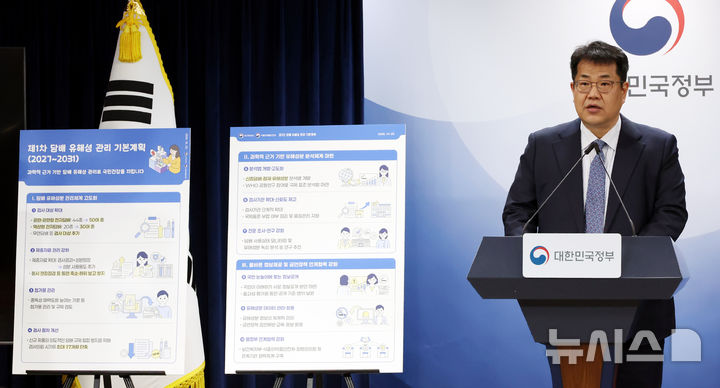
South Korea's government unveiled its first Tobacco Harm Management Basic Plan for 2027–2031 on October 29, 2026, proposing broader testing of vaping and heated tobacco products while excluding nicotine analogs such as 6-methyl nicotine. Synthetic nicotine came under tobacco regulation on April 24, and a June investigation found 6-methyl nicotine in 12 liquid inhalation products marketed as nicotine-free. Customs data released in September showed that imports of nicotine analog solutions fell 83.3%, from 12 metric tons in January–April to 2 metric tons in May–August. By September 20, imports had reached approximately 15 metric tons for the year, with 99.99% originating from China. Customs authorities have tightened pre-clearance testing and supply-chain documentation requirements, while the MFDS expects to complete its assessment of nicotine analog hazards by the end of 2026.
Regulations
Nov.04