Russia Considers Complete Ban on New Tobacco Products, Expanding Anti-Smoking Efforts

Dec.03.2024
Russia Considers Complete Ban on New Tobacco Products, Expanding Anti-Smoking Efforts
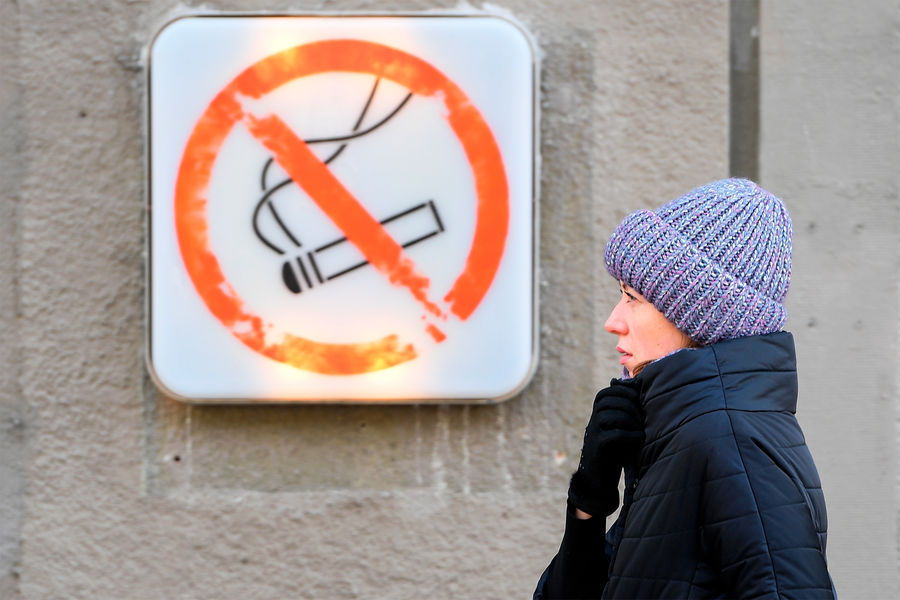
A senior official from Russia's Ministry of Health has proposed a complete ban on the import, production, and sale of novel tobacco products. This follows earlier proposals by State Duma lawmakers to impose fines for smoking while walking to reduce passive smoking and environmental pollution.

According to a report from Gazeta.Ru on December 2nd, Marina Gambaryan, director of the Tobacco Prevention and Control Center at the National Medical Research Center of the Russian Ministry of Health (NMRC TPM), has suggested a complete ban on the import, production, and sale of nicotine products to address the issue of nicotine addiction.


Currently, due to the ban on smoking in public and indoor places, people are more often forced to smoke on the streets. Ganbarov believes that addressing this issue should not be limited to localized bans, but rather more comprehensive measures should be taken.


In order to achieve the national policy goal of combating tobacco and nicotine product consumption, it is necessary to completely ban the import, production, distribution, and consumption of all new tobacco products.


After implementing these strict measures, discussions can take place about removing tobacco products from the market, restricting smoking to a certain age group, and other measures. However, simply banning smoking while walking may be difficult to implement on its own.


It is reported that the proposal to ban smoking while walking comes from Amir Khamitov, a member of the "New People's Party" in the State Duma. He explained that smoking forces people around to passively inhale smoke and also has an impact on the environment. He suggested a fine of no less than 5000 rubles (47 US dollars) for violators. Previously, experts warned that banning smoking while walking could lead to violent incidents.


We welcome news tips, article submissions, interview requests, or comments on this piece.

Please contact us at info@2firsts.com, or reach out to Alan Zhao, CEO of 2Firsts, on LinkedIn


Notice

1.  This article is intended solely for professional research purposes related to industry, technology, and policy. Any references to brands or products are made purely for objective description and do not constitute any form of endorsement, recommendation, or promotion by 2Firsts.

2.  The use of nicotine-containing products — including, but not limited to, cigarettes, e-cigarettes, nicotine pouchand heated tobacco products — carries significant health risks. Users are responsible for complying with all applicable laws and regulations in their respective jurisdictions.

3.  This article is not intended to serve as the basis for any investment decisions or financial advice. 2Firsts assumes no direct or indirect liability for any inaccuracies or errors in the content.

4.  Access to this article is strictly prohibited for individuals below the legal age in their jurisdiction.


Copyright


This article is either an original work created by 2Firsts or a reproduction from third-party sources with proper attribution. All copyrights and usage rights belong to 2Firsts or the original content provider. Unauthorized reproduction, distribution, or any other form of unauthorized use by any individual or organization is strictly prohibited. Violators will be held legally accountable.

For copyright-related inquiries, please contact: info@2firsts.com


AI Assistance Disclaimer


This article may have been enhanced using AI tools to improve translation and editorial efficiency. However, due to technical limitations, inaccuracies may occur. Readers are encouraged to refer to the cited sources for the most accurate information.

We welcome any corrections or feedback. Please contact us at: info@2firsts.com

Expert Warns in 2Firsts Op-ed: Proposed COP11 Ban on Nicotine Pouches Would Be a Global Public Health Mistake
As global delegates prepare for COP11, a leaked EU position paper has sparked fresh debate over the future of nicotine pouch regulation. In an exclusive op-ed submitted to 2Firsts, Dr. Nveed Chaudhary, Chair of GINN’s Scientific Committee, argues that banning nicotine pouches would be a profound public health mistake—one that ignores harm reduction science and risks reversing global progress in smoking cessation.
Nov.03
UK Advocacy Groups Launch "20IsPlenty" Campaign for Nicotine Pouch Strength Limit of 20mg
UK harm reduction groups led by We Vape have launched the “20IsPlenty” campaign calling for a 20mg nicotine pouch cap, a ban on youth advertising, and evidence-based regulation. The initiative coincides with the Tobacco and Vapes Bill debate and aims to ensure pouches remain accessible as safer alternatives for smokers.
Oct.28 by 2FIRSTS.ai
AIRSCREAM Unlocks Pan-European Nicotine Pouch Market for B2B Partners with Full-Service EU OEM Solutions
Showcased at PouchEx Stockholm, AIRSCREAM’s end-to-end OEM ecosystem demonstrates how brands can enter the fast-growing European nicotine pouch market with greater speed, confidence, and regulatory readiness.
Dec.04
Canada’s B.C. Passes First Vaping Cost-Recovery Framework, Allowing Government to Sue Manufacturers Over Health Expenses
According to the Nelson Star, British Columbia has passed the Vaping Product Damages and Health Care Costs Recovery Act by a 49–42 vote. The legislation enables the provincial government to seek recovery of future public health costs from vape manufacturers, following models used in opioid and tobacco litigation.
Dec.03
U.S. FDA Includes Cytisinicline for Vaping Addiction in National Priority Voucher Program, Shortens Review to 1–2 Months
The U.S. Food and Drug Administration (FDA) has added Cytisinicline, a plant-based therapy developed by Achieve Life Sciences for nicotine vaping addiction, to its new National Priority Voucher (CNPV) program. The initiative shortens drug review timelines from 10–12 months to just 1–2 months, expediting approval for treatments that address major public health needs.
Oct.20 by 2FIRSTS.ai
NYC Reaches Settlement with E-Cigarette Distributors in Flavored Vape Crackdown
New York City has reached settlement agreements with two e-cigarette wholesalers accused of selling flavored vapes illegally. The companies agreed to stop all flavored vape transactions in the city and face $1,000 fines for future violations. Litigation against other defendants in the broader case continues.
Nov.25 by 2FIRSTS.ai