Russian Public Group Seeks Website Restrictions on Remote Vape and Nicotine Sales

Apr.15
Russian Public Group Seeks Website Restrictions on Remote Vape and Nicotine Sales
Russian public movement “Healthy Fatherland,” has proposed blocking access in Russia to online resources that sell vapes and nicotine-containing products remotely.

Key Takeaways


  • Russia’s “Healthy Fatherland” movement proposed blocking online resources involved in remote sales of vapes and nicotine-containing products.
  • The group said it identified about 200 open and closed communities allegedly involved in illegal remote sales through social media monitoring.
  • The materials were submitted to the heads of Roskomnadzor, Rospotrebnadzor, and the Interior Ministry.
  • The group said the identified resources offer delivery without verifying buyers’ age, enabling minors to access nicotine products.
  • The movement’s chair said the pretrial blocking mechanism that came into force on April 1, 2026 should become a turning point in fighting illegal online trade.


2Firsts, April 15, 2026  


According to RIA Novosti, Ekaterina Leshchinskaya, chair of the Russian public movement “Healthy Fatherland,” has proposed blocking access in Russia to online resources selling vapes and nicotine-containing products remotely.


Civic group called for blocking illegal vape sales resources


According to the report, letters containing the proposal were sent to Roskomnadzor chief Andrei Lipov, Rospotrebnadzor chief Anna Popova, and Interior Minister Vladimir Kolokoltsev, and copies are in the possession of RIA Novosti.


The group said that during its monitoring of social media it identified about 200 open and closed communities through which illegal remote sales of vapes and nicotine-containing products were being carried out in Russia’s million-plus cities.


The group said the resources allow minors to access nicotine products


The letter said that, in order to protect citizens’ health, especially the health of minors, and suppress the illegal circulation of nicotine-containing products, the authorities should review the submitted materials on the identified online communities and take steps to restrict access to those resources in accordance with established procedures.


The group also asked authorities to initiate additional response measures against individuals involved in organizing illegal activity where grounds exist.


According to the appeal, the identified online resources sell products with delivery and without checking buyers’ age, creating conditions for minors to gain unrestricted access to nicotine-containing products. The group said the activity is systemic in nature and has effectively formed a stable shadow infrastructure for online trade operating outside current Russian law.


The chair said the 200 communities are only the “tip of the iceberg”


In comments to RIA Novosti, Leshchinskaya said the organization was seeing not isolated violations, but a well-developed underground system of online nicotine trade.


She said the nearly 200 identified communities are only the “tip of the iceberg,” and that such platforms give teenagers unrestricted access to vapes while ignoring age barriers. She added that the pretrial blocking mechanism that began operating on April 1, 2026 should become a turning point.


Leshchinskaya said the organization expects immediate state action: all identified resources should be blocked, and the practice of illegal trade should be eradicated.


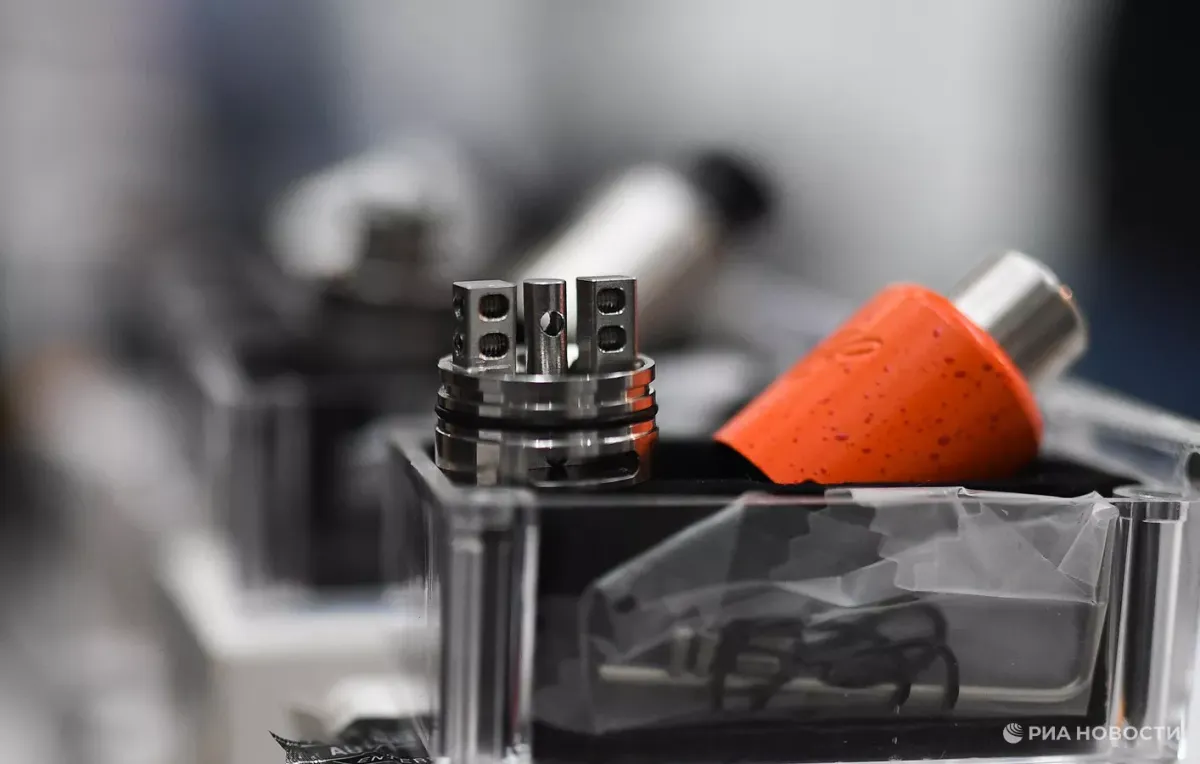
Image Source: RIA Novosti


We welcome news tips, article submissions, interview requests, or comments on this piece.

Please contact us at info@2firsts.com, or reach out to Alan Zhao, CEO of 2Firsts, on LinkedIn


Notice

1.  This article is intended solely for professional research purposes related to industry, technology, and policy. Any references to brands or products are made purely for objective description and do not constitute any form of endorsement, recommendation, or promotion by 2Firsts.

2.  The use of nicotine-containing products — including, but not limited to, cigarettes, e-cigarettes, nicotine pouchand heated tobacco products — carries significant health risks. Users are responsible for complying with all applicable laws and regulations in their respective jurisdictions.

3.  This article is not intended to serve as the basis for any investment decisions or financial advice. 2Firsts assumes no direct or indirect liability for any inaccuracies or errors in the content.

4.  Access to this article is strictly prohibited for individuals below the legal age in their jurisdiction.


Copyright


This article is either an original work created by 2Firsts or a reproduction from third-party sources with proper attribution. All copyrights and usage rights belong to 2Firsts or the original content provider. Unauthorized reproduction, distribution, or any other form of unauthorized use by any individual or organization is strictly prohibited. Violators will be held legally accountable.

For copyright-related inquiries, please contact: info@2firsts.com


AI Assistance Disclaimer


This article may have been enhanced using AI tools to improve translation and editorial efficiency. However, due to technical limitations, inaccuracies may occur. Readers are encouraged to refer to the cited sources for the most accurate information.

We welcome any corrections or feedback. Please contact us at: info@2firsts.com

Gallup Tracks Nicotine Pouch Use for the First Time: 11% of U.S. Adults Smoke, 9% Vape and 4% Use Nicotine Pouches
Gallup’s 2026 Consumption Habits survey tracked nicotine pouch use for the first time. The survey found that 11% of U.S. adults reported smoking cigarettes in the past week, 9% reported vaping, and 4% reported using nicotine pouches. Cigarette smoking remained near Gallup’s long-term low, while adult vaping rates stayed relatively stable in recent years.
Market
Aug.25 by 2Firsts Perspectives
Canada Health Minister Says She Is Not Considering Looser Nicotine Pouch Retail Rules as PMI-Linked Group Pushes for Wider Access
Canadian Health Minister Marjorie Michel says she is not considering loosening retail restrictions on nicotine pouches. Canada regulates pouches containing 4 mg or less of nicotine per unit as non-prescription nicotine replacement therapy and requires newer NRT formats such as pouches to be sold from behind pharmacy counters. Meanwhile, Unsmoke Canada, linked to Philip Morris International's Canadian business, is pushing to allow pouches in convenience stores and other general retail outlets. Health Canada also acknowledges continued unauthorized sales, while recent research shows rising pouch use among Canadian youth aged 16 to 19.
Sep.24
Product | DOJO Launches BLAST10K Fresh in UK With 0+10ml E-Liquid Structure, Retaining 2+8ml Pod Compatibility
DOJO launched the BLAST10K Fresh in the UK on September 4, 2026, introducing its INSTA-JUICED™ technology and a new 0+10ml structure that keeps e-liquid separated from the coil before activation. The device features a 1000mAh rechargeable battery, COREX BLAST dual-mesh technology and SSS leak-resistant technology, with a manufacturer-rated capacity of up to 10,000 puffs. It also retains compatibility with existing 2+8ml pods across the BLAST ecosystem. The launch introduces eight new flavors, including Matcha Strawberry, which DOJO describes as an industry first.
Market
Sep.04
Kantar Study Finds More Than 93% of Vape Products in Ukraine Fail Regulatory Requirements
According to Interfax-Ukraine, a study conducted by market research firm Kantar Ukraine at the request of major tobacco companies found that more than 93% of vape products in Ukraine did not fully comply with regulatory requirements. The research examined product categories, brand distribution and consumer purchasing channels, showing that pod systems and disposable vapes represent major segments of the market, while offline retail remains the dominant purchasing channel. The findings highlight ongoing compliance challenges in Ukraine’s vape market.
Aug.26
Australia Adds 6-Methylnicotine to Schedule 9 Prohibited Substances, Effective October 1
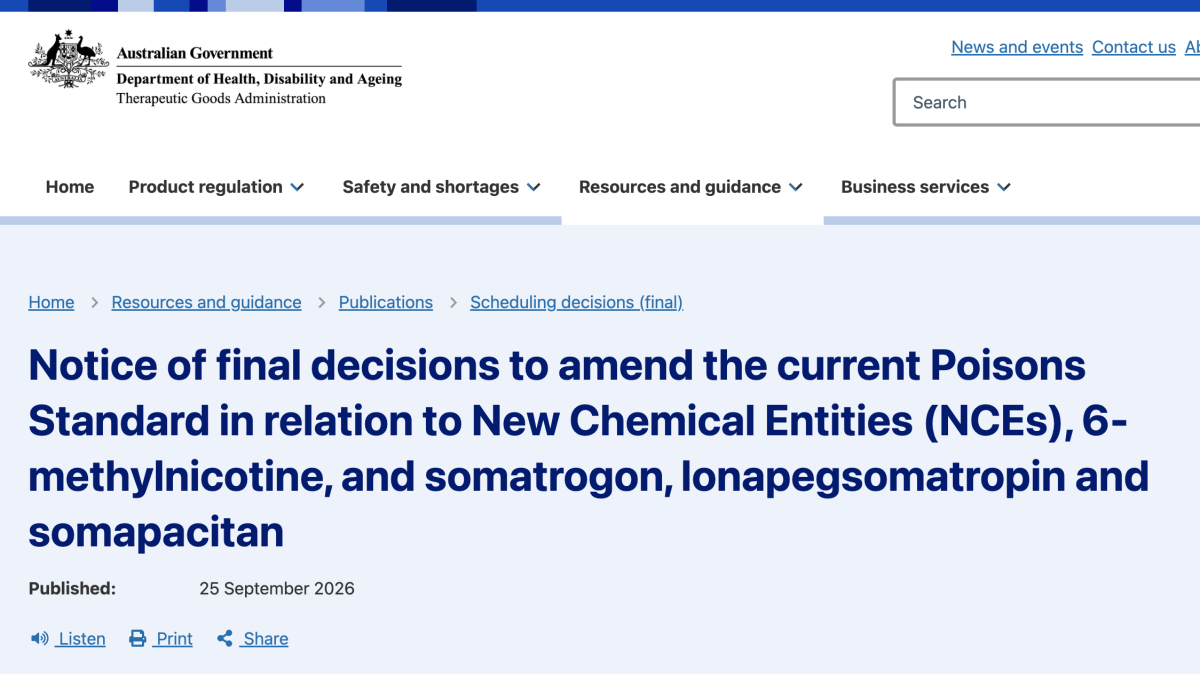
Australia's Therapeutic Goods Administration published a final decision on September 25 to classify 6-methylnicotine as a Schedule 9 prohibited substance under the Poisons Standard, effective October 1, 2026. TGA said the chemical has been reported in e-cigarette liquids sold in Australia and marketed as nicotine-free or nicotine alternatives, while evidence also indicates its use in preparations such as oral pouches. The government originally proposed a Schedule 7 classification but ultimately adopted the stricter Schedule 9 designation, citing acute toxicity, dependence risk, use in unapproved consumer products and misleading marketing.
News
Sep.29 by 2Firsts Perspectives
Latest UK ONS Data: 54% of Vapers Are Former Cigarette Smokers, 26% Also Smoke and 20% Never Smoked Regularly
Former cigarette smokers accounted for an estimated 54% of current e-cigarette users in Great Britain in 2025, while 26% also smoked cigarettes and 20% had never regularly smoked, according to a 2Firsts analysis of Office for National Statistics (ONS) data. Among former cigarette smokers who currently vape, approximately 81% used e-cigarettes daily, compared with about 50% of dual users. The ONS found that 33.8% of current cigarette smokers also vaped in 2025, up from 10.6% in 2014. Approximately 1.1 million adults who had never regularly smoked cigarettes used e-cigarettes, representing 2.9% of that population, compared with 0.2% in 2014. The figures highlight differences in the composition, frequency of use and long-term trends across Britain's vaping population.
DATA
Oct.14