Russian Vape Industry Proposes State Monopoly on E-Liquid Production as Alternative to Ban

Apr.03
Russian Vape Industry Proposes State Monopoly on E-Liquid Production as Alternative to Ban
Russian business groups are trying to persuade the authorities to abandon plans to ban the sale of e-cigarettes and related liquids at both the federal and regional levels.

Key Takeaways


  • Opora Russia sent a letter to Denis Manturov on March 30 opposing a ban on e-cigarettes and related liquids in Russia.
  • Business groups oppose bans on electronic nicotine delivery systems and their liquids at both the federal and regional levels.
  • Russia is considering allowing regions to impose vape sales restrictions, with a trial period proposed from March 1, 2027 to March 1, 2032.
  • Industry representatives said about 20,000 retail outlets in Russia currently sell ENDS products.
  • As an alternative, an industry group proposed a state monopoly on the production of nicotine base liquid.


2Firsts, April 1, 2026 


According to Kommersant, Russian business groups are working through Opora Russia and industry associations to persuade the authorities to abandon plans to ban the sale of e-cigarettes and related liquids at both the federal and regional levels.


Business groups say a vape ban would create risks greater than any likely regulatory effect


In a letter sent by Opora Russia to First Deputy Prime Minister Denis Manturov on March 30, the business community said that banning electronic nicotine delivery systems and their liquids would create economic, legal and political risks that would significantly exceed any possible regulatory effect.


Kirill Kuznetsov, chairman of Opora Russia’s excisable goods committee, said the organisation opposes any bans that could force a substantial number of entrepreneurs out of the market. He said about 20,000 retail outlets in Russia currently sell ENDS products and added that it would be inappropriate to fragment the country’s economic space through separate regional initiatives.


Russia is considering both regional vape ban trials and broader restrictions


The report said restrictions on vape sales in Russia have been under discussion since the summer of 2025. In August 2025, Nizhny Novgorod Region Governor Gleb Nikitin proposed giving regions the right to introduce such measures independently, and President Vladimir Putin supported the idea. In March 2026, Denis Manturov said several ministries had been tasked with working on a ban on the circulation of ENDS in Russia.


At present, the possibility of allowing regions to ban ENDS sales is planned as part of second-reading amendments to the law on licensing wholesale and retail tobacco trade. The report said this experiment is expected to run from March 1, 2027 to March 1, 2032. In regions that do not use the right to impose a ban, the issue would instead be addressed through retail licensing measures.


The report also said that the regional-ban option is seen as a compromise, with the alternative being a total nationwide ban on ENDS circulation. Russia’s State Commission on Countering Illegal Industrial Product Turnover had previously supported the full-ban scenario.


Industry group proposes state monopoly on e-liquid production instead of a ban


Dmitry Vladimirov, director of the Union of Participants in the Circulation of Nicotine-Containing Products, said a total ban has no proven effectiveness but carries direct risks for consumers and the budget.


In its letter to Manturov, Opora Russia referred to Vietnam’s 2025 strict ban on ENDS and their liquids, which it said pushed sales into illegal channels, and to Kazakhstan’s 2024 vape ban, which it said created similar problems. Business representatives also said that the absence of significant restrictions on ENDS sales in neighboring countries such as Belarus would add further risk for the Russian market.


Image source: Yevgeny Razumny / Kommersant


Further reading:
 

2FIRSTS | Special Report|Russia scales back anti-vaping drive, limits ban to single-region trial
After months of debate, Russian lawmakers have retreated from plans for a nationwide vaping ban, opting instead for a single-region pilot. The shift reflects pressure from business groups and fiscal authorities, amid warnings that sweeping prohibitions could fuel illegal trade while undermining efforts to regulate the market.
www.2firsts.com


We welcome news tips, article submissions, interview requests, or comments on this piece.

Please contact us at info@2firsts.com, or reach out to Alan Zhao, CEO of 2Firsts, on LinkedIn


Notice

1.  This article is intended solely for professional research purposes related to industry, technology, and policy. Any references to brands or products are made purely for objective description and do not constitute any form of endorsement, recommendation, or promotion by 2Firsts.

2.  The use of nicotine-containing products — including, but not limited to, cigarettes, e-cigarettes, nicotine pouchand heated tobacco products — carries significant health risks. Users are responsible for complying with all applicable laws and regulations in their respective jurisdictions.

3.  This article is not intended to serve as the basis for any investment decisions or financial advice. 2Firsts assumes no direct or indirect liability for any inaccuracies or errors in the content.

4.  Access to this article is strictly prohibited for individuals below the legal age in their jurisdiction.


Copyright


This article is either an original work created by 2Firsts or a reproduction from third-party sources with proper attribution. All copyrights and usage rights belong to 2Firsts or the original content provider. Unauthorized reproduction, distribution, or any other form of unauthorized use by any individual or organization is strictly prohibited. Violators will be held legally accountable.

For copyright-related inquiries, please contact: info@2firsts.com


AI Assistance Disclaimer


This article may have been enhanced using AI tools to improve translation and editorial efficiency. However, due to technical limitations, inaccuracies may occur. Readers are encouraged to refer to the cited sources for the most accurate information.

We welcome any corrections or feedback. Please contact us at: info@2firsts.com

South Korea's Tobacco Plan Excludes 6-Methyl Nicotine as Customs Tightens Import Controls and Analog Liquid Imports Fall 83%
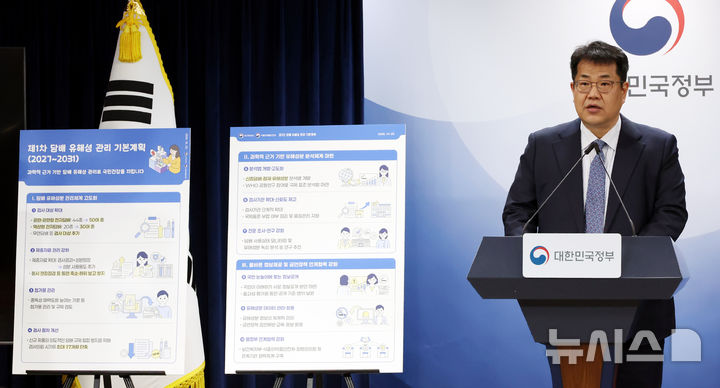
South Korea's government unveiled its first Tobacco Harm Management Basic Plan for 2027–2031 on October 29, 2026, proposing broader testing of vaping and heated tobacco products while excluding nicotine analogs such as 6-methyl nicotine. Synthetic nicotine came under tobacco regulation on April 24, and a June investigation found 6-methyl nicotine in 12 liquid inhalation products marketed as nicotine-free. Customs data released in September showed that imports of nicotine analog solutions fell 83.3%, from 12 metric tons in January–April to 2 metric tons in May–August. By September 20, imports had reached approximately 15 metric tons for the year, with 99.99% originating from China. Customs authorities have tightened pre-clearance testing and supply-chain documentation requirements, while the MFDS expects to complete its assessment of nicotine analog hazards by the end of 2026.
Regulations
Nov.04
Imperial Brands Sees Double-Digit NGP Growth as Sixth Year of Tobacco Revenue Gains Backs £1.5 Billion Buyback
Imperial Brands reaffirmed its FY26 guidance in its October 8 pre-close trading update, forecasting double-digit net revenue growth in next-generation products and share gains across heated tobacco, vape and modern oral. Tobacco net revenue is expected to grow at a low-single-digit rate, marking a sixth consecutive year of growth. The company has completed its £1.45 billion FY26 share repurchase and announced a £1.5 billion buyback for FY27. Group adjusted operating profit is expected to increase 3% to 5%, while free cash flow is forecast to exceed £2.2 billion.
Oct.09
EU Tobacco Tax Reform Targets November Push as Sweden Holds Nicotine-Pouch Minimum at €20 per Kilogram
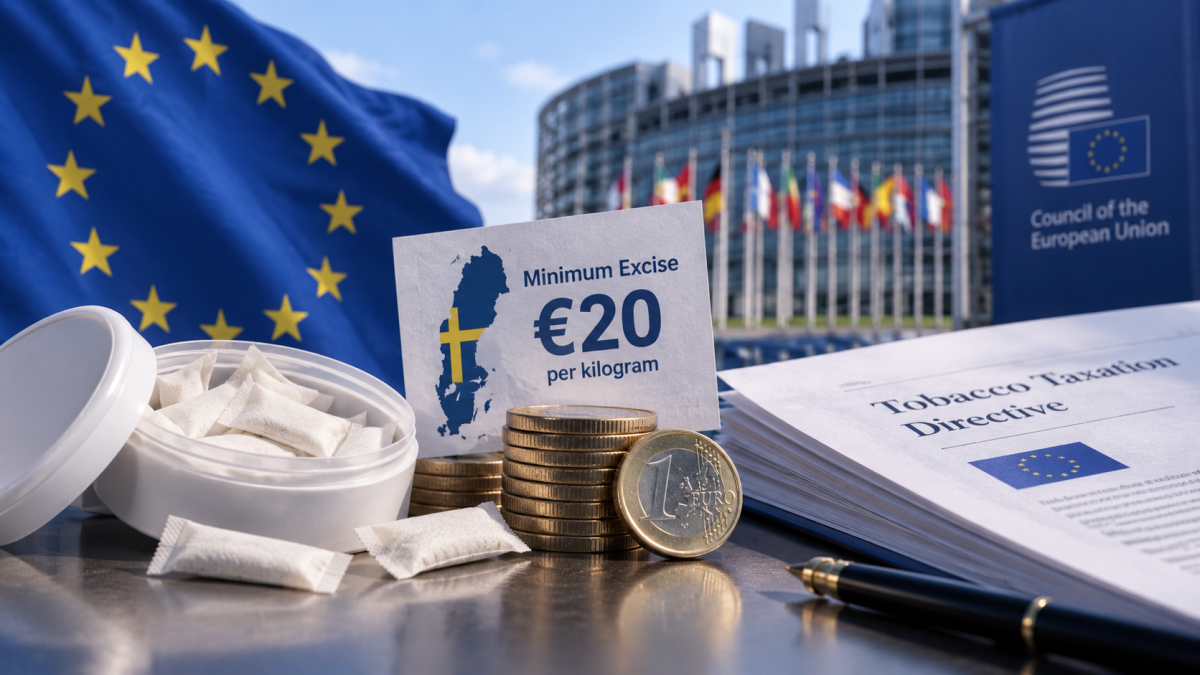
The Irish presidency of the Council of the European Union is using bilateral talks to push the bloc’s Tobacco Taxation Directive toward a political agreement in November. According to Law360, citing an EU official, Sweden is unwilling to accept a minimum excise threshold above €20 per kilogram for nicotine pouches. Council negotiations have already lowered the European Commission’s original proposal, but a May 2026 presidency compromise still set the minimum at 10% of the tax-inclusive retail price or €30 per kilogram in 2028-29, with higher levels later.
Market
Sep.17 by 2Firsts Perspectives
Pennsylvania Vape Directory Law Survives Court Challenge From Nova Distro and Others Amid Similar Rulings Across States
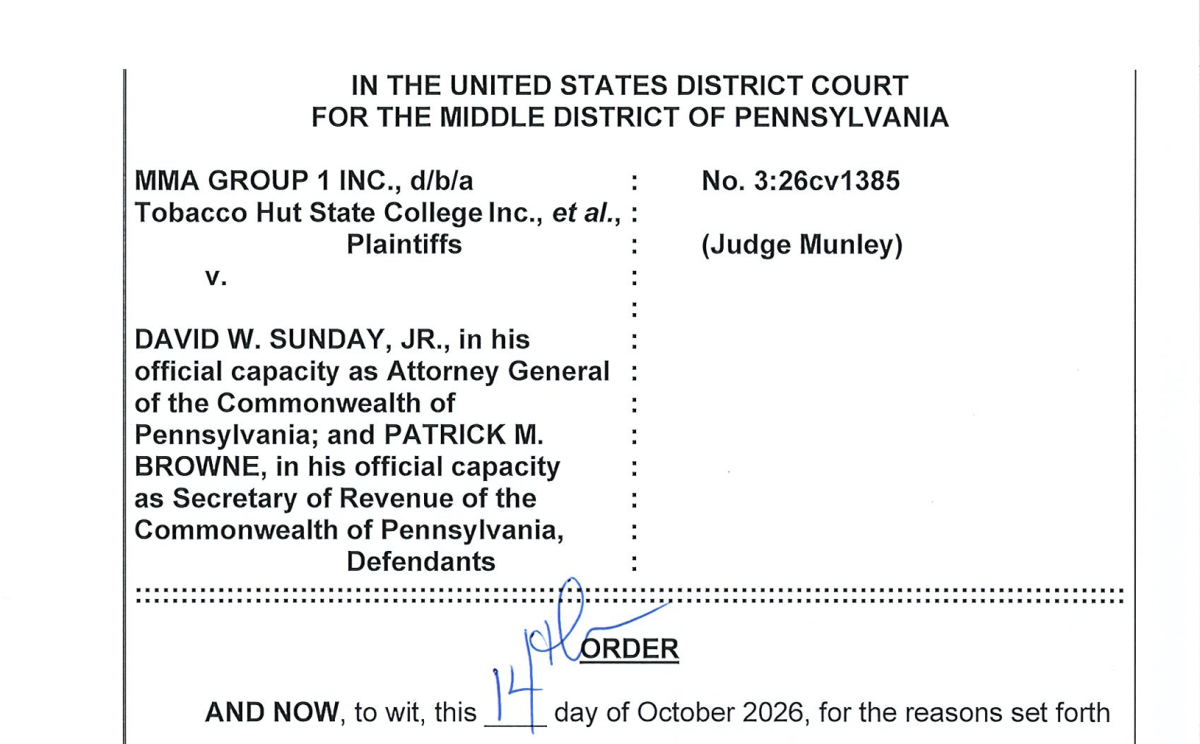
A U.S. federal court upheld Pennsylvania's vape directory law on October 14, rejecting a challenge brought by Nova Distro, 101 Distributors and companies operating Tobacco Hut retail stores. Court records show that vaping accounts for about 60% of Tobacco Hut's profits and that the chain held approximately $2 million in inventory potentially subject to seizure under the law as of June 2. Pennsylvania began enforcement on October 19. The ruling follows similar appellate decisions in other states, even as new research shows that unlisted vaping products continue to account for substantial sales in states with established directories.
Regulations
Oct.22
Sweden Finds ZYN Ingredient Labels Noncompliant Over Generic Flavoring Disclosure, Swedish Match Faces SEK 2 Million Monthly Penalty
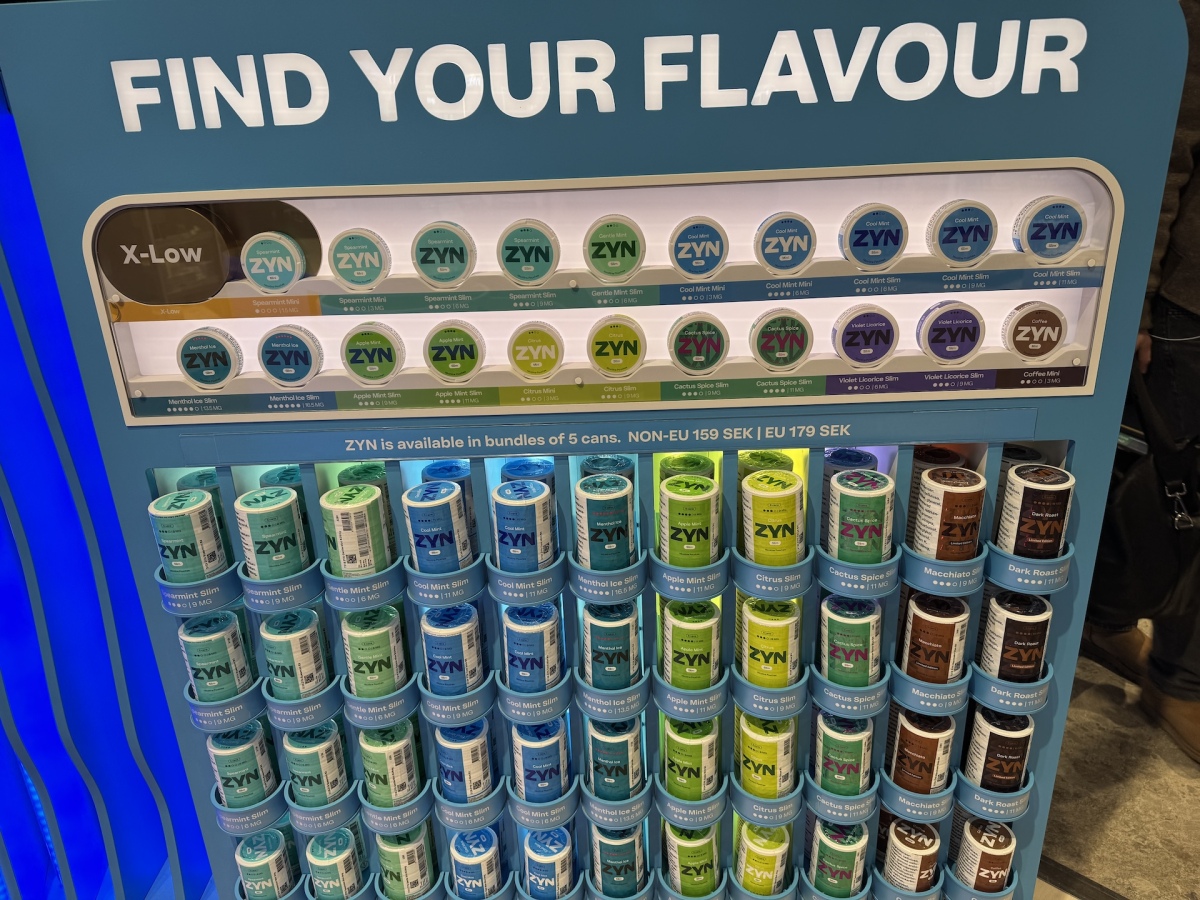
Sweden's Public Health Agency has found ingredient labels on ZYN nicotine pouches sold by Philip Morris International subsidiary Swedish Match to be noncompliant, according to Dagens industri. The products' packaging listed 10 to 13 ingredients, compared with 11 to 42 in regulatory submissions, with multiple flavoring ingredients grouped under the generic term "aromer." The agency ordered corrective action, warning of a conditional penalty of SEK 2 million per month for noncompliance. The order applies only to products manufactured after the decision becomes legally effective and does not require recalls. Swedish Match disputes the agency's interpretation and plans to appeal.
PMI
Oct.22
Philippines Mandates Safety Certification for Nicotine Pouches, Gives Industry 12 Months to Comply
The Philippines Department of Trade and Industry has placed nicotine pouches under mandatory product certification through Department Administrative Order No. 26-07, Series of 2026. Nicotine pouches must obtain a Philippine Standard, or PS, license before they can be manufactured, imported, packed, distributed or sold in the country. The regime requires testing for nicotine content, pH and water activity, while packaging must disclose nicotine strength, ingredients, allergens, batch information, the PS certification mark and prescribed health warnings. Existing market participants have a 12-month transition period to comply.
Regulations
Oct.12