Russia's Kaliningrad Governor Proposes Comprehensive Ban on E-cigarettes

Regulations by 2FIRSTS.ai
Jan.22.2024
Russia's Kaliningrad Governor Proposes Comprehensive Ban on E-cigarettes
Russian Governor Anton Alikhanov has ordered the development of a comprehensive bill to ban e-cigarettes in Kaliningrad, citing health concerns.

According to recent reports by Russian media outlet Newkaliningrad, the governor of Kaliningrad Oblast, Anton Alikhanov, has instructed the development of a comprehensive e-cigarette ban bill, which will be submitted for review by the State Duma.


Arlyahnov has requested that the Minister of Regional Regulation, Elena Serova, be responsible for preparing the documents.


You have two weeks to prepare the text and submit it to your parliamentary colleagues, urging them to support this legislative initiative for a complete ban on the import, sale, and use of e-cigarettes, among other measures. There have been numerous examples of such bans in countries like Thailand, Singapore, and many others," said Alikhonov.


Previously, Governor Alikhinov first proposed the ban on the production of vapor-producing e-cigarettes in February 2023. This proposal received support from the Public Council for Consumer Protection and Public Oversight Services of the Russian Federation in September. The regional director claimed that there has been an increase in cases of toxic poisoning and fainting incidents due to the prevalence of e-cigarettes in schools.


We welcome news tips, article submissions, interview requests, or comments on this piece.

Please contact us at info@2firsts.com, or reach out to Alan Zhao, CEO of 2Firsts, on LinkedIn


Notice

1.  This article is intended solely for professional research purposes related to industry, technology, and policy. Any references to brands or products are made purely for objective description and do not constitute any form of endorsement, recommendation, or promotion by 2Firsts.

2.  The use of nicotine-containing products — including, but not limited to, cigarettes, e-cigarettes, nicotine pouchand heated tobacco products — carries significant health risks. Users are responsible for complying with all applicable laws and regulations in their respective jurisdictions.

3.  This article is not intended to serve as the basis for any investment decisions or financial advice. 2Firsts assumes no direct or indirect liability for any inaccuracies or errors in the content.

4.  Access to this article is strictly prohibited for individuals below the legal age in their jurisdiction.


Copyright


This article is either an original work created by 2Firsts or a reproduction from third-party sources with proper attribution. All copyrights and usage rights belong to 2Firsts or the original content provider. Unauthorized reproduction, distribution, or any other form of unauthorized use by any individual or organization is strictly prohibited. Violators will be held legally accountable.

For copyright-related inquiries, please contact: info@2firsts.com


AI Assistance Disclaimer


This article may have been enhanced using AI tools to improve translation and editorial efficiency. However, due to technical limitations, inaccuracies may occur. Readers are encouraged to refer to the cited sources for the most accurate information.

We welcome any corrections or feedback. Please contact us at: info@2firsts.com

South Korea Extends Vape Rules to Unmanned Stores After Bringing Synthetic Nicotine Under Tobacco Law
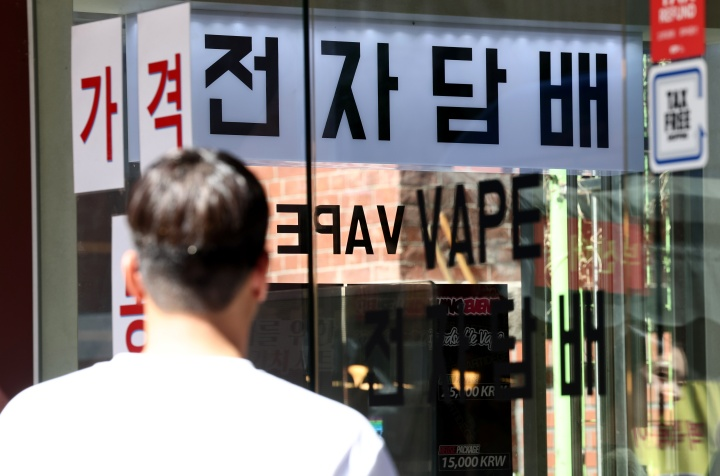
South Korea's Ministry of Gender Equality and Family said on September 14 that it plans to designate unmanned e-cigarette stores as businesses where minors are prohibited from entering or working. Operators would be required to verify customers' ages and display notices restricting access by minors. The proposal is open for public comment through October 6. The move follows an April expansion of South Korea's statutory tobacco definition that brought products made with natural or synthetic nicotine under the Tobacco Business Act. Nicotine-free liquids and products using nicotine analogues such as 6-methylnicotine, however, remain an emerging regulatory issue.
Sep.21
India Duty-Free Nicotine Pouch Sales Face Regulatory Test as ZYN, FOX Classification Remains Open
The Bombay High Court has ruled that airport duty-free shops are not exempt from India's domestic regulatory laws merely because they operate beyond the customs barrier, leaving in place a sales halt covering ZYN and FOX nicotine pouches at Mumbai's international airport. The court, however, did not determine that the products necessarily qualify as "drugs" under India's Drugs and Cosmetics Act. The retailers have four weeks to submit product information to the appropriate authorities, including CDSCO, which must complete its review within 30 days of receiving the submissions.
Sep.24
PMI CEO Attends Opening of IQOS Global Flagship in Tokyo’s Ginza as 1,814 Limited ILUMA i PRIME Sets Launch
IQOS opened its first global flagship, IQOS Flagship Ginza, in Tokyo on September 4, 2026, replacing the former IQOS Store Ginza after nearly a decade of operation. The new location expands conventional product retail into member lounges, digital experiences, art installations and brand programming. IQOS also launched a Ginza-exclusive IQOS ILUMA i PRIME set limited to 1,814 individually numbered units, priced at JPY11,980, or about US$77. PMI Sales Strategy Consultant Yuji M. later said on LinkedIn that more than 500 people had lined up from the night before the opening.
Sep.07
Australia Adds 6-Methylnicotine to Schedule 9 Prohibited Substances, Effective October 1
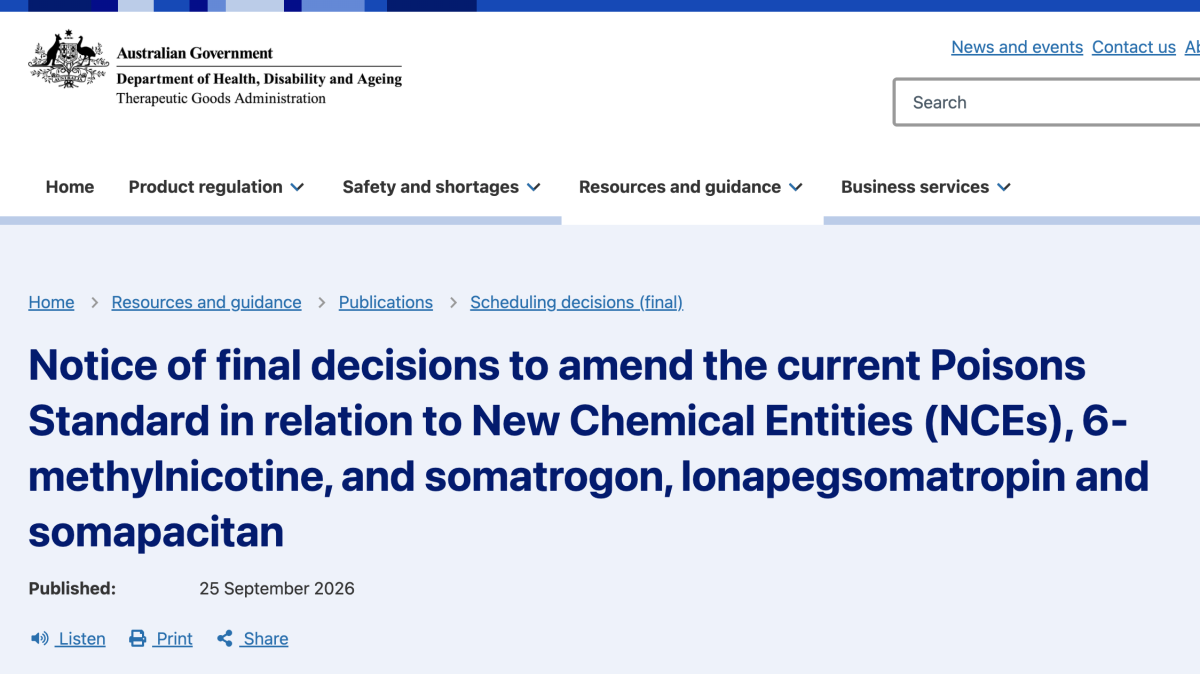
Australia's Therapeutic Goods Administration published a final decision on September 25 to classify 6-methylnicotine as a Schedule 9 prohibited substance under the Poisons Standard, effective October 1, 2026. TGA said the chemical has been reported in e-cigarette liquids sold in Australia and marketed as nicotine-free or nicotine alternatives, while evidence also indicates its use in preparations such as oral pouches. The government originally proposed a Schedule 7 classification but ultimately adopted the stricter Schedule 9 designation, citing acute toxicity, dependence risk, use in unapproved consumer products and misleading marketing.
News
Sep.29 by 2Firsts Perspectives
Philippines BIR Steps Up Illicit Vape Enforcement Ahead of Christmas Shopping
The Philippines’ Bureau of Internal Revenue is intensifying enforcement against illicit vape and tobacco products ahead of the Christmas shopping season, directing regional and enforcement offices to strengthen monitoring of production sites, warehouses, distribution channels and retail outlets. The BIR destroyed 240,550 illicit vape products in August with an estimated tax liability of about PHP1.53 billion. A nationwide tax-compliance operation in July also inspected 3,590 businesses involved in tobacco and vapor products.
Regulations
Sep.17 by 2Firsts Perspectives
German Tobacco Tax Revenue Falls 10.8% Through August as Tax-Paid Cigarette Volume Drops 12.6%
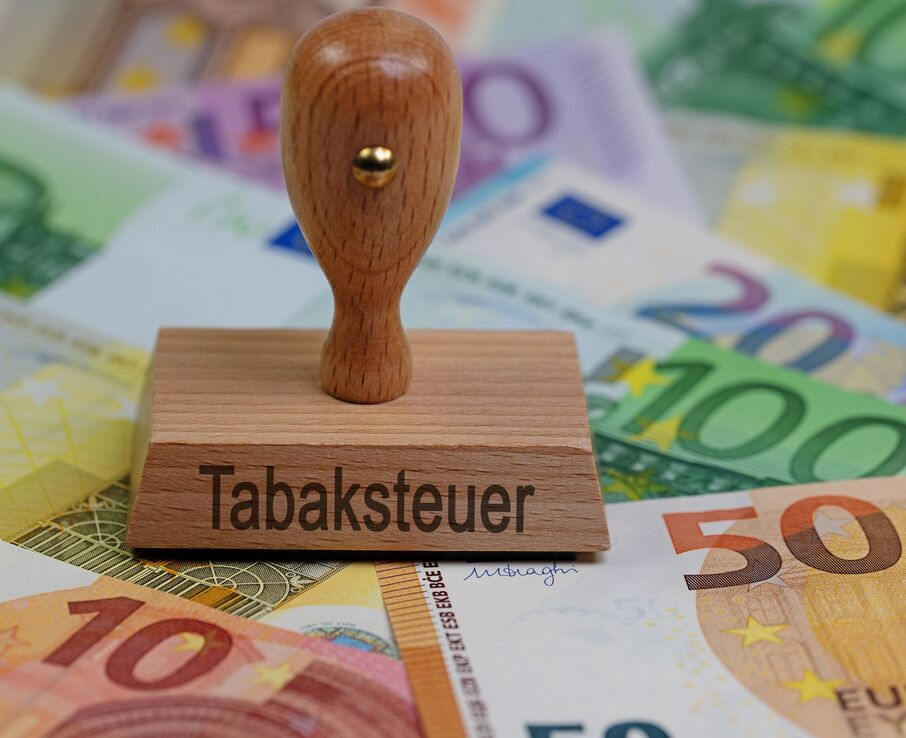
Germany collected €9.789 billion in total tobacco tax revenue from January through August 2026, down 10.8% from a year earlier, according to the Federal Ministry of Finance. Germany's tobacco tax base covers not only cigarettes and fine-cut tobacco but also heated tobacco and vaping liquids taxed as tobacco substitutes. The German Association of the Tobacco Industry and Novel Products, or BVTE, citing federal statistical data, said tax-paid cigarette volume fell 12.6% to 40.6 billion sticks. BVTE is using the latest figures to argue against further tax increases planned from 2027 through 2030, while Germany's parliament is scheduled to hold a first reading of the bill on September 24.
Sep.23