Social Media Posts Claim Geek Bar Manufacturer QISI Suspended Operations Until End of November; No Official Statement Issued

Aug.28.2025
Social Media Posts Claim Geek Bar Manufacturer QISI Suspended Operations Until End of November; No Official Statement Issued
Unconfirmed documents and videos suggest QISI, maker of Geek Bar, has suspended operations for “rectification” through November. No official response has been issued.

Disclaimer:

The materials cited in this article—including documents and videos—originate from social media and have not been confirmed by the company involved. Readers are advised to exercise discretion when interpreting or sharing this content.


Key Points


● A document dated August 24, circulating on Chinese social media, claims QISI will suspend operations and place employees on leave from August 25 to November 30.


● The notice refers to a “shutdown for rectification” (zhenggai), a term typically associated with regulatory compliance in China.


● QISI is the primary manufacturer of Geek Bar, a leading disposable vape brand in the U.S., and is linked to Elf Bar under the same controlling entity.


● The authenticity of the materials has not been confirmed, and QISI has not issued any public statement.


● In June, 2Firsts reported on earlier unverified notices indicating QISI scaled back production due to falling U.S. orders.


2Firsts, Shenzhen, August 28, 2025 —A document circulating on Chinese social media platforms appears to show that Shenzhen-based manufacturer QISI will suspend operations and place employees on leave from late August through the end of November 2025.


The document, titled “Notice on Employee Leave During Company Shutdown Period,” is dated August 24 and outlines two waves of leave beginning on August 25 and September 1, with all leave reportedly extending until November 30. 2Firsts has not independently verified the authenticity of the document.


QISI is known as a key manufacturer of Geek Bar, one of the top-selling disposable vape brands in the United States. Geek Bar and Elf Bar—another globally popular vape product—are understood to share the same ultimate controlling entity.


This document differs in tone and stated rationale from the unverified internal notices that circulated in June. At that time, QISI was reportedly scaling back production at its Zhuhai facility due to a “significant impact” on U.S. orders. By contrast, the current notice refers to a “shutdown for rectification” (zhenggai), a term commonly used in China to describe operational suspensions carried out in response to regulatory instructions or compliance-related issues. The nature of any such regulatory involvement, if any, has not been officially confirmed.


As of publication, QISI has not issued any public statement or response regarding the document or related reports.

 

Social Media Posts Claim Geek Bar Manufacturer QISI Suspended Operations Until End of November; No Official Statement Issued
Company profile from QISI’s official website | Source: qisitech.com


In addition to the written notice, several videos have emerged on Chinese social media platforms that appear to show individuals claiming to be QISI employees expressing concerns about employment-related issues. One such video has received more than 300 comments, including claims that “workshop equipment and important documents have been removed.” 2Firsts has not verified the content or authenticity of these videos.


Commentary and speculation about the situation have also begun appearing on WeChat public accounts and other online platforms in China. The accuracy and context of such posts remain unclear.


In June, 2Firsts reported on social media posts suggesting that QISI had adjusted production due to declining overseas orders. The company did not comment on those reports at the time.


2Firsts will continue to monitor developments and provide updates should further verifiable information become available.


Cover image generated by ChatGPT

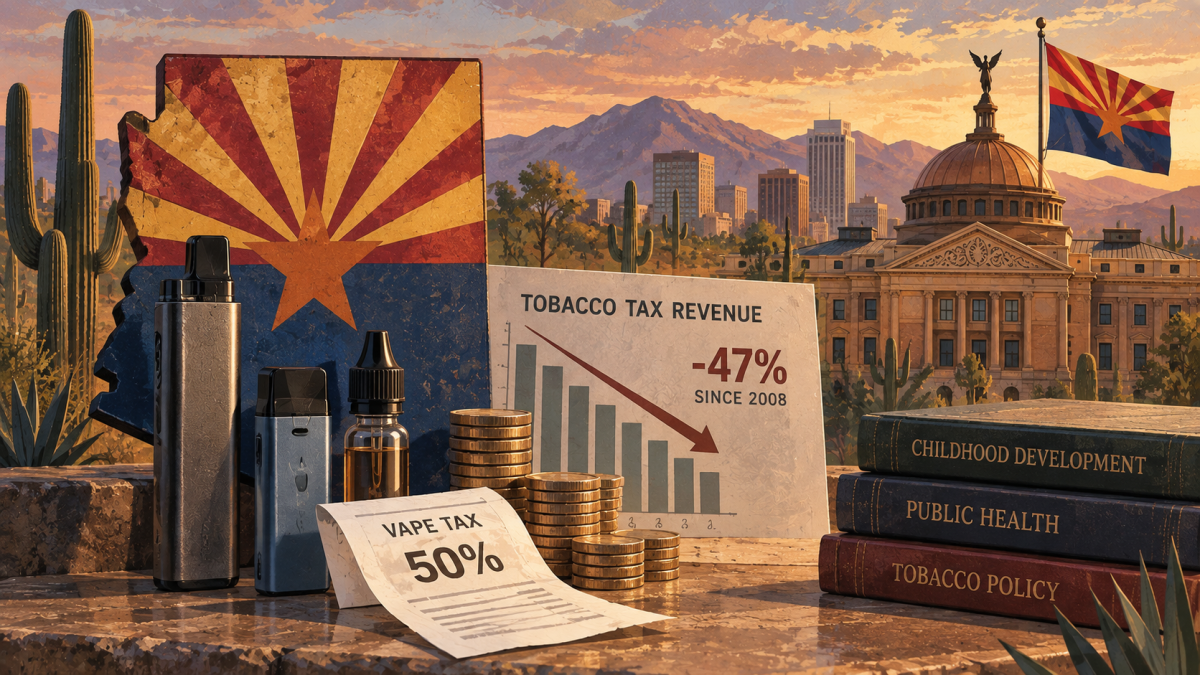
Arizona Turns to a 50% Retail Vape Tax as Tobacco Tax Revenue Falls 47% From 2008
Arizona's First Things First is pushing for an excise tax equal to 50% of the retail price of vaping products, estimating that the measure could generate about $100 million annually. The agency says its tobacco-tax revenue has fallen 47% from 2008 levels. Arizona has attempted to broaden its nicotine tax base in each of the past two years: a 2025 bill proposed a 50% wholesale-price tax, while a 2026 measure shifted to a 50% retail-price tax covering alternative nicotine products and vapor products. Separately, the state enacted HB 4001 this year to establish a new licensing and sales framework for alternative nicotine products.
Sep.21
Japan Survey Finds 49.5% Would Cut Tobacco Use if Prices Rise, 64.6% Show Interest in Nicotine-Free Alternatives
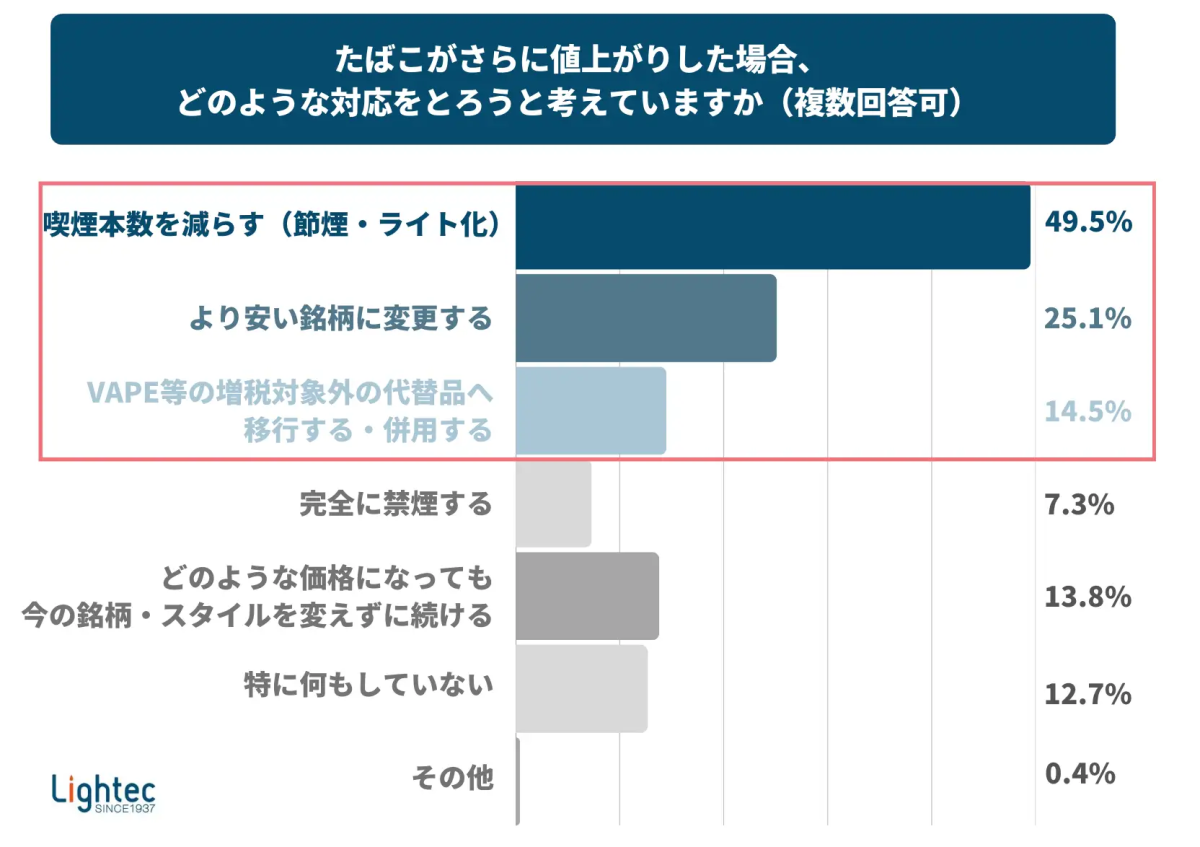
A September online survey commissioned by Japanese smoking-accessories company Lightec found that 49.5% of respondents would consider reducing tobacco use if prices rose further, while 25.1% would consider switching to cheaper brands and 14.5% would consider using or combining alternatives such as vapes and nicotine-free herbal sticks. Another 64.6% expressed some level of interest in such alternatives. The survey covered 1,088 respondents aged 20 to 70 and was conducted by a company that sells NICOLESS nicotine-free vaping and herbal-stick products, meaning its findings should not be treated as representative of Japan's smoking population.
DATA
Oct.12
South Korea Constitutional Court Upholds Volume-Based E-Liquid Tax, With Challenged Rates at KRW 370 and KRW 628 per Milliliter
South Korea's Constitutional Court has upheld fixed taxes on nicotine-containing e-cigarette liquids based on solution volume, ruling that challenged provisions imposing KRW 370 per milliliter in individual consumption tax and KRW 628 per milliliter in tobacco consumption tax do not violate the Constitution. The cases stemmed from historical disputes involving importers that reported nicotine as being extracted from tobacco stems rather than leaves. South Korea has since broadened its tobacco definition to include synthetic nicotine, while current tax laws provide reduced rates for certain products not derived from tobacco.
Sep.18
Kuwait Tightens Tobacco and Nicotine Rules, Bans Under-21 Sales and Extends Public Smoking Restrictions to Vapes and Heated Tobacco
Kuwait has issued a comprehensive new regulatory framework covering tobacco, e-cigarettes, heated tobacco and other nicotine products. Ministerial Decision No. 237 of 2026, signed by Health Minister Ahmad Al-Awadhi, will take effect on January 1, 2027. The rules prohibit sales to people under 21 and ban sales through websites, apps, social media and delivery services. E-cigarettes and heated tobacco products will also be treated as smoking in public and enclosed places where smoking is prohibited. Nicotine pouches and other oral nicotine products not registered as medicines are banned.
Regulations
Aug.17 by 2Firsts Perspectives
From Product Innovation to Integrated Solutions: NEXTECH Expands Its Global Heated Tobacco Solutions
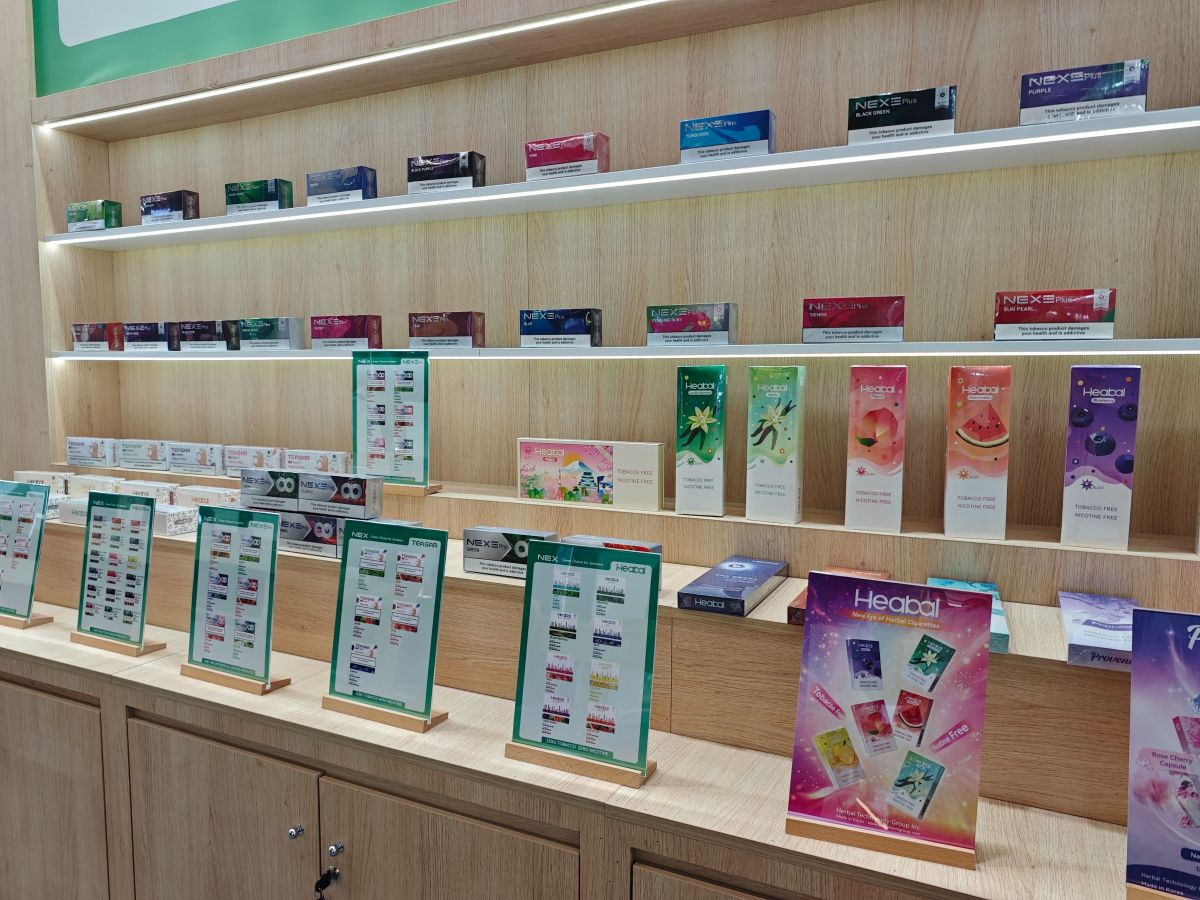
NEXTECH launched its NEXE Pro circumferential-heating tobacco stick globally at InterTabac 2026, as the company expands from product innovation into broader heated tobacco solutions. Amid intensifying competition across global HTP markets, NEXTECH is strengthening its R&D, manufacturing and pre-launch support capabilities to serve different types of business customers.
Industry Insight
Sep.15
Philip Morris Malaysia Again Meets Religious Authority Over Cigarette Alternatives as Perlis Mufti Responds on Halal Criteria
Philip Morris Malaysia Managing Director Naeem Shahab Khan met Perlis Mufti Mohd Asri Zainul Abidin on September 17 and presented the company's shift from conventional cigarettes toward alternative products. The mufti said a product could be considered halal if it is clean, its side effects are not harmful or can be controlled, and it does not involve excessive waste. His remarks did not mention IQOS or any other specific PMI product and did not amount to a new product-specific religious ruling. It was at least the second publicly reported engagement between Philip Morris Malaysia and a Malaysian religious institution over cigarette alternatives within six months.
Regulations
Sep.18 by 2Firsts Perspectives