Thai Customs and Police Raid Shop Selling Illegal E-Cigarettes

Regulations by 2FIRSTS.ai
May.20.2024
Thai Customs and Police Raid Shop Selling Illegal E-Cigarettes
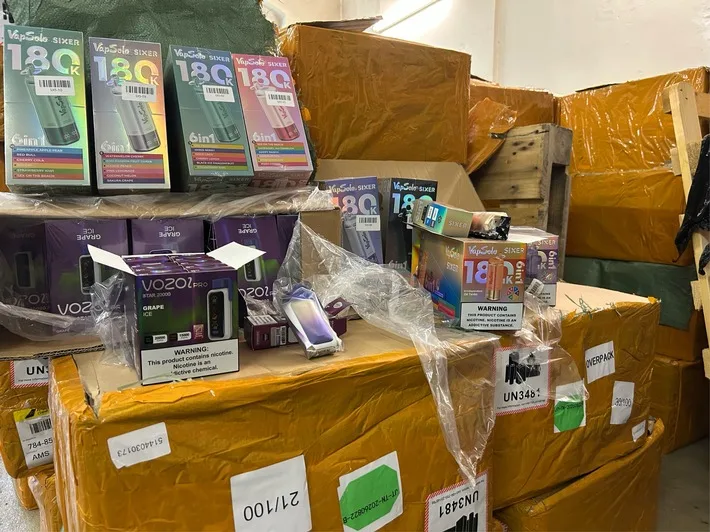
Thai authorities raided and seized over 4200 e-cigarette products worth over $27,862 in Nakhon Pathom province, violating customs laws.

According to a recent report by MGR Online, Thai authorities in Samut Sakhon Province conducted a joint operation involving the customs department and the security department to search and seize a shop secretly selling e-cigarettes. During the operation, over 4200 pieces of e-cigarette liquid and other devices were seized, with a total value exceeding 1 million Thai Baht (approximately $27,862).


The store's illegal sale of e-cigarettes violates Article 246 of the 2017 Customs Law. Those involved could face a maximum sentence of 5 years imprisonment, a fine of up to 4 times the value of the goods and customs duties, or both.


We welcome news tips, article submissions, interview requests, or comments on this piece.

Please contact us at info@2firsts.com, or reach out to Alan Zhao, CEO of 2Firsts, on LinkedIn


Notice

1.  This article is intended solely for professional research purposes related to industry, technology, and policy. Any references to brands or products are made purely for objective description and do not constitute any form of endorsement, recommendation, or promotion by 2Firsts.

2.  The use of nicotine-containing products — including, but not limited to, cigarettes, e-cigarettes, nicotine pouchand heated tobacco products — carries significant health risks. Users are responsible for complying with all applicable laws and regulations in their respective jurisdictions.

3.  This article is not intended to serve as the basis for any investment decisions or financial advice. 2Firsts assumes no direct or indirect liability for any inaccuracies or errors in the content.

4.  Access to this article is strictly prohibited for individuals below the legal age in their jurisdiction.


Copyright


This article is either an original work created by 2Firsts or a reproduction from third-party sources with proper attribution. All copyrights and usage rights belong to 2Firsts or the original content provider. Unauthorized reproduction, distribution, or any other form of unauthorized use by any individual or organization is strictly prohibited. Violators will be held legally accountable.

For copyright-related inquiries, please contact: info@2firsts.com


AI Assistance Disclaimer


This article may have been enhanced using AI tools to improve translation and editorial efficiency. However, due to technical limitations, inaccuracies may occur. Readers are encouraged to refer to the cited sources for the most accurate information.

We welcome any corrections or feedback. Please contact us at: info@2firsts.com

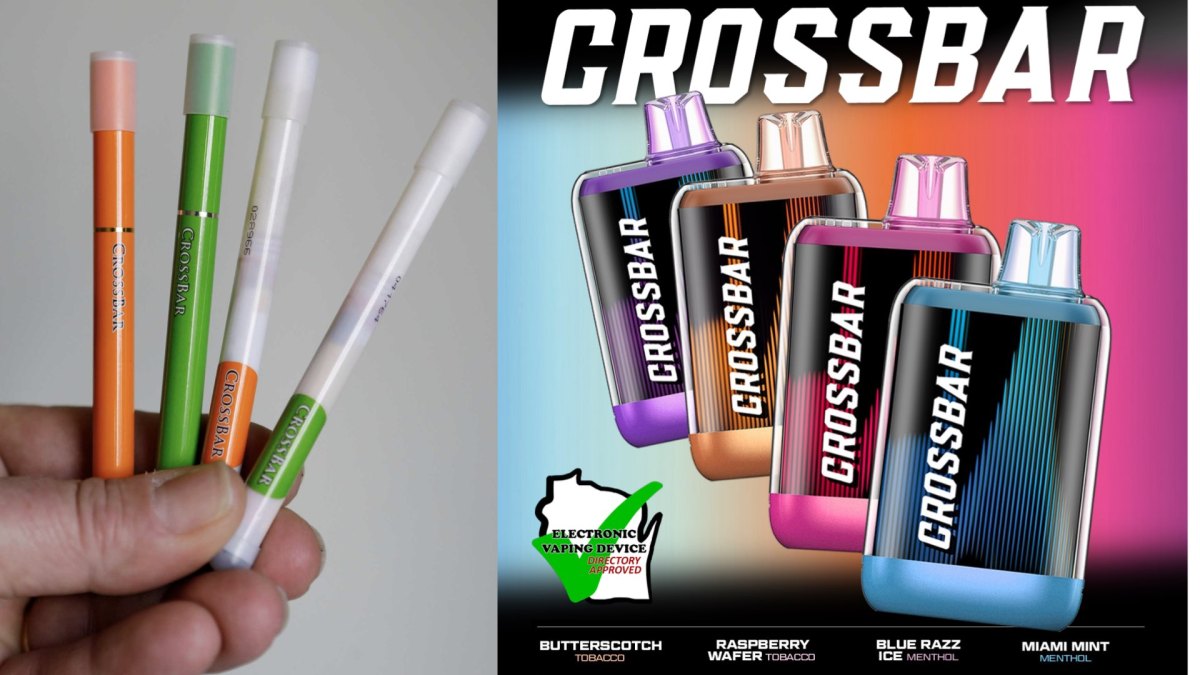
Special Report|CrossBar's High-Puff Vapes Draw Attention on Pennsylvania's 163-Product Directory as Link Between Earlier 1.3mL PMTA Filings and New 13mL Products Remains Unclear
Pennsylvania began enforcing its electronic nicotine delivery system directory restrictions on October 19, 2026. Among 163 product listings recorded before enforcement, four CrossBar 20K disposables stood out with 13mL capacity, advertised puff counts of up to 20,000 and a flattened design distinct from conventional pod systems and compact disposables. Historical records identify earlier 1.3mL CrossBar products associated with Romo LLC, while newer 13mL products appeared in several state directories beginning in 2025 under entities including Blue Nine LLC. PMTA compliance expert Mr. K identified amendments and application ownership transfers as possible regulatory mechanisms, although neither has been confirmed in this case. Separately, Reynolds' $7.5 million acquisition of 16 PACHA products and related assets illustrates the commercial value of products linked to historic PMTA submissions.
Special Report
Oct.22
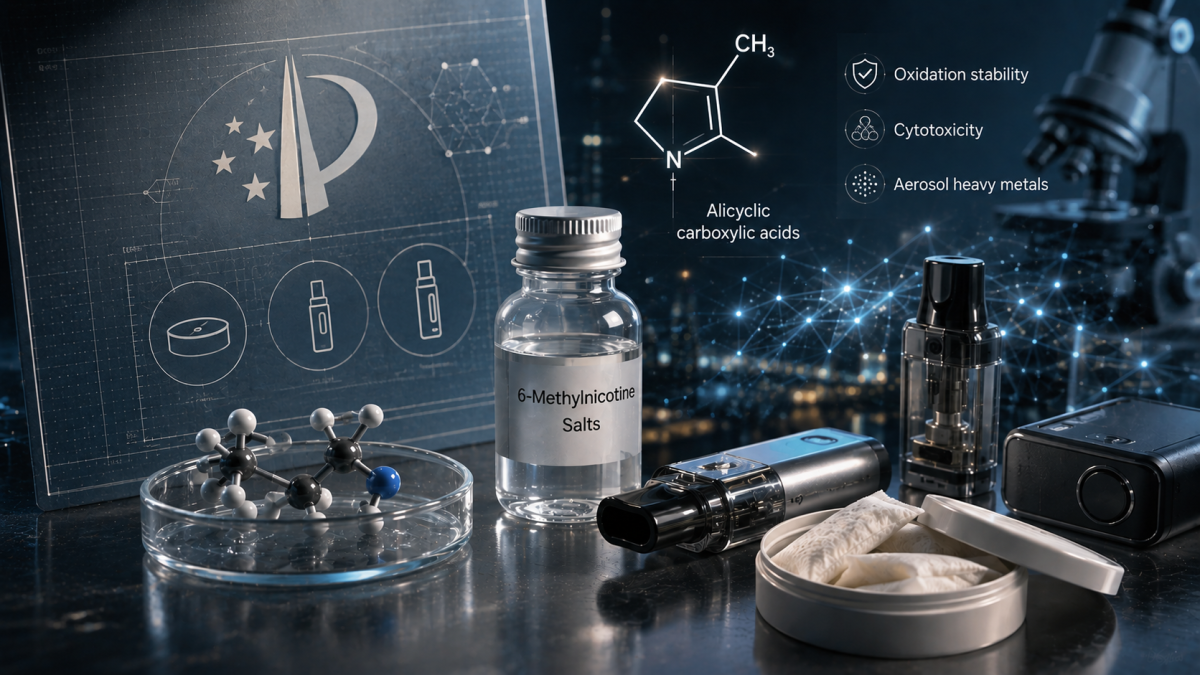
HG Innovation, linked to IMiracle and ELFBAR, wins China patent for 6-methylnicotine salts covering vaping and oral products
HG Innovation Limited has been granted a Chinese invention patent covering 6-methylnicotine salt formulations and their use in oral and vaping products. The technology forms salts between 6-methylnicotine and alicyclic carboxylic acids, with granted claims extending to oral products, atomization substrates and electronic atomization devices. Applicant-generated tests reported differences in oxidation stability, in-vitro cytotoxicity and aerosol heavy-metal performance compared with selected benzoate or lactate controls. HG Innovation is directly linked to the broader IMiracle and ELFBAR business network.
Sep.04
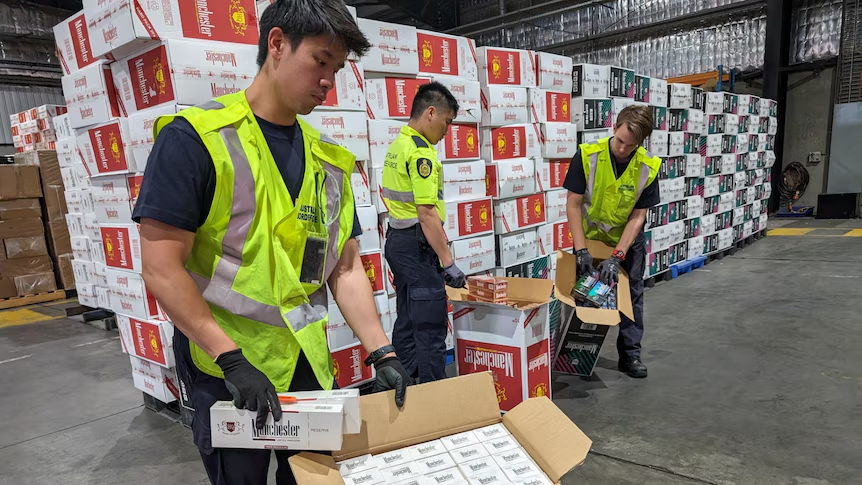
German Customs Seize 115,800 Vapes in €1.4 Million Tax Case
Germany's Magdeburg Main Customs Office seized 115,800 untaxed e-cigarettes containing a combined 4.366 million mL of e-liquid during four truck inspections between August 10 and September 4, 2026. The seizures prevented an estimated €1.397 million in tax losses and set a record for the customs office's jurisdiction. Criminal proceedings have been initiated against four truck drivers. The case follows a separate German investigation involving more than 7.6 million illicit vapes and an estimated €33.3 million in excise-tax losses.
Enforcement
Oct.13
South Korea Constitutional Court Upholds Volume-Based E-Liquid Tax, With Challenged Rates at KRW 370 and KRW 628 per Milliliter
South Korea's Constitutional Court has upheld fixed taxes on nicotine-containing e-cigarette liquids based on solution volume, ruling that challenged provisions imposing KRW 370 per milliliter in individual consumption tax and KRW 628 per milliliter in tobacco consumption tax do not violate the Constitution. The cases stemmed from historical disputes involving importers that reported nicotine as being extracted from tobacco stems rather than leaves. South Korea has since broadened its tobacco definition to include synthetic nicotine, while current tax laws provide reduced rates for certain products not derived from tobacco.
Sep.18
JUUL Purchasers Ask Ninth Circuit to Preserve Antitrust Classes in Case Over Altria’s $12.8 Billion Investment
Private antitrust litigation stemming from Altria's 2018 $12.8 billion investment for a 35% economic interest in JUUL is advancing before the U.S. Court of Appeals for the Ninth Circuit. Direct purchasers, indirect purchasers and indirect resellers of JUUL products filed answering briefs this week seeking to preserve class certifications granted by a California federal court in February. Altria and JUUL argue that individual consumers and large distributors differ too much in purchasing terms to remain in a single direct-purchaser class, while a separate dispute concerns whether California antitrust law can apply to indirect purchasers across 27 jurisdictions. A September trial has been put on hold during the appeal.
Sep.23
Australia’s Victoria Steps Up Illegal Tobacco Enforcement With Store Closures and Penalties of Up to A$2.5 Million
Australia’s state of Victoria has activated new powers allowing Tobacco Licensing Victoria and police to shut premises suspected of selling, supplying or possessing illicit tobacco for up to 90 days. Longer closures can be ordered by a magistrates’ court. Businesses subject to closure orders must generally cease all trading and will be placed on a public list. Breaching a closure order can carry penalties of up to A$2.5 million and 20 years in prison.
Sep.10