Thai Police Seize $98,000 Worth of E-cigarettes Near School

Regulations by 2FIRSTS.ai
Apr.10.2024
Thai Police Seize $98,000 Worth of E-cigarettes Near School
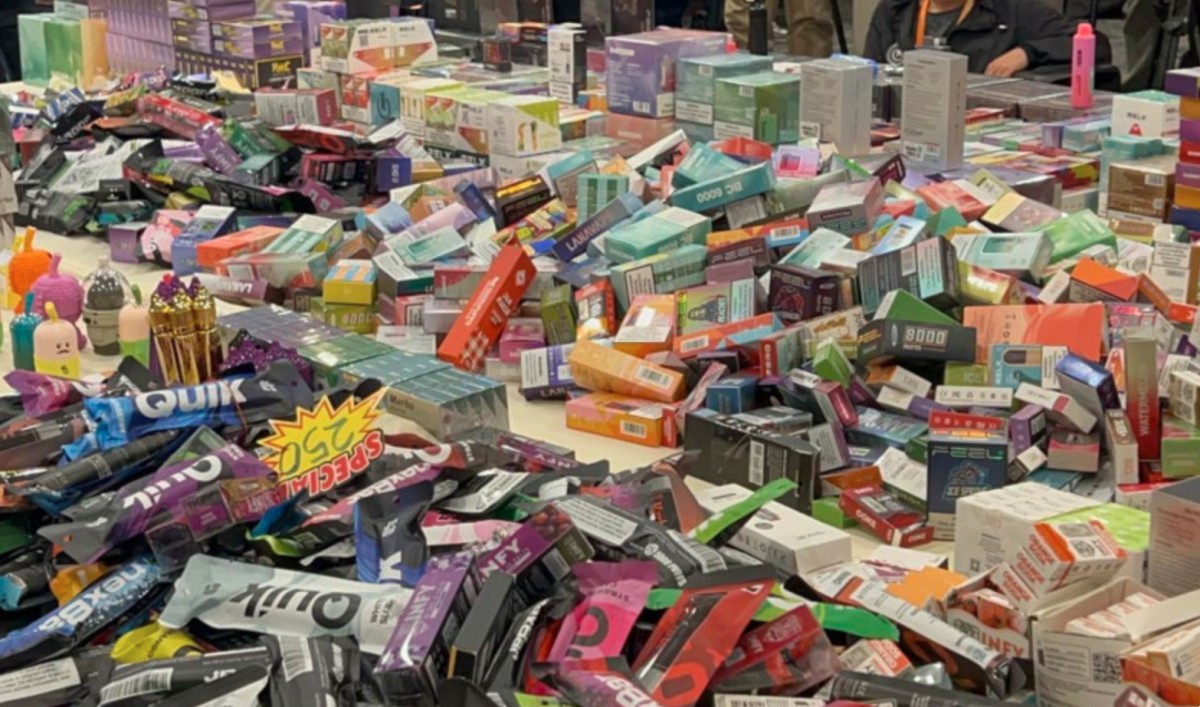
Thai police in Bangkok seized over 12,000 e-cigarettes worth $98,000 near schools, disguised as snacks and pens to attract teens.

According to a report from the Bangkok Post on April 10th, the police in Bangkok, Thailand seized over 12,000 e-cigarettes valued at approximately 3.6 million Thai baht (98,000 US dollars) from five shops near a school.


On Tuesday night, April 9th, officials from the Consumer Commission discovered these products after inspecting three stores in Chachoengsao County. The head of the commission, Phangphet Chunla-iad, stated that e-cigarette products being sold near schools were packaged in designs resembling snacks, ordinary pens, and even small milk cartons to increase their appeal to teenagers, making it difficult for teachers to detect that these e-cigarettes were being sold nearby.


The Secretary-General of the committee, Thasonat Thanitthiphan, stated that authorities are strictly enforcing consumer protection laws and related regulations to crack down on e-cigarette sellers. Under the consumer protection law, violators can be sentenced to a maximum of three years in prison or fined up to 600,000 Thai baht (approximately $16,488 USD). Smugglers of e-cigarettes can face a maximum of 10 years in prison or a fine of four times the value of the goods.


The secretary added that the seized e-cigarettes will be handed over to the police and will be destroyed after the court case concludes.


We welcome news tips, article submissions, interview requests, or comments on this piece.

Please contact us at info@2firsts.com, or reach out to Alan Zhao, CEO of 2Firsts, on LinkedIn


Notice

1.  This article is intended solely for professional research purposes related to industry, technology, and policy. Any references to brands or products are made purely for objective description and do not constitute any form of endorsement, recommendation, or promotion by 2Firsts.

2.  The use of nicotine-containing products — including, but not limited to, cigarettes, e-cigarettes, nicotine pouchand heated tobacco products — carries significant health risks. Users are responsible for complying with all applicable laws and regulations in their respective jurisdictions.

3.  This article is not intended to serve as the basis for any investment decisions or financial advice. 2Firsts assumes no direct or indirect liability for any inaccuracies or errors in the content.

4.  Access to this article is strictly prohibited for individuals below the legal age in their jurisdiction.


Copyright


This article is either an original work created by 2Firsts or a reproduction from third-party sources with proper attribution. All copyrights and usage rights belong to 2Firsts or the original content provider. Unauthorized reproduction, distribution, or any other form of unauthorized use by any individual or organization is strictly prohibited. Violators will be held legally accountable.

For copyright-related inquiries, please contact: info@2firsts.com


AI Assistance Disclaimer


This article may have been enhanced using AI tools to improve translation and editorial efficiency. However, due to technical limitations, inaccuracies may occur. Readers are encouraged to refer to the cited sources for the most accurate information.

We welcome any corrections or feedback. Please contact us at: info@2firsts.com

PMI Global Communications Chief Moira Gilchrist: Why AI Matters More Than Ever in the Smoke-Free Transition
Philip Morris International (PMI) Chief Global Communications Officer Moira Gilchrist said artificial intelligence is changing how companies understand audiences, manage owned information channels and communicate business transformation. PMI is using AI-generated audience personas to test messaging while optimizing its corporate website and other owned channels for large language models. As PMI continues its transition from cigarettes toward smoke-free products, Gilchrist said owned data and corporate channels are becoming increasingly important in demonstrating the scale of that transformation.
Aug.26
Bret Koplow Takes Permanent Charge of FDA Tobacco Center After Pushing Faster PMTA Reviews, as HHS Emphasizes Innovation and Access to Lower-Risk Alternatives
The U.S. Department of Health and Human Services has named Bret Koplow permanent director of the FDA’s Center for Tobacco Products, ending his period as acting chief. Koplow has spent years working on tobacco regulation, law and policy inside the FDA and, while serving as acting director, pushed for faster PMTA reviews and nicotine pouch review pilots. HHS also said CTP will prioritize innovation and access to less harmful alternatives for adult smokers while continuing efforts to protect youth.
Sep.09
China’s HTP Exports Fell 14.3% in H1 2026 as Russia and Belarus Accounted for 76% Lead
In H1 2026, China’s HS 24041100 exports stood at $1.32 million, down 14.3% YoY, with volume falling 17.2% to 55.33 tons. Market distribution shifted drastically amid overall export drops. Exports to Russia and Belarus totaled $1 million, taking 76.0% of all shipments versus 29.5% in H1 2025. Belarus became the top destination with export value jumping 177.5%, while the Philippines, Singapore and Indonesia’s combined share slumped from 49.3% to 11.2%.Domestically, Yunnan led exporter registrations; Jiangsu and Shanghai were key suppliers, yet Anhui and Sichuan had no exports. Heavy concentration means order or declaration changes for Russia/Belarus greatly affect national aggregate data. The data shows customs entry points (not end markets), covering tobacco consumables only, excluding heating equipment and the complete HTP supply chain.
Aug.11
Special Report | Can Nicotine Be Replaced? 6-MN Is Already on the Market While Key Human Evidence Is Still Missing
Nicotine analogues such as 6-methylnicotine are already appearing in e-cigarettes and oral pouches, even as key human evidence remains limited. A new Nixodine-S study adds nonclinical data showing differences from nicotine in cytotoxicity and receptor activity, while independent studies point to a more complex toxicological picture. With supply-chain activity growing and FDA seeking clearer authority over nicotine analogues, the industry now faces a larger question: what evidence is needed before these substances can credibly replace nicotine?
SCIENCE
Sep.23
China Tobacco Regulator Deputy Head Visits Laos as Both Sides Strengthen Cooperation on Illegal Tobacco Trade
China’s official Xinhua News Agency reported that Liu Sanjiang, deputy head and Party group member of China’s tobacco regulator, led a delegation to Laos from July 31 to Aug. 2, 2026, for discussions with Lao authorities on combating cross-border illegal tobacco trade. The two sides discussed areas including law enforcement cooperation, information sharing and efforts to address tobacco-related illegal activities such as counterfeiting and smuggling. The visit highlights cooperation between Chinese and Lao authorities on illicit tobacco control.
News
Aug.05
WIRED Investigation: Chinese-Made Vapes Turn to 6-Methyl-Nicotine and Other Analogs, Challenging U.S. Regulation
U.S. technology and investigative publication WIRED has examined how nicotine analogs are emerging as a new challenge for the country’s vape regulatory framework. The article argues that after the U.S. expanded federal oversight of nicotine products in 2022, some manufacturers began using nicotine-like compounds such as 6-methyl-nicotine that may fall outside existing definitions. Researchers cited by WIRED said some nicotine analogs could be more potent than traditional nicotine, although human health impacts remain unclear. U.S. policymakers are considering broader definitions of nicotine to bring these compounds under federal oversight.
Jul.27