Thailand Maintains Ban on E-Cigarette Imports.

Aug.31.2022
Thailand Maintains Ban on E-Cigarette Imports.
Thailand continues to prohibit the importation of electronic cigarettes to protect young people's health risks.

Thailand will not lift the ban on importing electronic cigarettes.


The government has officially confirmed its opposition to the use of electronic cigarettes, citing their negative impact on the health of users, more than half of whom are young people.


Anutin Charnvirakul, the Minister of Public Health, emphasized the need to continue the ban on importing electronic cigarettes during a national conference on smoking and public health held in Bangkok. This is to protect young people from the health risks associated with electronic smoking devices.


A survey conducted last year by Thailand's National Statistical Office found that more than half of the approximately 80,000 e-cigarette users in Thailand were between the ages of 15 and 24. "This clearly indicates that e-cigarettes are creating new smokers, especially among young people, and an increasing number of international studies have found that vaping has negative effects on the brains of young people," said Mr. Anutin.


He stated that Thailand has learned from the experiences of other countries in dealing with electronic cigarettes, and has found that currently there is no other option more effective than banning the import of electronic cigarettes for controlling their usage.


He said that cracking down on the smuggling of electronic cigarettes into the country would also continue to limit access to black market products.


Statement:


This article is compiled from third-party information and is only intended for industry exchange and learning.


This article does not represent the views of 2FIRSTS and 2FIRSTS cannot confirm the authenticity or accuracy of the article content. The translation of this article is only for industry communication and research purposes.


Due to limitations in our translation skills, the translated article may not accurately convey the original message. Please refer to the original article for accuracy.


2FIRSTS maintains complete alignment with the Chinese government on any domestic, Hong Kong, Macau, Taiwan, and foreign-related statements and positions.


The copyright of the compiled information belongs to the original media and authors. If there is any infringement, please contact us for deletion.


Disclaimer

This article is provided solely for professional research, industry discussion, and informational purposes. Any references to brands, companies, products, technologies, or policies are made for factual reporting and analytical purposes only, and do not constitute endorsement, recommendation, promotion, or advertising by 2Firsts.

Nicotine-containing products, including but not limited to cigarettes, e-cigarettes, heated tobacco products, and nicotine pouches, carry significant health risks. Readers are responsible for complying with all applicable laws and regulations in their respective jurisdictions, including age restrictions and access limitations.

The information contained in this article should not be regarded as investment, legal, medical, regulatory, or commercial advice. While 2Firsts strives to ensure the accuracy and reliability of its content, it does not assume liability for any direct or indirect loss arising from errors, omissions, inaccuracies, or reliance on the information contained herein.

This article is not intended for individuals below the legal age for accessing tobacco or nicotine-related information in their jurisdiction.


Copyright Notice

This article is either original content produced by 2Firsts or content reproduced, translated, summarized, or adapted from third-party sources with attribution where applicable. The intellectual property rights of the original content remain with 2Firsts or the respective original rights holders.

No individual or organization may copy, reproduce, distribute, republish, modify, translate, or otherwise use this content without prior authorization. Any unauthorized use may result in legal action.

For copyright-related inquiries, corrections, or removal requests, please contact: info@2firsts.com.


AI-Assisted Translation and Editing Notice

Portions of this article may have been translated, edited, or reviewed with the assistance of artificial intelligence tools to improve efficiency and readability. Due to the limitations of AI-assisted translation and editing, discrepancies, omissions, or inaccuracies may exist when compared with the original source.

Where applicable, readers are advised to refer to the original source for the most complete and accurate information. If you identify any errors or believe that any content infringes upon your rights, please contact us at info@2firsts.com, and we will review and address the matter promptly.


2Firsts First Look|China to End VAT Export Rebates on Vape Devices and Nicotine in April 2027, Following Earlier Removal for HTP Devices and Nicotine Vapes
China's Ministry of Finance and State Taxation Administration announced on October 12, 2026, that value-added tax (VAT) export rebates for vape devices, nicotine and its salts, and certain non-combustible inhalation products will be eliminated from April 1, 2027. The measure adds four tobacco- and nicotine-related customs codes, including 8543400010, which covers vape devices and qualifying empty pods. China previously eliminated rebates for nicotine-containing vaping products and devices under code 8543400090 in April 2026. According to industry classification information held by 2Firsts, the latter currently corresponds to heated tobacco devices. Export excise tax refund and exemption arrangements will remain unchanged.
Special Report
Oct.12
IKE Tech Launches IKE 2.0 Compliance Platform for Nicotine Products
IKE Tech launched IKE 2.0 on September 28, initially targeting nicotine products with a platform that combines user identity verification, product authentication, configurable policy controls and data analytics. Products can be authenticated through direct device integration or NFC smart tags. IKE Tech was formed with participation from Ispire's Aspire North America, Berify and Chemular, with Ispire currently holding a 40% interest. Its age-verification component PMTA was accepted by the FDA in 2025 and remains under review. The company did not disclose customer names, commercial deployment volumes, pricing or revenue tied to IKE 2.0.
News
Sep.29 by 2Firsts Perspectives
R.J. Reynolds Vapor Company Launches Flavored Vuse Pro Pods in U.S. Without FDA Marketing Authorization
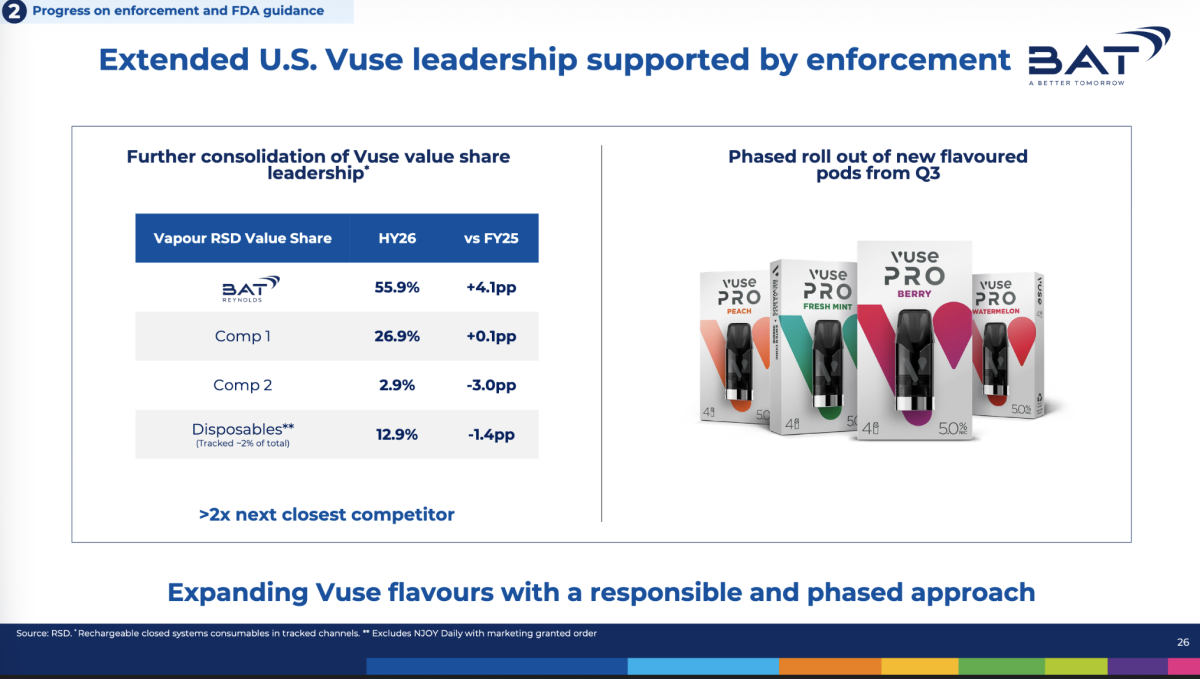
R.J. Reynolds Vapor Company has begun selling four flavored Vuse Pro pods — Peach, Berry, Watermelon and Fresh Mint — in Ohio and selected other U.S. markets. According to the Vuse U.S. FAQ, Vuse Pro contains approximately 5.0% nicotine by weight, and Vuse Pro pre-filled pods are intended for use with Vuse Alto devices. Reynolds told 2Firsts that product labeling lists an e-liquid capacity of 2.0 mL per pod. The Vuse Alto Power Unit received FDA marketing authorization in 2024, while the new Vuse Pro pods themselves have not received marketing granted orders. The rollout follows the FDA’s May 2026 revision of enforcement priorities for certain unauthorized vaping products with qualifying pending applications.
BAT
Sep.10
GSTHR Estimates 200 Million People Use Non-Combustible Nicotine Products as 28 Countries Show Rising Use Alongside Falling Smoking Rates
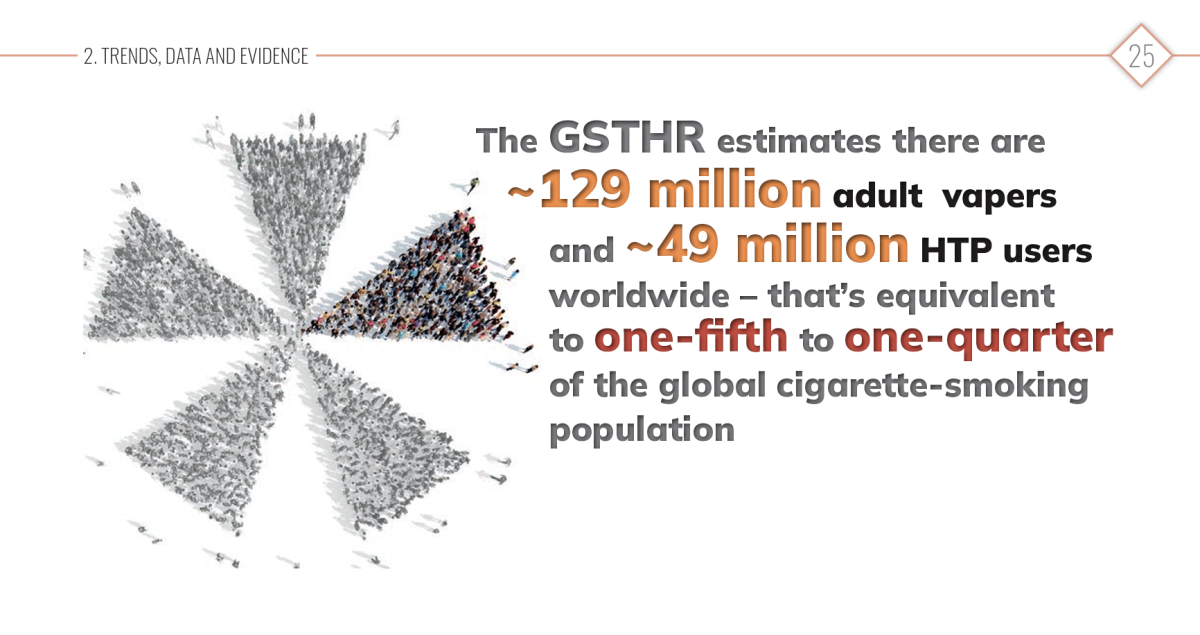
The Global State of Tobacco Harm Reduction, a project operated by Knowledge·Action·Change, estimates that about 200 million people worldwide use non-combustible nicotine products including vapes, heated tobacco, nicotine pouches and snus. Its 2026 report says use of these products rose alongside declining smoking rates in 28 countries it analyzed. The data do not establish that all 200 million users have quit smoking, nor do they prove a direct causal relationship. GSTHR also says regulatory restrictions on the products continue to expand in many markets.
Sep.10
Swedish Match Faces Broader Labeling Order After ZYN Inspection, Documents Obtained by 2Firsts Show
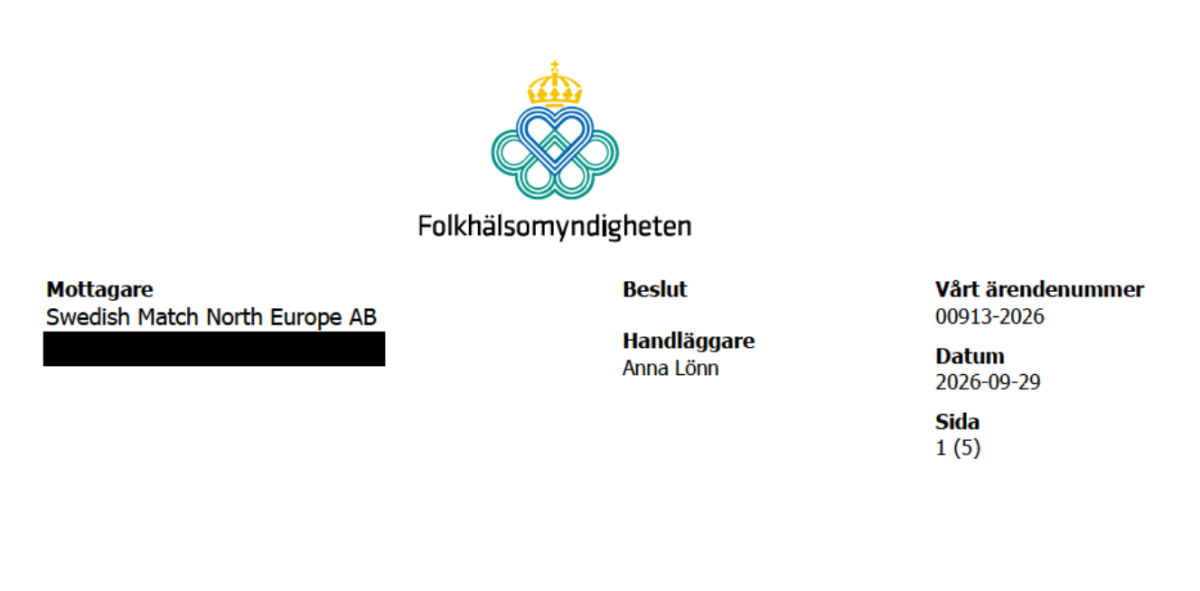
Documents obtained by 2Firsts show that Sweden's Public Health Agency ordered Swedish Match to revise ingredient labels beyond the five ZYN products inspected. The dispute centers on whether flavoring ingredients must be individually disclosed, with Swedish Match citing trade-secret protection and the regulator insisting on full ingredient disclosure. The company faces a conditional penalty of SEK 2 million per month for noncompliance. As of October 22, the agency had received no appeal, despite the company's stated intention to challenge the decision.
Oct.22
Kumulus Vape2026 H1 Revenue Falls 8.3% but Profit Rises 24% as B2B Weakens and Consumer Channels Grow
French vaping company Kumulus Vape reported first-half 2026 revenue of €25.5 million, down 8.3% year over year, as its core B2B distribution business fell 11% to €21.6 million. B2C and store-network revenue rose 5.6% and 17.8%, respectively. Commercial margin increased to 26.3% from 21.7%, while net profit rose 24.1% to €0.8 million. The company attributed the profitability improvement to catalog optimization, logistics restructuring and the ramp-up of Labster, its in-house production unit for proprietary brands.
Market
Sep.17 by 2Firsts Perspectives