The Surge in Confiscated E-cigarettes in Brazil: A Report

Regulations by 2FIRSTS.ai
Jan.15.2024
The Surge in Confiscated E-cigarettes in Brazil: A Report
According to the latest report from Brazil's Federal Revenue Service, the seizure of e-cigarettes in the state of Santa Catarina increased by 117% in the past year.

According to a report by the Brazilian media outlet Correiodoestado on January 12th, the latest report from Brazil's Federal Revenue Bureau reveals a staggering 117% increase in the seizure of e-cigarettes in the state of South Mato Grosso over the past year.


The state of Mato Grosso do Sul ranks second on the national e-cigarette seizure leaderboard, only behind the state of Parana. According to reports, in 2023, Mato Grosso do Sul confiscated a total of 363,911 e-cigarettes, whereas Parana took the lead nationwide with 618,889 seizures.


The Brazilian Federal Revenue Agency has emphasized that e-cigarette smuggling has been steadily increasing across Brazil since 2019. Overall, within just one year (from 2022 to 2023), the number of e-cigarettes seized has increased by 25%. Nationwide, the seizure count was 1,094,622 in 2022, and it rose to 1,367,719 in 2023.


Of particular note is the state of Santa Catarina, where the number of e-cigarette confiscations in 2023 has increased by six times compared to 2022.


We welcome news tips, article submissions, interview requests, or comments on this piece.

Please contact us at info@2firsts.com, or reach out to Alan Zhao, CEO of 2Firsts, on LinkedIn


Notice

1.  This article is intended solely for professional research purposes related to industry, technology, and policy. Any references to brands or products are made purely for objective description and do not constitute any form of endorsement, recommendation, or promotion by 2Firsts.

2.  The use of nicotine-containing products — including, but not limited to, cigarettes, e-cigarettes, nicotine pouchand heated tobacco products — carries significant health risks. Users are responsible for complying with all applicable laws and regulations in their respective jurisdictions.

3.  This article is not intended to serve as the basis for any investment decisions or financial advice. 2Firsts assumes no direct or indirect liability for any inaccuracies or errors in the content.

4.  Access to this article is strictly prohibited for individuals below the legal age in their jurisdiction.


Copyright


This article is either an original work created by 2Firsts or a reproduction from third-party sources with proper attribution. All copyrights and usage rights belong to 2Firsts or the original content provider. Unauthorized reproduction, distribution, or any other form of unauthorized use by any individual or organization is strictly prohibited. Violators will be held legally accountable.

For copyright-related inquiries, please contact: info@2firsts.com


AI Assistance Disclaimer


This article may have been enhanced using AI tools to improve translation and editorial efficiency. However, due to technical limitations, inaccuracies may occur. Readers are encouraged to refer to the cited sources for the most accurate information.

We welcome any corrections or feedback. Please contact us at: info@2firsts.com

U.S. Customs Plan to Require Foreign Export Declarations Could Deal ‘Devastating’ Blow to China’s Vape Exports, Logistics gl Expert Says
A U.S. Customs and Border Protection proposal to collect foreign export declarations and other overseas customs documents could expose discrepancies in the value, classification and description of China-made vape shipments entering the United States. A veteran Chinese logistics professional told 2Firsts that the measure, if implemented, could undermine the all-inclusive shipping model used by some unauthorized vape exporters and push parts of the trade toward costlier underground channels. The risk extends beyond higher duties: accurately declared products may also be more readily identified as unauthorized e-cigarettes subject to FDA enforcement.
Special Report
Sep.07
FDA Unifies Tobacco Registration and Product Listing Form Across Product Categories
The U.S. FDA has consolidated two tobacco establishment registration and product listing forms into a redesigned Form FDA 3741 covering all regulated product categories, including e-cigarettes, heated tobacco products and nicotine pouches. The current requirements remain limited to domestic establishments. Separately, the FDA has proposed extending registration and product listing requirements to foreign manufacturers, signaling greater regulatory attention to manufacturing entities and product-level information across the tobacco and nicotine supply chain.
FDA
Sep.30
HG Innovation, linked to IMiracle and ELFBAR, wins China patent for 6-methylnicotine salts covering vaping and oral products
HG Innovation Limited has been granted a Chinese invention patent covering 6-methylnicotine salt formulations and their use in oral and vaping products. The technology forms salts between 6-methylnicotine and alicyclic carboxylic acids, with granted claims extending to oral products, atomization substrates and electronic atomization devices. Applicant-generated tests reported differences in oxidation stability, in-vitro cytotoxicity and aerosol heavy-metal performance compared with selected benzoate or lactate controls. HG Innovation is directly linked to the broader IMiracle and ELFBAR business network.
Sep.04
Product | KT&G to Launch lil Tonino Lamborghini in South Korea, Bringing 3-Second Heat-Up to New HTP Platform
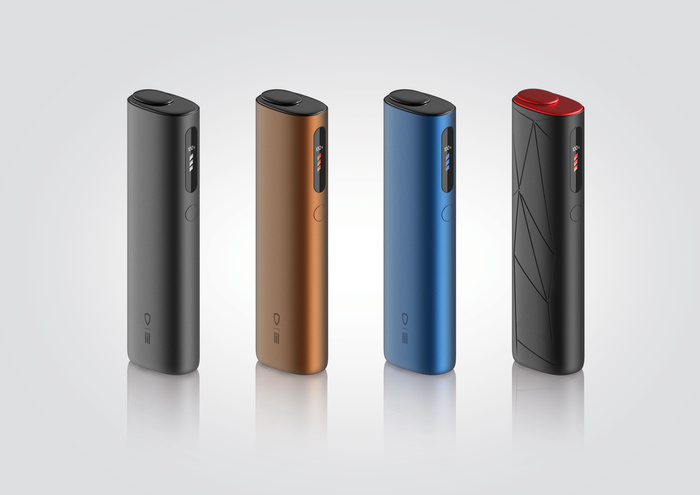
KT&G will launch the lil Tonino Lamborghini heated tobacco device in Seoul on September 15, 2026. The product introduces a new heating technology called Flashwave Heating, which uses microwaves to heat tobacco sticks internally and delivers a manufacturer-rated heat-up time of about three seconds. The device features an all-metal aluminum body, a color display and a dedicated GUI, and launches alongside a new line of NAU tobacco sticks that are incompatible with existing lil consumables. Korean media describe the product as KT&G's first new heated tobacco platform since lil AIBLE was introduced in 2022.
Aug.31
F1 Faces Renewed Pressure Over Tobacco and Nicotine Sponsorships as 67 Groups Target ZYN and VELO Ahead of Madrid Race
Ahead of the Formula 1 race in Madrid, 67 Spanish and international public-health, medical and consumer organizations have sent an open letter to F1 President and CEO Stefano Domenicali calling for an end to sponsorships linked to the tobacco and nicotine industry, including nicotine pouches, vaping products and heated tobacco. The letter focuses on Philip Morris International’s ZYN partnership with Ferrari and British American Tobacco’s long-running partnership with McLaren and exposure for VELO. The campaign follows a March letter in which more than 160 organizations worldwide made a similar request to Formula 1.
Sep.10
North Carolina Tightens Vape Product Directory Enforcement, Expands State and Local Powers as Violators Face Fines, Product Seizures and License Suspension or Revocation
North Carolina has expanded enforcement of its vapor product directory rules, authorizing more state and local law enforcement participation and establishing a task force led by the State Bureau of Investigation. The legislation requires at least one unannounced compliance inspection annually for retailers, distributors and wholesalers handling covered products. Penalties effective October 1, 2026, include civil fines of $500–$750 for a first violation and $1,000–$1,500 for repeated violations within 12 months, along with potential license suspension or revocation. Manufacturers may face penalties of $10,000 per unlisted product. The measures strengthen the product directory system established in 2024.
Regulations
Oct.28