Turkey Imposes Higher Taxes on Tobacco Products in August

Aug.08.2024
Turkey Imposes Higher Taxes on Tobacco Products in August
Turkey's tobacco industry reacts to consecutive tax hikes on tobacco products, sharing price changes on social media.

According to a report by DUNYA on August 8th, Erol Dündar, chairman of the Tobacco Industry and Merchants Association of Turkey (Tekel Bayileri Yardımlaşma Derneği, TBYD), stated that Turkey has been continuously increasing taxes on tobacco products. He also shared the prices of tobacco products after the tax increase on social media platform X, while answering questions such as "Have cigarettes been taxed, how much is the price of cigarettes now, and what are the prices of the cheapest and most expensive cigarettes in lira.


Dundar stated, "Taxes have been increased on products of the Imperial Tobacco brand, and the tax hike on various types of tobacco products is still ongoing.


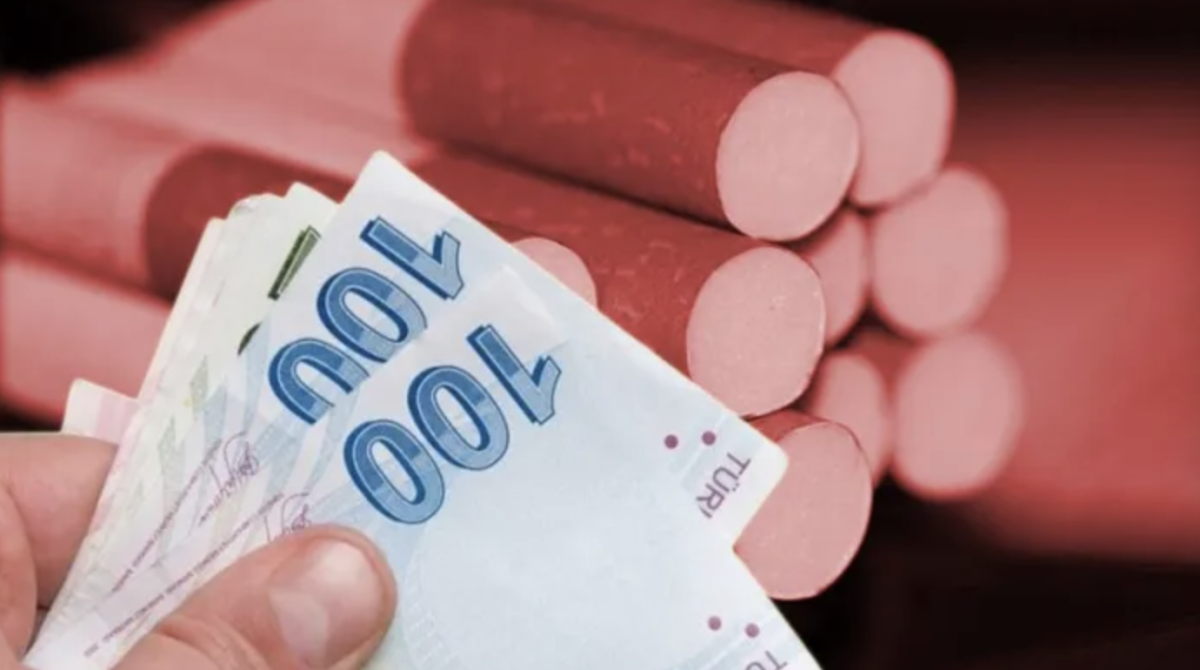
In August, Turkey will be imposing a 4-5 lira (approximately 0.86-1.07 yuan) tax on tobacco products. This tax increase will apply to products from PM, BAT, JTI, and TT.


According to the Prime Minister's tax list, the most expensive tobacco product is priced at 77 lira (approximately 16.46 yuan), while the cheapest is 69 lira (approximately 14.75 yuan). JTI's most expensive tobacco product is priced at 78 lira (approximately 13.68 yuan), while the cheapest is 64 lira (approximately 13.68 yuan). BAT's most expensive tobacco product is priced at 85 lira (approximately 18.17 yuan), while the cheapest is 64 lira (approximately 13.68 yuan). TT's most expensive tobacco product is priced at 71 lira (approximately 15.18 yuan), while the cheapest is 60 lira (approximately 12.83 yuan). Imperial Tobacco's most expensive tobacco product is priced at 77 lira (approximately 16.46 yuan), while the cheapest is 62 lira (approximately 13.25 yuan).


We welcome news tips, article submissions, interview requests, or comments on this piece.

Please contact us at info@2firsts.com, or reach out to Alan Zhao, CEO of 2Firsts, on LinkedIn


Notice

1.  This article is intended solely for professional research purposes related to industry, technology, and policy. Any references to brands or products are made purely for objective description and do not constitute any form of endorsement, recommendation, or promotion by 2Firsts.

2.  The use of nicotine-containing products — including, but not limited to, cigarettes, e-cigarettes, nicotine pouchand heated tobacco products — carries significant health risks. Users are responsible for complying with all applicable laws and regulations in their respective jurisdictions.

3.  This article is not intended to serve as the basis for any investment decisions or financial advice. 2Firsts assumes no direct or indirect liability for any inaccuracies or errors in the content.

4.  Access to this article is strictly prohibited for individuals below the legal age in their jurisdiction.


Copyright


This article is either an original work created by 2Firsts or a reproduction from third-party sources with proper attribution. All copyrights and usage rights belong to 2Firsts or the original content provider. Unauthorized reproduction, distribution, or any other form of unauthorized use by any individual or organization is strictly prohibited. Violators will be held legally accountable.

For copyright-related inquiries, please contact: info@2firsts.com


AI Assistance Disclaimer


This article may have been enhanced using AI tools to improve translation and editorial efficiency. However, due to technical limitations, inaccuracies may occur. Readers are encouraged to refer to the cited sources for the most accurate information.

We welcome any corrections or feedback. Please contact us at: info@2firsts.com

WIRED Investigation: Chinese-Made Vapes Turn to 6-Methyl-Nicotine and Other Analogs, Challenging U.S. Regulation
U.S. technology and investigative publication WIRED has examined how nicotine analogs are emerging as a new challenge for the country’s vape regulatory framework. The article argues that after the U.S. expanded federal oversight of nicotine products in 2022, some manufacturers began using nicotine-like compounds such as 6-methyl-nicotine that may fall outside existing definitions. Researchers cited by WIRED said some nicotine analogs could be more potent than traditional nicotine, although human health impacts remain unclear. U.S. policymakers are considering broader definitions of nicotine to bring these compounds under federal oversight.
Jul.27
InterTabac 2026: Further Sessions on Regulation, Market Access and Innovation Confirmed; 2FIRSTS to Host China Market Forum
InterTabac 2026 will bring together international experts to discuss European regulation, tax policy, Track & Trace, market access, retail impacts, consumer behavior and innovation. Sessions will also examine Poland’s tobacco-growing perspective and the growing fragmentation of Europe’s tobacco and nicotine market. Media partner 2FIRSTS will host the second “2FIRSTS Connect at InterTabac” on September 16, focusing on developments in China’s tobacco and nicotine industry.
Aug.06
Altria Smokeable Profit Rises 2.4% as Marlboro Share Falls and U.S. Discounts Gain
Altria’s second-quarter results show a U.S. nicotine market splitting across price, product and regulation. Smokeable profit rose 2.4% as Marlboro pricing offset lower volumes, while discount brand Basic gained share among value-conscious smokers. In oral nicotine, on! PLUS expanded distribution but faced intensifying competition from ZYN and Velo. NJOY remained off the market as patent and regulatory hurdles delayed its return. The broader lesson: U.S. growth increasingly depends on price-tier strategy, retail execution, authorisation and enforcement readiness across the industry.
Special Report
Jul.31
South Korea Rejects 16 Trillion Won Tax-Evasion Claim Over Chinese Synthetic Nicotine
The South Korean government rejected allegations that Chinese synthetic-nicotine e-liquids were linked to about 16 trillion won in tobacco tax evasion, saying China does not ban synthetic nicotine exports and the estimate is difficult to verify, while acknowledging that pre-law synthetic-nicotine inventory is effectively difficult to tax.
Market
Jun.25
CCPIT Says Trade Friction Index for China-Related Electronics Sector Remains High, With Vape Products Among Areas of Focus
China Council for the Promotion of International Trade (CCPIT) held its July regular press conference on July 31, 2026, releasing the May 2026 Global Economic and Trade Friction Index. CCPIT spokesperson Yang Fan said the global trade friction index stood at 95 in May, remaining at a medium-to-high level. By industry, the electronics sector recorded the highest trade friction index among 13 monitored industries. In China-related trade frictions, the index stood at 93, with electronics products including drones, chips and vape products among areas where friction remained elevated.
Aug.03
Japan’s Heated Tobacco Tax Changes Reshape Consumer Choices, Survey Reveals Impact of Price and Income
A consumer survey by Japanese heated tobacco information platform RELAZO found that rising tobacco prices and planned heated tobacco tax changes may influence smoking decisions among Japanese consumers. The survey covered 49,879 men and women aged 20 to 69 nationwide. It found that around 40% of respondents cumulatively indicated they may consider quitting when a pack reaches ¥600 (approximately US$4.1), while nearly 90% expressed potential quitting intentions at a ¥1,000 (approximately US$6.8) price level. The survey also found significant differences by income level, with lower-income respondents showing greater sensitivity to price increases.
Jul.24