UK Council Supports Government's 'Smoke-Free Generation' Plan

Regulations by 2FIRSTS.ai
Dec.04.2023
UK Council Supports Government's 'Smoke-Free Generation' Plan
Westmorland and Furness council's health committee supports the UK government's proposed "smoke-free generation" plan to reduce smokers to under 5% by 2030.

According to Nwemail, the Health and Wellbeing Committee of the Westmorland and Furness Council in the United Kingdom has endorsed the government's proposed "smoke-free generation" plan. These measures aim to reduce the number of smokers to below 5% of the population by 2030.


The government's recommendations to reduce smoking include making it a criminal offense to sell tobacco products to anyone born on or after January 1st, 2009, as well as restricting the flavors and descriptions of e-cigarettes to no longer target children.


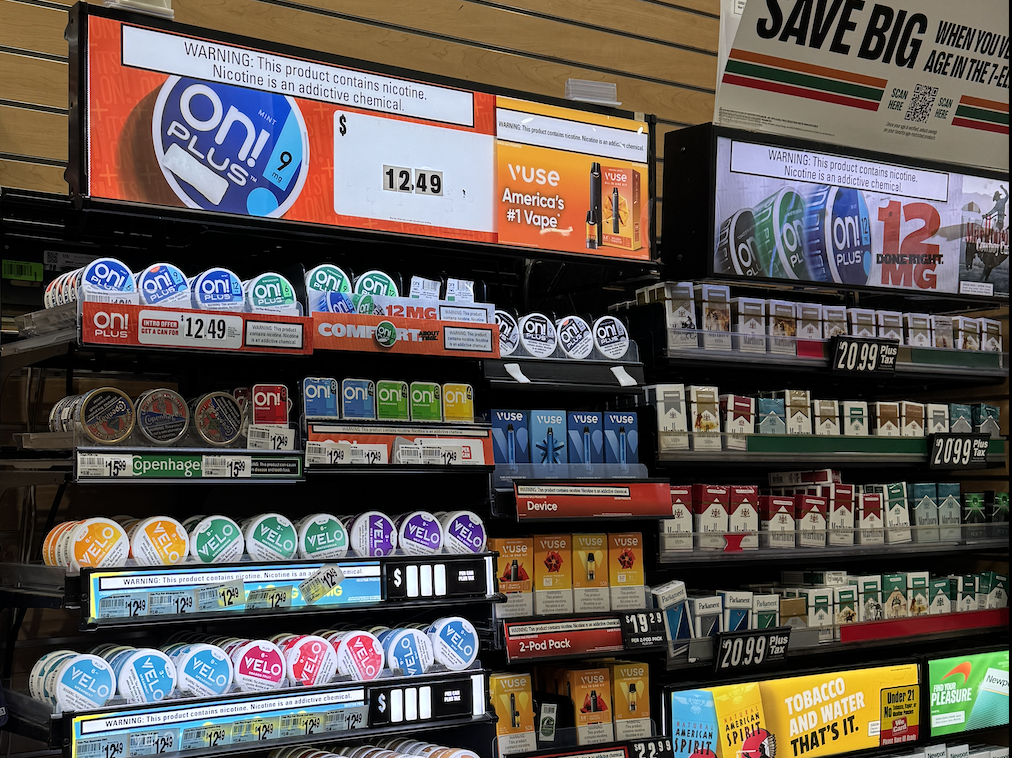
The government's plan also includes regulating the display of e-cigarettes in retail stores to keep them out of the sight of children and prevent them from being attracted to these products. They are also considering restrictions on the sale of disposable e-cigarettes, as this is linked to the increasing use of e-cigarettes among children.


Katrina Stephens, the director of public health for Westmorland and Furness Council, previously stated that smoking remains the leading cause of premature death in the region.


According to the UK Department of Public Health, smoking is responsible for 84% of lung cancer deaths and increases the risk of stroke by at least 50%. The government has set a target to achieve smoke-free England by 2030. This means that by 2030, the smoking population will be less than 5%.


According to Stephens, in order for Westmoreland and Furness to achieve this goal, 10,000 people in the region will need to quit smoking, without any new smokers starting.


We welcome news tips, article submissions, interview requests, or comments on this piece.

Please contact us at info@2firsts.com, or reach out to Alan Zhao, CEO of 2Firsts, on LinkedIn


Notice

1.  This article is intended solely for professional research purposes related to industry, technology, and policy. Any references to brands or products are made purely for objective description and do not constitute any form of endorsement, recommendation, or promotion by 2Firsts.

2.  The use of nicotine-containing products — including, but not limited to, cigarettes, e-cigarettes, nicotine pouchand heated tobacco products — carries significant health risks. Users are responsible for complying with all applicable laws and regulations in their respective jurisdictions.

3.  This article is not intended to serve as the basis for any investment decisions or financial advice. 2Firsts assumes no direct or indirect liability for any inaccuracies or errors in the content.

4.  Access to this article is strictly prohibited for individuals below the legal age in their jurisdiction.


Copyright


This article is either an original work created by 2Firsts or a reproduction from third-party sources with proper attribution. All copyrights and usage rights belong to 2Firsts or the original content provider. Unauthorized reproduction, distribution, or any other form of unauthorized use by any individual or organization is strictly prohibited. Violators will be held legally accountable.

For copyright-related inquiries, please contact: info@2firsts.com


AI Assistance Disclaimer


This article may have been enhanced using AI tools to improve translation and editorial efficiency. However, due to technical limitations, inaccuracies may occur. Readers are encouraged to refer to the cited sources for the most accurate information.

We welcome any corrections or feedback. Please contact us at: info@2firsts.com

The Volume Illusion: Measuring the Future of Nicotine with the Tools of the Past
As next-generation nicotine products become economically central rather than marginal, traditional volume-based metrics are increasingly unable to explain consumption, risk, and value. Units designed for a cigarette-based economy struggle to describe systems defined by delivery speed, pharmacokinetics, and adaptive user behavior. Drawing on financial reporting, regulation, and nicotine science, a fundamental question: can the future of nicotine still be measured using the tools of its past?
Feb.09 by Alan Zhao | 2Firsts Perspectives
Report Says Teen e-cigarette use on the rise, with majority of sales coming from disposable products
Monitoring a Changing Tobacco Product Market in the United States is the second annual review from the Monitoring Tobacco Product Use project, analyzing retail scanner data from January 2019 to December 2024 and TEEN+ survey data.
Jan.07 by 2FIRSTS.ai
France drops a vaping clause from the 2026 finance bill after use of Article 49.3
A provision in France’s 2026 finance bill intended to regulate vaping products was abandoned after Sébastien Lecornu used Article 49.3 on January 20 to commit the government’s responsibility on the “revenue” section of the state budget.
Jan.21 by 2FIRSTS.ai
New Nicotine Products Added to Tax List in Delaware Budget Proposal
Delaware Governor Matt Meyer’s proposed FY2027 budget would significantly raise cigarette and nicotine product taxes to help close a $500 million budget gap and generate new revenue. The cigarette tax would rise from $2.10 to $3.60 per pack, with increases on moist snuff, e-liquids and other tobacco products. Supporters say the move is justified, while small businesses warn of potential sales losses.
Feb.17
Exclusive|Suspected China Tobacco Nicotine Oral Film Product Surfaces on Social Media
China Tobacco Jiangsu IC appears to have developed a nicotine oral film product under the "Nanjing" brand, according to images circulating on Chinese social media. If confirmed, this could potentially mark China Tobacco's first oral nicotine product targeting the domestic market. The product's authenticity has not been officially verified, and no nicotine pouch products have been approved for sale in China.
Special Report
Feb.09
Puerto Rico House Files P.C. 1070 to Ban Flavored Vaping Product Sales to Under-21s
According to a statement from the Puerto Rico House of Representatives, House Speaker Carlos Méndez and Rep. Pedro Julio Santiago announced the filing of House Bill 1070 (P.C. 1070), which would prohibit sales to people under 21 of vaping devices, liquids, or cartridges featuring a flavor and/or aroma other than nicotine.
Jan.29 by 2FIRSTS.ai