UK Disposable Ban: Definition and Penalty Details Disclosed

Regulations by 2FIRSTS.ai
Mar.12.2024
UK Disposable Ban: Definition and Penalty Details Disclosed
UK government plans to ban disposable e-cigarettes starting in April 2025, with penalties up to £200 for violators.

According to a draft regulation introduced by the UK government on March 11, 2024, disposable e-cigarettes will be banned across the UK starting in April 2025. Any retailer found in violation of this regulation will face a £200 fine and potential imprisonment. Once the regulation comes into effect, retailers caught selling disposable e-cigarettes will either be subject to a fixed penalty or receive a compliance/stop-sale notice to ensure they cease selling these products.


Any business that does not comply with the enforcement notice may face further fines or imprisonment. Enforcement officers will also have the power to enter stores, take photos, and seize suspected contraband items. This document is currently in the draft stage, which means that the relevant regulations may still change.


This regulation also provides a definition for disposable e-cigarettes.


  • A disposable e-cigarette refers to an e-cigarette that is designed to not be reused, including any (a) non-refillable, (b) non-rechargeable, or (c) non-refillable and non-rechargeable e-cigarette. 


  • In this regulation, an e-cigarette is considered non-refillable unless its design includes either (a) replaceable disposable containers that can be obtained separately, or (b) refillable containers. 


  • This includes coils that cannot be replaced by individual users during normal use, as well as any coils contained in disposable cigarette boxes or pipes that cannot be provided separately or replaced. 


The government also released an impact report predicting how this ban will affect profits for the entire retail industry. It is estimated that the losses in 2025 and 2026 will reach £648 million and £761 million respectively.


This figure was derived by multiplying the average price of disposable e-cigarettes by the projected annual sales volume. This number was then multiplied by 24%, which is the estimated profit margin, based on data from annual business surveys. However, this draft has faced criticism from the ACS.


The CEO of ACS, James Lowman, stated:


The idea that the government ban on disposable e-cigarettes will simply make them disappear is extremely naive. There are many fundamental issues with the impact assessment, the most significant being a serious underestimation of the financial impact on retailers of the ban on disposable e-cigarettes. Calculating the profit loss from the ban on disposable products using overall retail turnover completely misunderstands this category.


In both regulations and impact assessments, there is nothing to deter criminals and unlicensed vendors. They will continue to operate with impunity. Pretending that such measures can curb illegal transactions is nothing but a policy fantasy.


The government is continuing to accept comments and viewpoints on the draft proposal until March 25th.


We welcome news tips, article submissions, interview requests, or comments on this piece.

Please contact us at info@2firsts.com, or reach out to Alan Zhao, CEO of 2Firsts, on LinkedIn


Notice

1.  This article is intended solely for professional research purposes related to industry, technology, and policy. Any references to brands or products are made purely for objective description and do not constitute any form of endorsement, recommendation, or promotion by 2Firsts.

2.  The use of nicotine-containing products — including, but not limited to, cigarettes, e-cigarettes, nicotine pouchand heated tobacco products — carries significant health risks. Users are responsible for complying with all applicable laws and regulations in their respective jurisdictions.

3.  This article is not intended to serve as the basis for any investment decisions or financial advice. 2Firsts assumes no direct or indirect liability for any inaccuracies or errors in the content.

4.  Access to this article is strictly prohibited for individuals below the legal age in their jurisdiction.


Copyright


This article is either an original work created by 2Firsts or a reproduction from third-party sources with proper attribution. All copyrights and usage rights belong to 2Firsts or the original content provider. Unauthorized reproduction, distribution, or any other form of unauthorized use by any individual or organization is strictly prohibited. Violators will be held legally accountable.

For copyright-related inquiries, please contact: info@2firsts.com


AI Assistance Disclaimer


This article may have been enhanced using AI tools to improve translation and editorial efficiency. However, due to technical limitations, inaccuracies may occur. Readers are encouraged to refer to the cited sources for the most accurate information.

We welcome any corrections or feedback. Please contact us at: info@2firsts.com

Australia Adds 6-Methylnicotine to Schedule 9 Prohibited Substances, Effective October 1
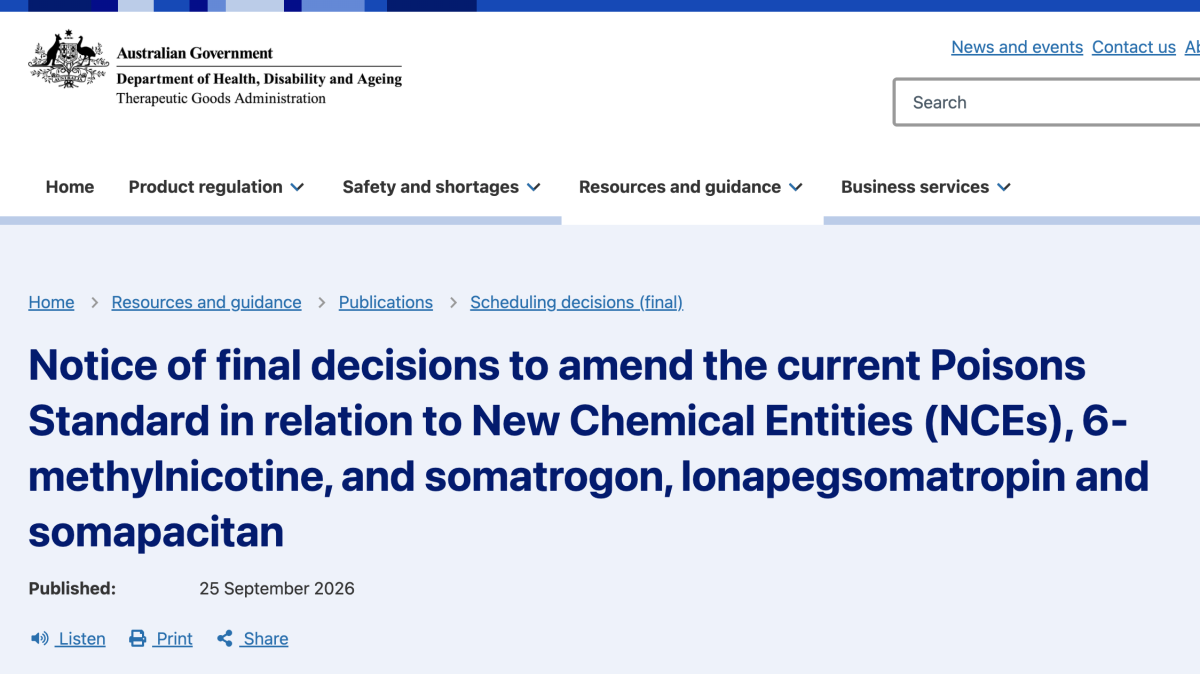
Australia's Therapeutic Goods Administration published a final decision on September 25 to classify 6-methylnicotine as a Schedule 9 prohibited substance under the Poisons Standard, effective October 1, 2026. TGA said the chemical has been reported in e-cigarette liquids sold in Australia and marketed as nicotine-free or nicotine alternatives, while evidence also indicates its use in preparations such as oral pouches. The government originally proposed a Schedule 7 classification but ultimately adopted the stricter Schedule 9 designation, citing acute toxicity, dependence risk, use in unapproved consumer products and misleading marketing.
News
Sep.29 by 2Firsts Perspectives
IVG Parent Secures HMRC Excise Warehouse and Duty Stamp Approvals Ahead of UK Vape Tax
Acme Vape Ltd, the company behind UK vaping brand IVG, has received HM Revenue & Customs approval to operate an excise warehouse for vaping products and participate in the Vaping Duty Stamps Scheme. The UK's Vaping Products Duty will take effect on October 1, 2026, at a flat rate of £2.20 per 10ml of vaping liquid. Acme Vape Ltd says its approved warehouse in Preston will become operational under the new regime on the same date.
Regulations
Sep.18 by 2Firsts Perspectives
On-Site Report | After FDA Announces Review of PMTA Framework, CTP Director Details Reform Priorities
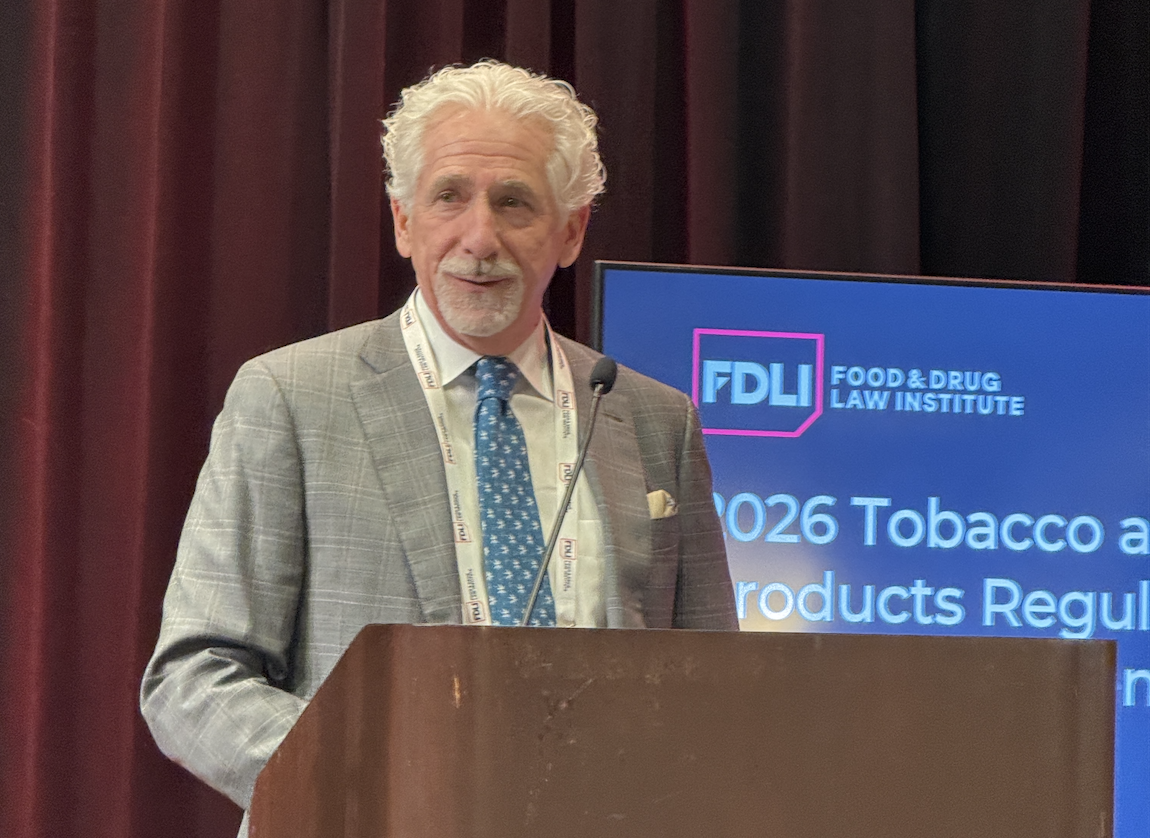
FDA CTP Director Bret Koplow used his FDLI keynote in Washington to outline how the agency is rethinking the PMTA framework. He discussed category-specific review, nicotine pouch and sPMTA pilots, AI-assisted review, a 70% reduction in pending applications, and a major staffing constraint: CTP currently has only nine scientific review teams. He also reaffirmed tobacco harm reduction while stressing youth protection, flavored products, risk communication, and the challenge of unauthorized e-cigarettes.
Regulations
Oct.06
Sweden Threatens EU Tobacco Tax Deal as Nicotine Pouch Duty Dispute Looms Over November 9 Meeting
Sweden is expected to oppose a European Union proposal to raise minimum tobacco excise duties, Law360 reported on October 26, 2026, citing an EU official. A provisional Council agenda dated October 23 confirms that the tobacco taxation package is scheduled for discussion at the November 9 finance ministers' meeting, where member states will seek a general approach. The proposed reforms would raise minimum taxes on conventional tobacco products and establish EU-wide excise rules for vaping liquids, heated tobacco and nicotine pouches. Sweden supports harmonising tobacco taxation rules but objects to requiring nicotine pouches to bear the same minimum tax burden as certain smoking tobacco products. As EU indirect tax legislation requires unanimous Council approval, Swedish opposition could block the proposal in its current form.
Regulations
Oct.29
Product|AIR Files U.S. PMTA for Crown Switch. Can Greentank's Chip Technology Deliver a Compliance and Competitive Advantage?
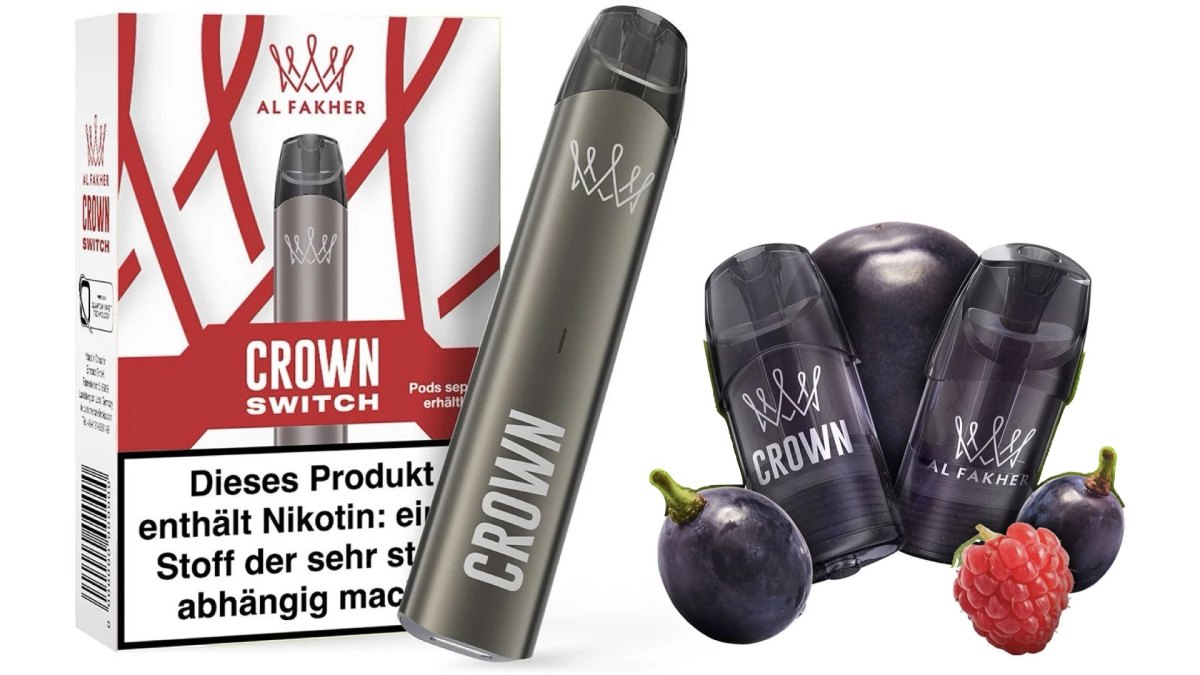
AIR Global PLC (NASDAQ: AIIR) announced on November 5, 2026, that it had submitted a Premarket Tobacco Product Application (PMTA) to the U.S. Food and Drug Administration (FDA) for Crown Switch, its rechargeable pod vape platform. First launched in Germany in November 2025, the device uses Quantum Chip atomization technology developed by Canadian vaporization technology company Greentank Innovations. German retail versions feature 2mL prefilled pods containing 18mg/mL nicotine in six flavors, while AIR has separately tested two 5% nicotine formulations intended for U.S. development. AIR invested $20 million in Greentank in July and reported approximately $3.4 million in U.S. PMTA-related regulatory costs for the first nine months of 2026. The Crown Switch application has been submitted, but the FDA has not granted marketing authorization.
product
Nov.13
Athletes Back Skoka's $21.5 Million Nicotine Pouch Venture: Can Its Consumer Health Founder Make an FDA-Focused Strategy Pay Off?
U.S. nicotine pouch startup Skoka Inc. has raised $21.5 million and committed $15 million to an FDA regulatory and scientific research program. Founder Dan Aziz previously built dietary supplement brand Premama, which was acquired by Dr. Reddy's Laboratories in 2023. Skoka is combining proprietary formulations, ingredient transparency and equity investment from professional athletes. The company submitted a bundled PMTA covering 55 products on October 1, 2026. Aziz said Skoka declined an opportunity to enter retail in 2025, prioritizing product research and regulatory submissions instead. It now targets a U.S. retail launch in 2027, subject to FDA requirements. Its products have not received marketing authorization.
Business
Nov.04