UK Tobacco and Vapes Bill to Ban Tobacco Sales to Those Born After 2009, Effective 2027

Nov.14.2024
UK Tobacco and Vapes Bill to Ban Tobacco Sales to Those Born After 2009, Effective 2027
The UK's Tobacco and Vapes Bill plans to gradually ban the sale of tobacco products to those born on or after January 1, 2009, and strengthen regulations on vapes and nicotine products, including introducing a licensing system and increasing fines for violations.

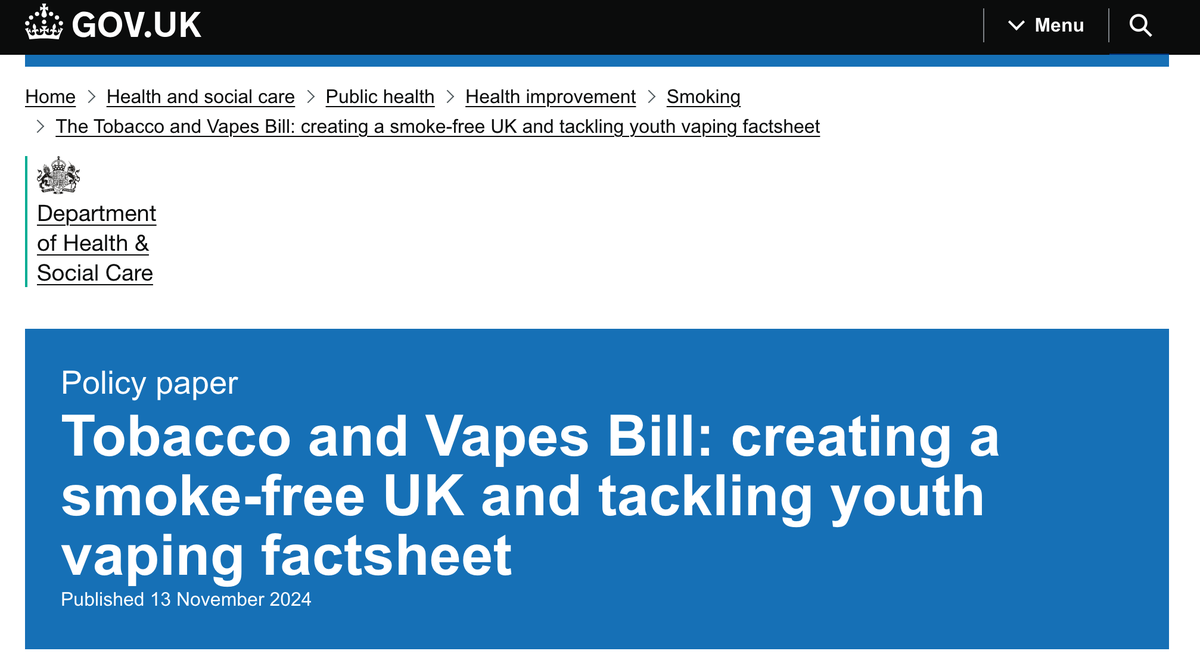
On November 13th, the UK government website released a document titled "Tobacco and Vapes Bill: creating a smoke-free UK and tackling youth vaping factsheet". This legislation will be a milestone in the UK's efforts to become a smoke-free nation.


The bill aims to gradually ban the sale of tobacco products and introduce a smoke-free generation nationwide. Selling tobacco products, herbal smoking products, and cigarette papers to individuals born on or after 1 January 2009 will be illegal. Children born on or after this date will never be able to be legally sold tobacco products, breaking the cycle of addiction and disadvantage.


The products in scope include:


  • cigarettes
  • hand rolled tobacco
  • cigars
  • cigarillos
  • pipe tobacco
  • waterpipe tobacco products (for example, shisha)
  • chewing tobacco
  • heated tobacco
  • nasal tobacco (snuff)
  • herbal smoking products
  • cigarette papers


Display, sales, and advertising restrictions:


In addition, the bill will also prohibit all vape and other nicotine products (such as nicotine pouches) from advertising and sponsorship, following strict restrictions similar to those imposed on tobacco.


The bill will fill a gap by banning the sale of all vapes and nicotine products to those under 18 years old, as well as prohibiting the free distribution of these products and sales through vending machines.


The minister will also have the authority to regulate the flavors, packaging, and display of vapes and other nicotine products, as well as the power to modify and update product standards.


Expanding existing legislation


The Tobacco and Vapes Bill will also extend existing indoor smoking restrictions to certain outdoor public spaces and workplaces. The government is considering expanding smoke-free areas to include areas outside of schools, children's playgrounds, and hospitals, but will not cover outdoor dining areas or beaches and other broader open spaces. Specific locations that should be smoke-free will be determined through secondary legislation and will undergo thorough consultation.


In addition, smoke-free places also prohibit vapes and heated tobacco products.


Strict law enforcement and product registration system


Furthermore, the bill will enhance enforcement efforts and support the implementation of the above measures. It will empower the introduction of a specific licensing regime for retail tobacco products, herbal smoking products, rolling papers, vapes, and nicotine products in England, Wales, and Northern Ireland. The bill also strengthens Scotland's existing retail registration, expanding it to include herbal smoking products and nicotine products.


It will also give enforcement agencies in England and Wales the power to issue Fixed Penalty Notices (FPNs) of up to £200 for illegal activities, including selling tobacco and vape products to minors, and £2,500 FPNs for offences in connection with licensing.


The government will also be given the authority to introduce a new product registration system for tobacco, vaps, and nicotine products. This system will outline requirements for producers and manufacturers before their products are sold to consumers.


Geographical scope


The bill will apply to the entire UK and will create a coordinated and consistent regulatory framework for tobacco and vape products, building on existing legislation in the four constituent countries. The UK government worked in partnership with the Scottish government, the Welsh government, and the Northern Ireland Executive to develop the bill. 


Under the devolution agreement, measures vary across the UK, with Wales and Scotland already making further progress in smoke-free areas, banning smoking outside hospitals. Wales has also implemented smoke-free policies outside hospitals and school grounds.


Subject to approval from Parliament, the age of sale restrictions for tobacco will come into force on 1 January 2027, when those born on 1 January 2009 turn 18.


We welcome news tips, article submissions, interview requests, or comments on this piece.

Please contact us at info@2firsts.com, or reach out to Alan Zhao, CEO of 2Firsts, on LinkedIn


Notice

1.  This article is intended solely for professional research purposes related to industry, technology, and policy. Any references to brands or products are made purely for objective description and do not constitute any form of endorsement, recommendation, or promotion by 2Firsts.

2.  The use of nicotine-containing products — including, but not limited to, cigarettes, e-cigarettes, nicotine pouchand heated tobacco products — carries significant health risks. Users are responsible for complying with all applicable laws and regulations in their respective jurisdictions.

3.  This article is not intended to serve as the basis for any investment decisions or financial advice. 2Firsts assumes no direct or indirect liability for any inaccuracies or errors in the content.

4.  Access to this article is strictly prohibited for individuals below the legal age in their jurisdiction.


Copyright


This article is either an original work created by 2Firsts or a reproduction from third-party sources with proper attribution. All copyrights and usage rights belong to 2Firsts or the original content provider. Unauthorized reproduction, distribution, or any other form of unauthorized use by any individual or organization is strictly prohibited. Violators will be held legally accountable.

For copyright-related inquiries, please contact: info@2firsts.com


AI Assistance Disclaimer


This article may have been enhanced using AI tools to improve translation and editorial efficiency. However, due to technical limitations, inaccuracies may occur. Readers are encouraged to refer to the cited sources for the most accurate information.

We welcome any corrections or feedback. Please contact us at: info@2firsts.com

Special Report | Can Nicotine Be Replaced? 6-MN Is Already on the Market While Key Human Evidence Is Still Missing
Nicotine analogues such as 6-methylnicotine are already appearing in e-cigarettes and oral pouches, even as key human evidence remains limited. A new Nixodine-S study adds nonclinical data showing differences from nicotine in cytotoxicity and receptor activity, while independent studies point to a more complex toxicological picture. With supply-chain activity growing and FDA seeking clearer authority over nicotine analogues, the industry now faces a larger question: what evidence is needed before these substances can credibly replace nicotine?
SCIENCE
Sep.23
FDA Appoints Former Tobacco Enforcement Deputy Jessica Zeller as Director as Agency Weighs PMTA Framework Changes
The U.S. Food and Drug Administration (FDA) has named Jessica Zeller director of the Center for Tobacco Products' (CTP) Office of Compliance and Enforcement (OCE), effective November 1, 2026. Zeller, the office's inaugural deputy director, returns from medical device manufacturer Edwards Lifesciences with more than 20 years of regulatory and legal experience. The appointment follows CTP leadership changes and adjustments to tobacco regulation. Bret Koplow became permanent CTP director in September; the FDA revised enforcement priorities for unauthorized e-cigarettes and nicotine pouches in May and announced faster PMTA review procedures. On September 28, the agency said it would evaluate changes to the existing PMTA regulatory framework, including potential rulemaking to replace it.
FDA
Oct.20 by 2Firsts Perspectives
Imperial Brands Plans to Cut Nearly 18% of Workforce as German Plant Closure and Polish Outsourcing Drive Restructuring
Imperial Brands disclosed on November 17, 2026, that its global manufacturing and organisational restructuring is expected to reduce between 4,200 and 4,600 roles by the end of 2030, equivalent to approximately 16%–18% of its workforce at the end of 2025. The first phase covers 2,100 roles with departures confirmed or subject to consultation, while a further 2,100–2,500 positions are expected to be eliminated by 2030. The company is proceeding with the closure of its Langenhagen factory in Germany, has sold its manufacturing facility in Taiwan, and has transferred selected finance, procurement and supply-chain operations in Poland to Capgemini. The restructuring programme is expected to cost approximately £740 million, with Imperial targeting at least £320 million in annual cost savings by 2030.
company
Nov.18
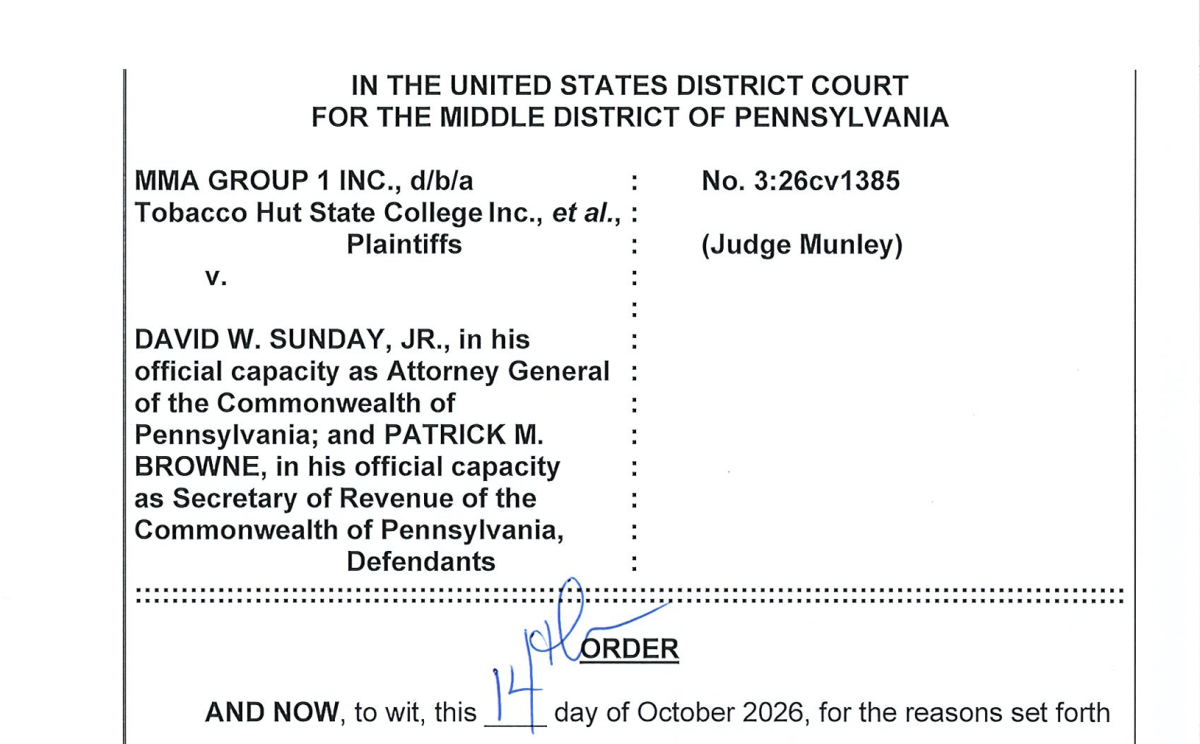
Pennsylvania Vape Directory Law Survives Court Challenge From Nova Distro and Others Amid Similar Rulings Across States
A U.S. federal court upheld Pennsylvania's vape directory law on October 14, rejecting a challenge brought by Nova Distro, 101 Distributors and companies operating Tobacco Hut retail stores. Court records show that vaping accounts for about 60% of Tobacco Hut's profits and that the chain held approximately $2 million in inventory potentially subject to seizure under the law as of June 2. Pennsylvania began enforcement on October 19. The ruling follows similar appellate decisions in other states, even as new research shows that unlisted vaping products continue to account for substantial sales in states with established directories.
Regulations
Oct.22
IKE Tech Launches IKE 2.0 Compliance Platform for Nicotine Products
IKE Tech launched IKE 2.0 on September 28, initially targeting nicotine products with a platform that combines user identity verification, product authentication, configurable policy controls and data analytics. Products can be authenticated through direct device integration or NFC smart tags. IKE Tech was formed with participation from Ispire's Aspire North America, Berify and Chemular, with Ispire currently holding a 40% interest. Its age-verification component PMTA was accepted by the FDA in 2025 and remains under review. The company did not disclose customer names, commercial deployment volumes, pricing or revenue tied to IKE 2.0.
News
Sep.29 by 2Firsts Perspectives
Russia Expands Temporary Administration of JTI Assets in Second Round: From Four to All Seven Russian Entities, With Approximately $9.5 Billion in Related Assets
Japan Tobacco Inc. (JT) confirmed on November 9, 2026, that all seven of its Russian entities had been placed under temporary administration after a second presidential decree added three companies to the four designated a day earlier. The additional entities are associated with importing, management, holdings and the former supply of Ploom heated-tobacco devices. JT disclosed approximately ¥1.5 trillion in Russian business-related assets as of September 30, including ¥360 billion in cash and deposits, and approximately ¥200 billion in liabilities. Under its revised FY2026 forecast, Russia accounts for about 25% of adjusted operating profit. JT said operations in Russia were continuing, while the financial impact remained under assessment.
company
Nov.09