Authorities find counterfeit tobacco and e-cigarettes in England's Gur city

Oct.30.2024
Authorities find counterfeit tobacco and e-cigarettes in England's Gur city
Multiple shops in England's Grimsby city were found with counterfeit cigarettes and illegal tobacco products, leading to raids and inspections.

According to a report by the BBC on October 29th, multiple shops in the city of Gore, England, were found to be selling a large quantity of counterfeit cigarettes and illegal tobacco products.


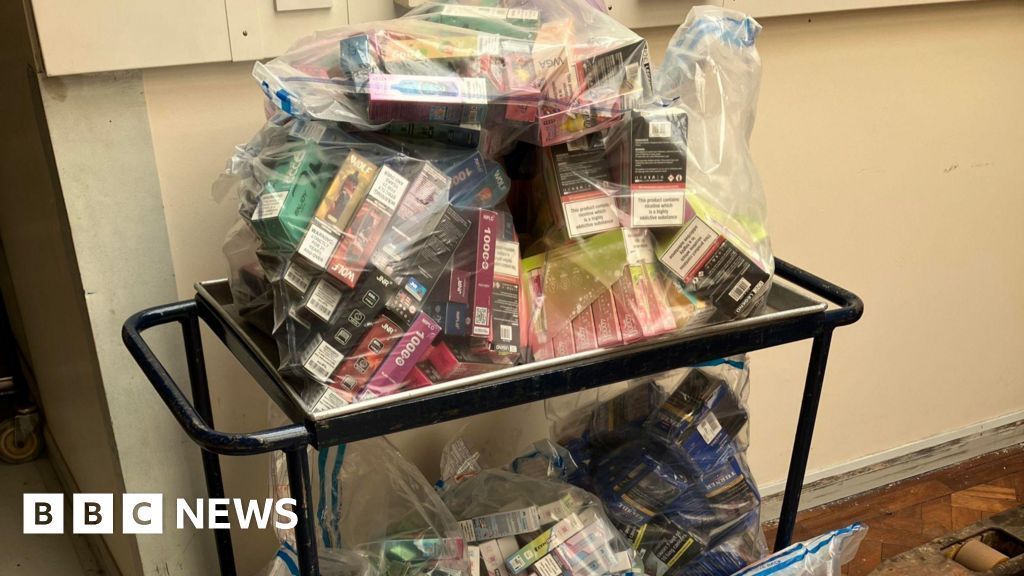
On October 24, the Trading Standards department of East Yorkshire Council, in conjunction with the police, conducted surprise inspections on four shops selling illegal tobacco and e-cigarette products.


In this operation, law enforcement officials seized 440 e-cigarettes, 22,500 cigarettes, and over 22 pounds of hand-rolled tobacco. The products confiscated included multiple brands such as ENJOY, WOLF, and JNR. The retail value of these tobacco products is estimated at £14,500. Additionally, police conducted additional raids at locations in Hessle and Hedon.


The county council stated that individuals convicted of selling illegal tobacco may face fines of up to £10,000 or risk imprisonment.


We welcome news tips, article submissions, interview requests, or comments on this piece.

Please contact us at info@2firsts.com, or reach out to Alan Zhao, CEO of 2Firsts, on LinkedIn


Notice

1.  This article is intended solely for professional research purposes related to industry, technology, and policy. Any references to brands or products are made purely for objective description and do not constitute any form of endorsement, recommendation, or promotion by 2Firsts.

2.  The use of nicotine-containing products — including, but not limited to, cigarettes, e-cigarettes, nicotine pouchand heated tobacco products — carries significant health risks. Users are responsible for complying with all applicable laws and regulations in their respective jurisdictions.

3.  This article is not intended to serve as the basis for any investment decisions or financial advice. 2Firsts assumes no direct or indirect liability for any inaccuracies or errors in the content.

4.  Access to this article is strictly prohibited for individuals below the legal age in their jurisdiction.


Copyright


This article is either an original work created by 2Firsts or a reproduction from third-party sources with proper attribution. All copyrights and usage rights belong to 2Firsts or the original content provider. Unauthorized reproduction, distribution, or any other form of unauthorized use by any individual or organization is strictly prohibited. Violators will be held legally accountable.

For copyright-related inquiries, please contact: info@2firsts.com


AI Assistance Disclaimer


This article may have been enhanced using AI tools to improve translation and editorial efficiency. However, due to technical limitations, inaccuracies may occur. Readers are encouraged to refer to the cited sources for the most accurate information.

We welcome any corrections or feedback. Please contact us at: info@2firsts.com

Australia Adds 6-Methylnicotine to Schedule 9 Prohibited Substances, Effective October 1
Australia's Therapeutic Goods Administration published a final decision on September 25 to classify 6-methylnicotine as a Schedule 9 prohibited substance under the Poisons Standard, effective October 1, 2026. TGA said the chemical has been reported in e-cigarette liquids sold in Australia and marketed as nicotine-free or nicotine alternatives, while evidence also indicates its use in preparations such as oral pouches. The government originally proposed a Schedule 7 classification but ultimately adopted the stricter Schedule 9 designation, citing acute toxicity, dependence risk, use in unapproved consumer products and misleading marketing.
News
Sep.29 by 2Firsts Perspectives
Juul Sublicense Reshapes Vuse Alto Patent Bill as Court Ends R.J. Reynolds’ 5.25% Royalty Obligation to Altria
According to Law360 on August 31, 2026, a federal judge in North Carolina ruled that a patent sublicense between R.J. Reynolds Vapor Co. and Juul Labs Inc. relieves Reynolds of its obligation to continue paying royalties to Altria Client Services LLC over Vuse Alto. A jury had previously found that Vuse Alto infringed three Altria patents and awarded approximately $95.2 million in past damages, after which Reynolds was ordered to pay an ongoing royalty equal to 5.25% of positive net sales. The new ruling finds that a valid sublicense can eliminate future infringement, potentially ending what Altria described as hundreds of millions of dollars in future royalties.
Sep.01
Charlie’s Bets on Age-Gating and 678 PMTA Assets as U.S. Vape Enforcement Landscape Shifts
Charlie’s Holdings said in its latest shareholder letter that it is moving to commercialize PACHA products and monetize its PMTA assets as the FDA changes enforcement priorities for unauthorized ENDS products. Thirty PACHA SKUs were previously tentatively identified for a proposed public list of products that the FDA generally does not intend to prioritize for enforcement. Charlie’s is also preparing test-market sales of age-gated flavored disposables and says it currently holds 678 PMTA-related product assets while seeking additional strategic transactions and partnerships.
Sep.11
NATO Executive Director David Spross Sees U.S. Vape Regulation Improving, Calls for More PMTA Authorizations and Warns of 2027 State Tax Pressure
The National Association of Tobacco Outlets is calling for more FDA marketing authorizations, greater transparency in the PMTA process and continued enforcement against unauthorized e-cigarettes, even as its executive director, David Spross, points to recent regulatory developments as signs of progress. At the state level, excise taxes, flavor restrictions and vapor product directories remain major issues for tobacco retailers. By August 2026, 17 states had enacted laws establishing state-managed e-cigarette directories or similar systems.
Innovation
Sep.29 by 2Firsts Perspectives
Philippines Weighs Unified Vape Tax as Lawmakers Back Risk-Based Rates and Government Seeks to Fill ₱66 Billion Revenue Gap
Philippine lawmakers are considering an overhaul of the country's vape excise-tax regime to eliminate the wide gap between taxes on nicotine salt and freebase nicotine liquids and reduce incentives for misdeclaration. House Bill 5364, filed by Rep. Rufus Rodriguez and Rep. Maximo Rodriguez Jr., would impose a unified ₱10-per-milliliter tax on vapor products, with 5% annual increases beginning in 2027. Rodriguez says the proposal could generate an average ₱6 billion in annual collections from 2027 through 2030. The debate comes as the Philippine government considers tobacco, vape and other health-tax reforms to help offset around ₱66 billion in revenue expected to be forgone under a proposed tax-relief package.
Aug.18
From Nicotine Salts to Cocrystals: China’s Shenzhen Huabao institute explores a more stable form for sustained nicotine release
China-based Shenzhen Huabao Collaborative Innovation Technology Research Institute Co., Ltd. has filed a patent application for a nicotine-ascorbic acid cocrystal, exploring a new solid-state form of nicotine. The patent proposes applications across e-liquids, heated tobacco sticks, oral tobacco, chewing tobacco and snuff. In nicotine pouch tests disclosed in the filing, cocrystal formulations showed less than a 6% decline in nicotine content after three months of accelerated storage and a release profile combining early-stage release with sustained delivery over 60 minutes. The filing reflects exploration of nicotine forms beyond conventional nicotine base and nicotine salts.
Aug.13