Underage Sales of E-Cigarettes Exposed in Lancashire County

Sep.13.2024
Underage Sales of E-Cigarettes Exposed in Lancashire County
Over 50 secret enforcement operations in Lancashire this summer revealed one-third of stores illegally selling e-cigarettes to minors.

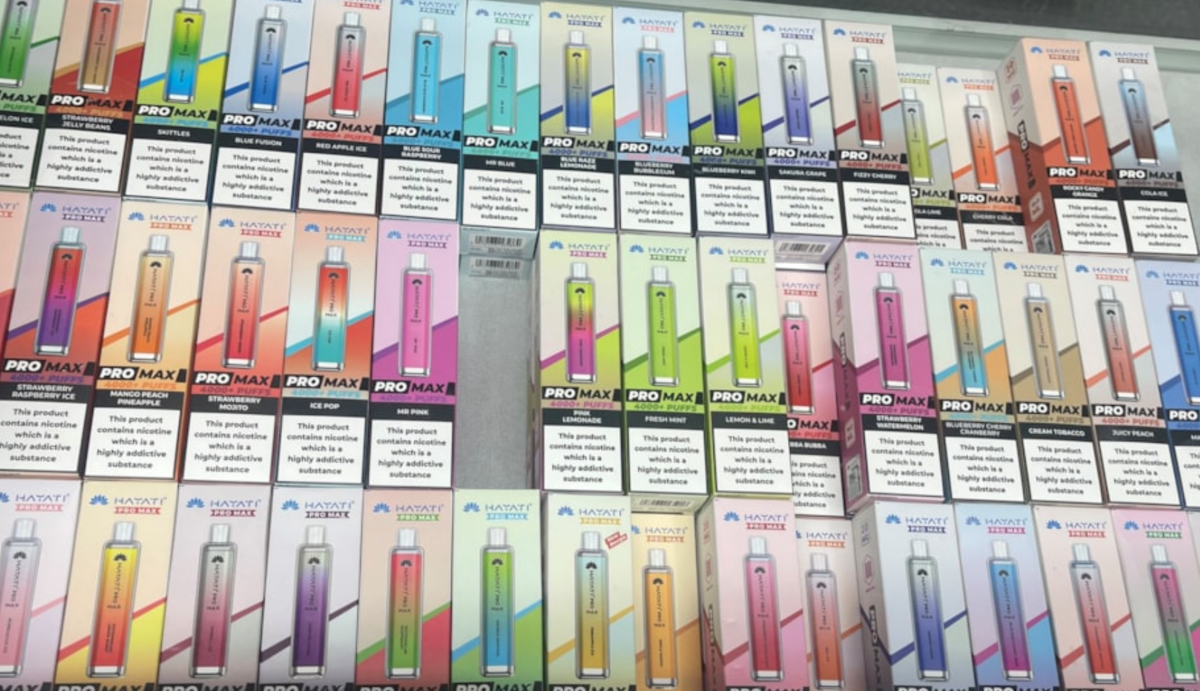
According to the official website of Lancashire County Council, this summer, more than 50 covert operations were carried out in various areas of Lancashire, UK, revealing that one-third of the shops were illegally selling e-cigarettes to underage volunteers.


The Lancashire County Council's Trading Standards team partnered with Lancashire County Police for joint action, visiting 56 shops in Lancaster, Wyre, Preston, Ribble Valley, Chorley, Hyndburn, Burnley, and Pendle in July and August. According to the law, e-cigarettes cannot be sold to those under 18, and staff are required to follow the "Challenge 25" rule, requesting identification from anyone who appears to be under 25.


In 56 test purchase attempts, 20 stores failed to pass the test and sold e-cigarettes to volunteers. Among them, four stores sold e-cigarettes that did not comply with relevant safety regulations, leading law enforcement officials to confiscate over 300 non-compliant e-cigarettes.


The trade standards team is currently investigating these cases of failed tests, which could lead to legal action. The maximum penalty for selling e-cigarettes to minors is a fine of £2,500.


Lancashire County Council Health and Wellbeing Cabinet Member Councilor Michael Green stated that,...


Our summer undercover operation highlights the need to improve efforts in preventing young people from purchasing e-cigarettes. It is disappointing that our team found 20 stores willing to ignore regulations and sell these products to young residents of Lancashire.


Lancashire Police community policing supervisor Dave Byrne stated that


Selling e-cigarettes to children is not only illegal, but it can also put them at risk and lead to antisocial behavior problems. We will continue to work with our partners to ensure these products do not end up in the hands of children and will take strict measures against those who illegally sell them.


We welcome news tips, article submissions, interview requests, or comments on this piece.

Please contact us at info@2firsts.com, or reach out to Alan Zhao, CEO of 2Firsts, on LinkedIn


Notice

1.  This article is intended solely for professional research purposes related to industry, technology, and policy. Any references to brands or products are made purely for objective description and do not constitute any form of endorsement, recommendation, or promotion by 2Firsts.

2.  The use of nicotine-containing products — including, but not limited to, cigarettes, e-cigarettes, nicotine pouchand heated tobacco products — carries significant health risks. Users are responsible for complying with all applicable laws and regulations in their respective jurisdictions.

3.  This article is not intended to serve as the basis for any investment decisions or financial advice. 2Firsts assumes no direct or indirect liability for any inaccuracies or errors in the content.

4.  Access to this article is strictly prohibited for individuals below the legal age in their jurisdiction.


Copyright


This article is either an original work created by 2Firsts or a reproduction from third-party sources with proper attribution. All copyrights and usage rights belong to 2Firsts or the original content provider. Unauthorized reproduction, distribution, or any other form of unauthorized use by any individual or organization is strictly prohibited. Violators will be held legally accountable.

For copyright-related inquiries, please contact: info@2firsts.com


AI Assistance Disclaimer


This article may have been enhanced using AI tools to improve translation and editorial efficiency. However, due to technical limitations, inaccuracies may occur. Readers are encouraged to refer to the cited sources for the most accurate information.

We welcome any corrections or feedback. Please contact us at: info@2firsts.com

Reuters: India Seeks to Dismiss Adani Nicotine Pouch Challenge as Mumbai Airport Dispute Moves to Court
Reuters reported on July 13, 2026, that India is seeking to dismiss Adani Airports’ legal challenge over nicotine pouch sales at Mumbai International Airport’s duty-free shops. Adani denies wrongdoing and argues that existing drug and cosmetics regulations do not apply to duty-free sales or nicotine pouches.
Innovation
Jul.14 by 2Firsts Perspectives
South Korea’s New Vape Rules Raise Bar for E-Liquid Makers and China-Linked Supply Chains, Expert Says
South Korea’s new vape regulations are reshaping the e-liquid market, raising compliance requirements for manufacturers, retailers and overseas suppliers. In an interview with 2Firsts, Korean nicotine products specialist Sam Kim discusses licensing barriers, inventory impacts, China-linked supply chains, and emerging regulatory challenges around nicotine analogues, nicotine-free products and DIY mixing. The Korean case may offer broader insights as governments worldwide adapt to rapidly evolving nicotine products.
Jul.16
Japan’s Heated Tobacco Tax Reform Drives Price Increase as JT Raises All Ploom Sticks by ¥40
Japan Tobacco Inc. (JT) has applied to Japan’s finance minister for approval to revise retail prices of its Ploom heated tobacco sticks following planned changes to the heated tobacco tax system from October 1, 2026. If approved, all 31 Ploom stick products will increase by ¥40. After the adjustment, EVO products will cost ¥620 per 20-stick pack, MEVIUS products ¥590 and CAMEL products ¥570. JT said the price revision is intended to respond to tax changes while maintaining product quality and brand value. The tax reform is expected to narrow the tax gap between combustible cigarettes and heated tobacco products, potentially reshaping pricing strategies in Japan’s heated tobacco market.
Jul.22
California Lawmakers Pass Disposable Nicotine Vape Ban, With Sales Prohibition Set for 2028
According to CBS Los Angeles on August 27, 2026, California lawmakers have passed Assembly Bill 762, which would phase out disposable, battery-embedded nicotine vapes in the state. If signed by Governor Gavin Newsom, manufacturing and importation of the covered products would be prohibited beginning January 1, 2027, followed by a sales ban on January 1, 2028. Driven primarily by concerns over electronic waste, lithium-battery fires and environmental pollution, the legislation would further shift California’s legal vape market toward rechargeable, refillable or replaceable-pod devices.
Aug.28
FIFA Bans Vaping in 2026 World Cup Stadiums, Putting Nicotine Rules in Event Compliance Focus
FIFA’s 2026 World Cup stadium rules prohibit smoking, vaping and the use of any tobacco products or electronic smoking devices inside stadiums, including inner and outer perimeters, while electronic smoking devices, tobacco products, lighters and matches are listed as prohibited items, bringing nicotine-product management, venue compliance and cross-border legal differences into focus at a major global sporting event.
Jul.06
Australian Coalition Taskforce Calls for 80% Tobacco Tax Cut to Combat Illicit Market
According to SGST on August 26, 2026, Australia’s Coalition Illegal Tobacco Taskforce released a report recommending an up to 80% cut in tobacco excise to reduce the appeal of the illicit tobacco market. The report claimed organised crime groups now control about 80% of Australia’s tobacco market and argued that high excise rates have widened the price gap between legal and illegal products. The recommendation remains a policy proposal and has not been adopted by the Australian government, which said its focus remains on enforcement, compliance and additional resources.
Aug.27