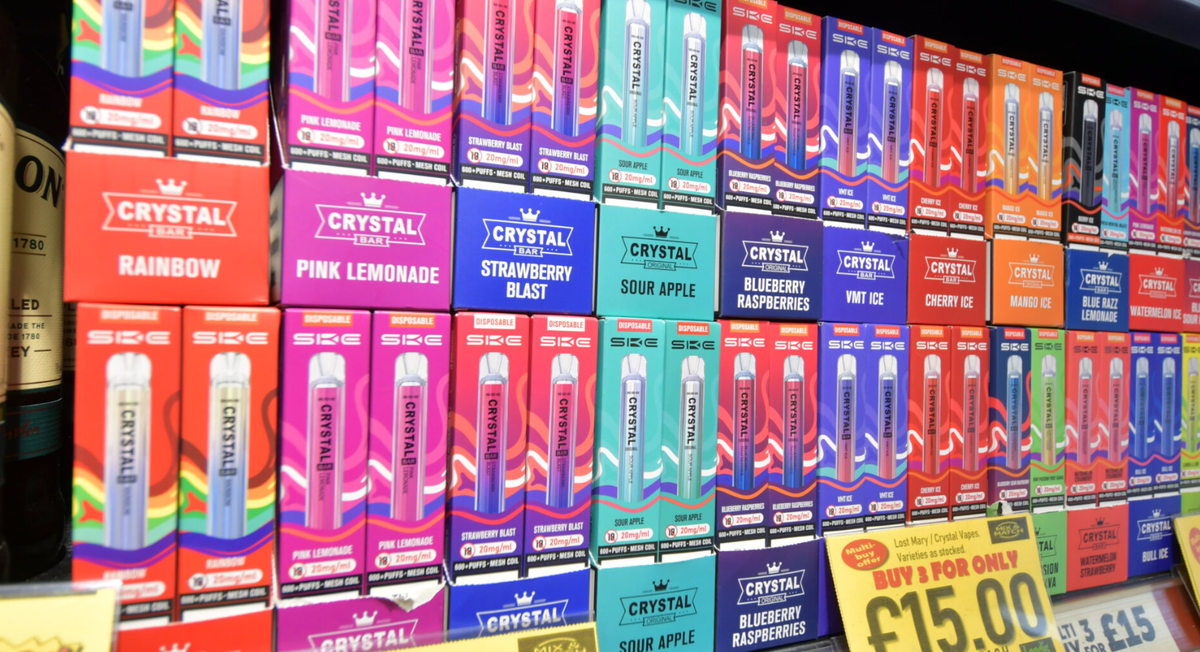
According to Better Retailing's report on September 3rd, the UK government plans to announce the latest news on the proposed ban on disposable e-cigarettes this Friday (6th). This will put an end to retailers and suppliers speculating about the scope and timing of the expected legislation.
According to a source from a well-known e-cigarette distributor, the UK government will confirm the effective date of the ban as April 1, 2025. Several e-cigarette companies, including Phoenix 2 Retail and JUUL, have stated that they have not received any information from the government since the July elections, leaving the fate of previously postponed legislation uncertain.
A source stated that
We have received reliable information that the government will provide the latest update on the ban on disposable e-cigarettes this Friday, September 6th.
It is widely believed within the industry that the ban will take effect on April 1st and will be followed by a six-month grace period during which retailers must cease selling disposable e-cigarettes.
While the start date of the ban is expected to be confirmed on Friday, guidance on the definition of "disposable" e-cigarettes has been released ahead of time. However, Better Retailing has learned from e-cigarette distributors that they are still seeking clarification from the Trade Standards Bureau to avoid any ambiguity in the upcoming legislation.
A source confirmed that
Because this is a regulation, and regulations always have multiple ways of interpretation, we are submitting all products for compliance review to the Trading Standards Agency and the Chartered Trading Standards Institute (CTSI).
The expected announcement will confirm that the Labour Party's version of the bill includes the same restrictions introduced by the previous Conservative government. Details on the powers to limit e-cigarette displays, packaging, and flavors, as well as maintaining the former government's "smoke-free generation" measures, will be disclosed by the minister at a later date and will enter a consultation phase. Additionally, government departments are looking to brief the minister on the benefits of an e-cigarette licensing system, a measure that was not considered by the previous Conservative government.
A spokesperson for the Association of Convenience Stores (ACS) told Better Retailing that
The key point is that the ban on disposable e-cigarettes will be introduced through existing legislation, specifically through secondary regulations, while the tobacco and e-cigarette bill will be proposed through its own separate bill.
We welcome news tips, article submissions, interview requests, or comments on this piece.
Please contact us at info@2firsts.com, or reach out to Alan Zhao, CEO of 2Firsts, on LinkedIn
Notice
1. This article is intended solely for professional research purposes related to industry, technology, and policy. Any references to brands or products are made purely for objective description and do not constitute any form of endorsement, recommendation, or promotion by 2Firsts.
2. The use of nicotine-containing products — including, but not limited to, cigarettes, e-cigarettes, nicotine pouchand heated tobacco products — carries significant health risks. Users are responsible for complying with all applicable laws and regulations in their respective jurisdictions.
3. This article is not intended to serve as the basis for any investment decisions or financial advice. 2Firsts assumes no direct or indirect liability for any inaccuracies or errors in the content.
4. Access to this article is strictly prohibited for individuals below the legal age in their jurisdiction.
Copyright
This article is either an original work created by 2Firsts or a reproduction from third-party sources with proper attribution. All copyrights and usage rights belong to 2Firsts or the original content provider. Unauthorized reproduction, distribution, or any other form of unauthorized use by any individual or organization is strictly prohibited. Violators will be held legally accountable.
For copyright-related inquiries, please contact: info@2firsts.com
AI Assistance Disclaimer
This article may have been enhanced using AI tools to improve translation and editorial efficiency. However, due to technical limitations, inaccuracies may occur. Readers are encouraged to refer to the cited sources for the most accurate information.
We welcome any corrections or feedback. Please contact us at: info@2firsts.com