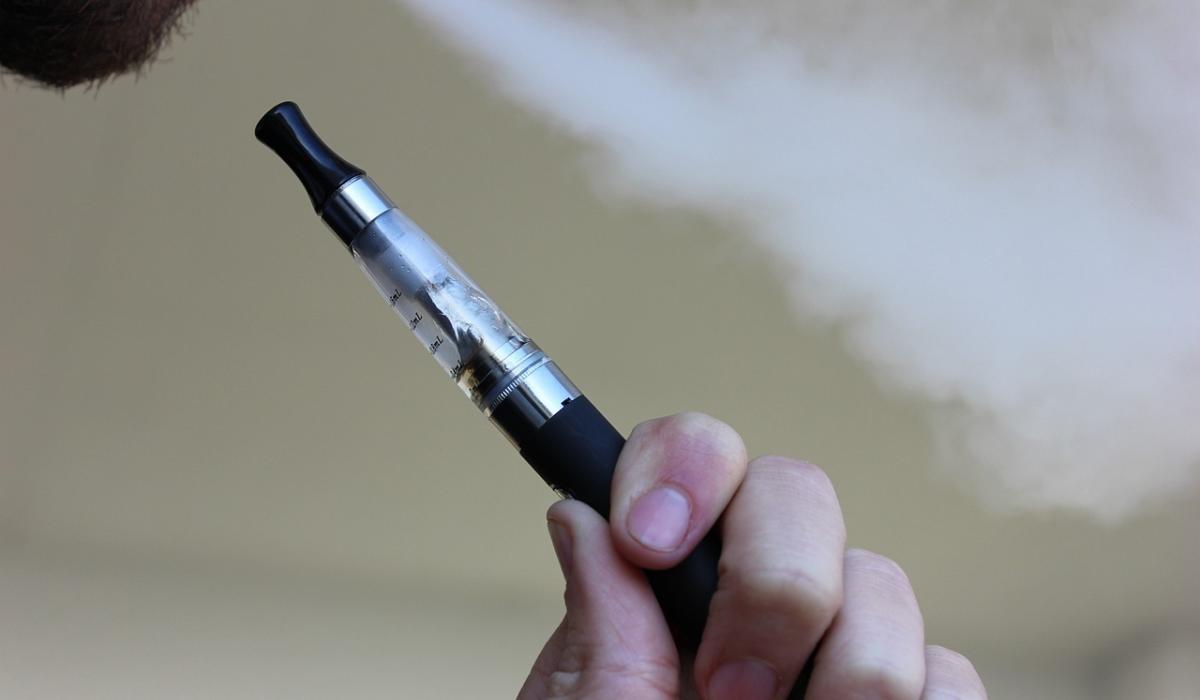
According to a report from Leinster Leader on March 13th, the Irish electronic waste management organization (WEEE Ireland) has warned retailers in County Kildare to be vigilant about the regulation of disposable e-cigarettes and rechargeable vapor products, as non-compliance could result in hefty fines and serious legal consequences.
The organization has launched an "e-cigarette retailer compliance awareness" campaign, stating that purchasing e-cigarettes from unregistered suppliers could result in fines of 500 to 2000 euros from the Environmental Protection Agency (EPA).
WEEE Ireland has 393 registered retailers in County Kildare, who may be affected if they unknowingly purchase products from unregistered importers.
Elizabeth O'Reilly, the environmental compliance manager of the agency, stated: "Disposable and rechargeable atomization devices and their batteries fall under the scope of European battery regulations and the Irish Waste Electrical and Electronic Equipment Regulations. Some importers may not be fulfilling their legal obligations and gaining an unfair advantage in the market. For distributors and retailers, purchasing products from an unregistered supply chain could result in greater responsibility for producers. This includes registering limited companies as manufacturers, reporting monthly sales volume in Ireland, and providing solutions for the recycling and reuse of discarded vapor and batteries for end users.
In order to support compliance, WEEE Ireland emphasizes that retailers should check if their suppliers are registered on the PRL website (www.producerregister.ie/producers).
When discussing the responsibility of retailers to recycle e-cigarette devices, O'Reilly stated that retailers must understand that so-called disposable or rechargeable e-cigarette devices contain batteries and are classified as Electrical and Electronic Equipment (EEE) products. Additionally, retailers are obligated to recycle them on a one-to-one basis either in-store or through home delivery.
We encourage retailers to participate in legal supply chains, support responsible recycling efforts to prevent resources from ending up in landfills, being illegally dumped, or processed by unauthorized operators, which can cause serious environmental impacts.
We welcome news tips, article submissions, interview requests, or comments on this piece.
Please contact us at info@2firsts.com, or reach out to Alan Zhao, CEO of 2Firsts, on LinkedIn
Notice
1. This article is intended solely for professional research purposes related to industry, technology, and policy. Any references to brands or products are made purely for objective description and do not constitute any form of endorsement, recommendation, or promotion by 2Firsts.
2. The use of nicotine-containing products — including, but not limited to, cigarettes, e-cigarettes, nicotine pouchand heated tobacco products — carries significant health risks. Users are responsible for complying with all applicable laws and regulations in their respective jurisdictions.
3. This article is not intended to serve as the basis for any investment decisions or financial advice. 2Firsts assumes no direct or indirect liability for any inaccuracies or errors in the content.
4. Access to this article is strictly prohibited for individuals below the legal age in their jurisdiction.
Copyright
This article is either an original work created by 2Firsts or a reproduction from third-party sources with proper attribution. All copyrights and usage rights belong to 2Firsts or the original content provider. Unauthorized reproduction, distribution, or any other form of unauthorized use by any individual or organization is strictly prohibited. Violators will be held legally accountable.
For copyright-related inquiries, please contact: info@2firsts.com
AI Assistance Disclaimer
This article may have been enhanced using AI tools to improve translation and editorial efficiency. However, due to technical limitations, inaccuracies may occur. Readers are encouraged to refer to the cited sources for the most accurate information.
We welcome any corrections or feedback. Please contact us at: info@2firsts.com