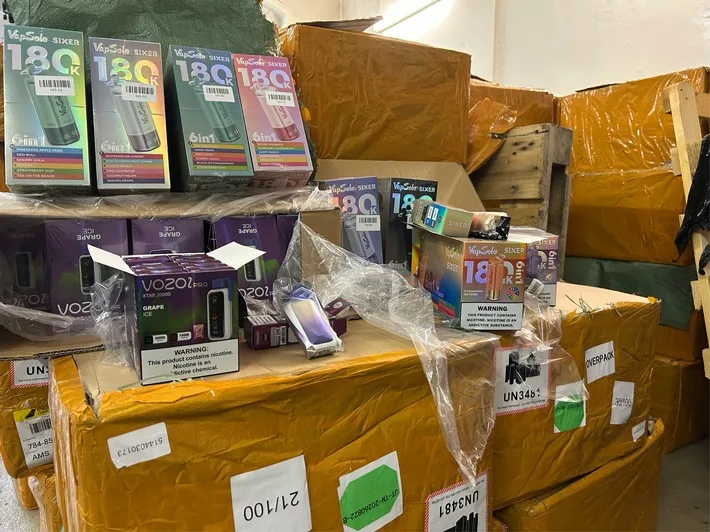
The UK Vaping Industry Association (UKVIA) released a statement on its official website on 24 October regarding the ban on disposable e-cigarettes in the UK.
The association stated that UKVIA had warned policymakers prior to the passing of the Tobacco and E-cigarettes Bill, emphasising the need to strike the right balance between implementing new regulations and ensuring that smokers are not prevented from quitting by using less harmful e-cigarettes. In recent years, e-cigarettes, especially disposable ones, have made a significant contribution to reducing adult smoking rates, which are now at an all-time low.
The association's general secretary, John Dunne, said: "We recognise that disposable e-cigarettes have provoked divisive debate, but their accessibility and convenience in low-income communities, particularly where smoking rates are highest, should not be overlooked. This highlights the need for careful consideration in future legislation to avoid penalising adult smokers who are trying to quit using e-cigarettes, which have been proven to be the most effective method of smoking cessation."
"We have not shied away from the fact that disposable e-cigarettes have an impact on the environment and pose a challenge in preventing youth e-cigarette use. Furthermore, this declaration does not prevent the importation of disposable e-cigarettes, which means that a continuous supply will enter the country and ultimately end up on the black market".
"As we have seen in other parts of the world, such as Australia, banning e-cigarettes is not the solution to the problem; it only encourages the development of the black market and poses significant risks to young people and the environment."
"What is needed is better enforcement of existing laws that require e-cigarette retailers not to sell to children under 18 and to comply with environmental regulations such as the Waste Electrical and Electronic Equipment (WEEE) Directive. However, recent Freedom of Information requests to national trade standards bodies, environmental agencies and product safety standards bodies show that enforcement in terms of penalties and prosecutions is extremely low, which may make offenders think twice before breaking the law."
"This is why we have advocated for a licensing system for e-cigarette retailers and distributors. To obtain a licence, retailers must demonstrate that they have taken steps to prevent the sale of e-cigarettes to minors. Distributors must also ensure that they are environmentally responsible and only stock and sell compliant products. As part of the scheme, we are also calling for fines of up to £10,000 for retailers and £100,000 for distributors who break the law, and for the money raised from the licensing scheme - estimated at £50 million - to be used to fund the necessary level of enforcement."
We welcome news tips, article submissions, interview requests, or comments on this piece.
Please contact us at info@2firsts.com, or reach out to Alan Zhao, CEO of 2Firsts, on LinkedIn
Notice
1. This article is intended solely for professional research purposes related to industry, technology, and policy. Any references to brands or products are made purely for objective description and do not constitute any form of endorsement, recommendation, or promotion by 2Firsts.
2. The use of nicotine-containing products — including, but not limited to, cigarettes, e-cigarettes, nicotine pouchand heated tobacco products — carries significant health risks. Users are responsible for complying with all applicable laws and regulations in their respective jurisdictions.
3. This article is not intended to serve as the basis for any investment decisions or financial advice. 2Firsts assumes no direct or indirect liability for any inaccuracies or errors in the content.
4. Access to this article is strictly prohibited for individuals below the legal age in their jurisdiction.
Copyright
This article is either an original work created by 2Firsts or a reproduction from third-party sources with proper attribution. All copyrights and usage rights belong to 2Firsts or the original content provider. Unauthorized reproduction, distribution, or any other form of unauthorized use by any individual or organization is strictly prohibited. Violators will be held legally accountable.
For copyright-related inquiries, please contact: info@2firsts.com
AI Assistance Disclaimer
This article may have been enhanced using AI tools to improve translation and editorial efficiency. However, due to technical limitations, inaccuracies may occur. Readers are encouraged to refer to the cited sources for the most accurate information.
We welcome any corrections or feedback. Please contact us at: info@2firsts.com