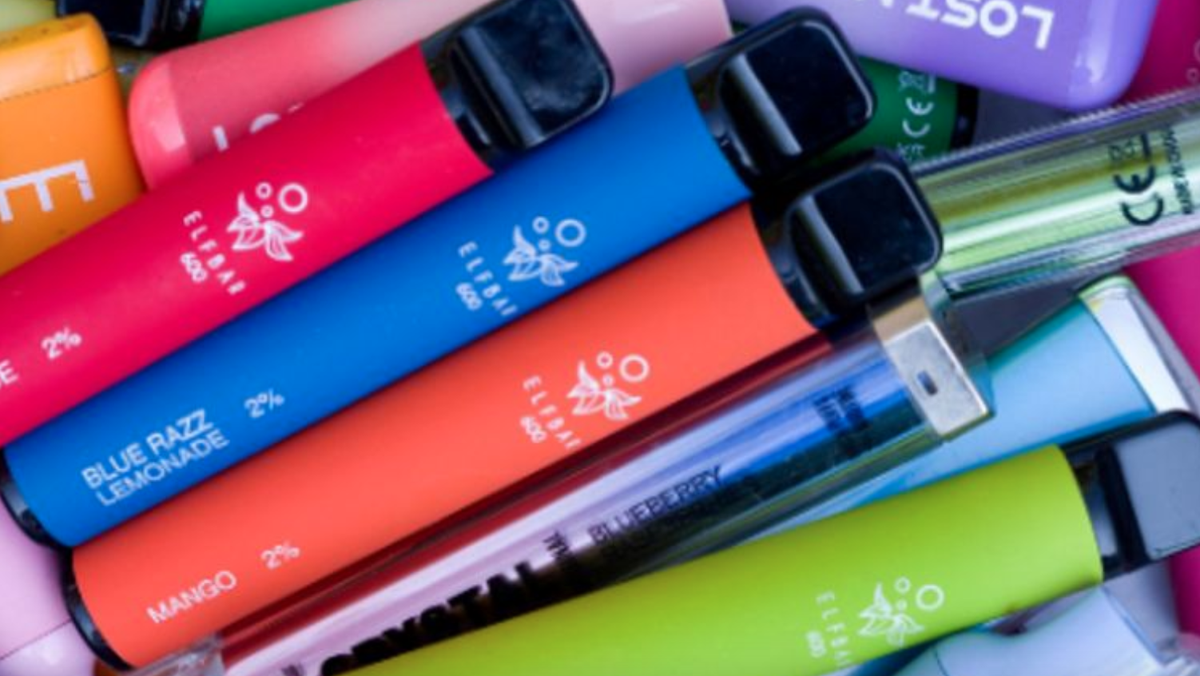
UK county backs disposable vape ban, stresses education over regulation

Oct.29.2024
UK county backs disposable vape ban, stresses education over regulation
Professor Kate Blackburn of Wiltshire Public Health calls for education to combat youth e-cigarette use, welcoming UK ban on disposables.

According to a report by Hellorayo on October 29, Professor Kate Blackburn, Director of Public Health in Wiltshire, UK, stated that education is key to preventing young people from using e-cigarettes.


The official welcomed the decision by the UK government to ban the sale of disposable e-cigarettes starting from June next year.


He pointed out that e-cigarettes are a smoking cessation tool, but are not designed for people who have never smoked or for minors.


While e-cigarettes are not risk-free, we are seeing a significant increase in the use of e-cigarettes among teenagers due to disposable e-cigarettes.


Black added that it is necessary to address any possible vulnerabilities to protect vulnerable groups from the harm of illegal e-cigarette and tobacco supply. She mentioned that the UK has allocated around £20 million for border enforcement to prevent illegal products from entering the country.


Black is calling for "unified action" on a national and local level. She emphasizes that education is central to keeping young people safe, and research from public health teams has found that the actual rate of teenage e-cigarette use is lower than perceived.


It is interesting that people believe there are more teenagers using e-cigarettes than there actually are. Understanding why they use e-cigarettes, such as to appear cool or to cope with emotional issues, is crucial.


We welcome news tips, article submissions, interview requests, or comments on this piece.

Please contact us at info@2firsts.com, or reach out to Alan Zhao, CEO of 2Firsts, on LinkedIn


Notice

1.  This article is intended solely for professional research purposes related to industry, technology, and policy. Any references to brands or products are made purely for objective description and do not constitute any form of endorsement, recommendation, or promotion by 2Firsts.

2.  The use of nicotine-containing products — including, but not limited to, cigarettes, e-cigarettes, nicotine pouchand heated tobacco products — carries significant health risks. Users are responsible for complying with all applicable laws and regulations in their respective jurisdictions.

3.  This article is not intended to serve as the basis for any investment decisions or financial advice. 2Firsts assumes no direct or indirect liability for any inaccuracies or errors in the content.

4.  Access to this article is strictly prohibited for individuals below the legal age in their jurisdiction.


Copyright


This article is either an original work created by 2Firsts or a reproduction from third-party sources with proper attribution. All copyrights and usage rights belong to 2Firsts or the original content provider. Unauthorized reproduction, distribution, or any other form of unauthorized use by any individual or organization is strictly prohibited. Violators will be held legally accountable.

For copyright-related inquiries, please contact: info@2firsts.com


AI Assistance Disclaimer


This article may have been enhanced using AI tools to improve translation and editorial efficiency. However, due to technical limitations, inaccuracies may occur. Readers are encouraged to refer to the cited sources for the most accurate information.

We welcome any corrections or feedback. Please contact us at: info@2firsts.com

WIRED Investigation: Chinese-Made Vapes Turn to 6-Methyl-Nicotine and Other Analogs, Challenging U.S. Regulation
U.S. technology and investigative publication WIRED has examined how nicotine analogs are emerging as a new challenge for the country’s vape regulatory framework. The article argues that after the U.S. expanded federal oversight of nicotine products in 2022, some manufacturers began using nicotine-like compounds such as 6-methyl-nicotine that may fall outside existing definitions. Researchers cited by WIRED said some nicotine analogs could be more potent than traditional nicotine, although human health impacts remain unclear. U.S. policymakers are considering broader definitions of nicotine to bring these compounds under federal oversight.
Jul.27
Juul Sublicense Reshapes Vuse Alto Patent Bill as Court Ends R.J. Reynolds’ 5.25% Royalty Obligation to Altria
According to Law360 on August 31, 2026, a federal judge in North Carolina ruled that a patent sublicense between R.J. Reynolds Vapor Co. and Juul Labs Inc. relieves Reynolds of its obligation to continue paying royalties to Altria Client Services LLC over Vuse Alto. A jury had previously found that Vuse Alto infringed three Altria patents and awarded approximately $95.2 million in past damages, after which Reynolds was ordered to pay an ongoing royalty equal to 5.25% of positive net sales. The new ruling finds that a valid sublicense can eliminate future infringement, potentially ending what Altria described as hundreds of millions of dollars in future royalties.
Sep.01
Australian Coalition Taskforce Calls for 80% Tobacco Tax Cut to Combat Illicit Market
According to SGST on August 26, 2026, Australia’s Coalition Illegal Tobacco Taskforce released a report recommending an up to 80% cut in tobacco excise to reduce the appeal of the illicit tobacco market. The report claimed organised crime groups now control about 80% of Australia’s tobacco market and argued that high excise rates have widened the price gap between legal and illegal products. The recommendation remains a policy proposal and has not been adopted by the Australian government, which said its focus remains on enforcement, compliance and additional resources.
Aug.27
Australian Coalition Unveils Illicit Tobacco Plan With 80% Excise Cut and Legal, Taxed Vapes and Nicotine Pouches
Australia’s Coalition has unveiled a national illicit-tobacco policy that would cut tobacco excise by 80% and create legal, regulated and taxed adult markets for vaping products and nicotine pouches if it wins government. The plan proposes an excise of A$0.50 per millilitre of e-liquid and A$0.025 per milligram of nicotine in pouches, alongside A$200 million in additional enforcement and a A$60 million three-year public-awareness campaign. The Coalition says the package would narrow the price advantage of illicit products and undermine organised crime, while Labor and public-health groups warn that dramatically cheaper cigarettes could reverse long-term declines in smoking.
Sep.03
2Firsts Hosts U.S. Market Mid-Year Briefing: Companies Need to Reassess Product and Market-Access Strategies
2Firsts held its 2026 U.S. Market Compliance and Development Mid-Year Briefing in Shenzhen, China, on July 28. The discussion examined how state-level requirements, proposed foreign-establishment registration rules and expanding supply-chain responsibilities are changing product and investment decisions in the U.S. tobacco and nicotine market.
Jul.29
Indonesia’s BNN Pushes Total Vape Ban as Health Ministry Tightens Tobacco Packaging Rules, Putting $40 Billion Industry at Risk
Indonesia is entering a new phase of debate over vape and tobacco regulation. The National Narcotics Agency (BNN) has proposed a total vape ban, with some lawmakers supporting stronger restrictions. At the same time, the Health Ministry is advancing tobacco and nicotine regulations under Government Regulation No. 28/2024, including measures such as plain packaging and product controls. Tobacco and vape industries have warned that tighter rules could affect a sector worth around $40 billion, supporting about 6 million jobs and contributing significant tax revenue.
Jul.27