According to a report from Mynavi, Mariel Macrum, Vice President and Head of Marketing at British American Tobacco Japan (BAT Japan), and Eli Critik, Global Head of BAT's heated tobacco product, recently gave an interview to the media detailing the launch of the glo hyper pro series and its brand strategy in the Japanese market.
Japan has become the first market to launch the glo series of tobacco products. Due to the increasing demand for non-combustible tobacco products, British American Tobacco released the latest glo hyper pro series in December last year. McCrae stated that the company's goal is to increase the number of users of non-combustible tobacco products from 23.9 million to 50 million by 2030, and to increase the revenue contribution from non-combustible tobacco business to 50%.
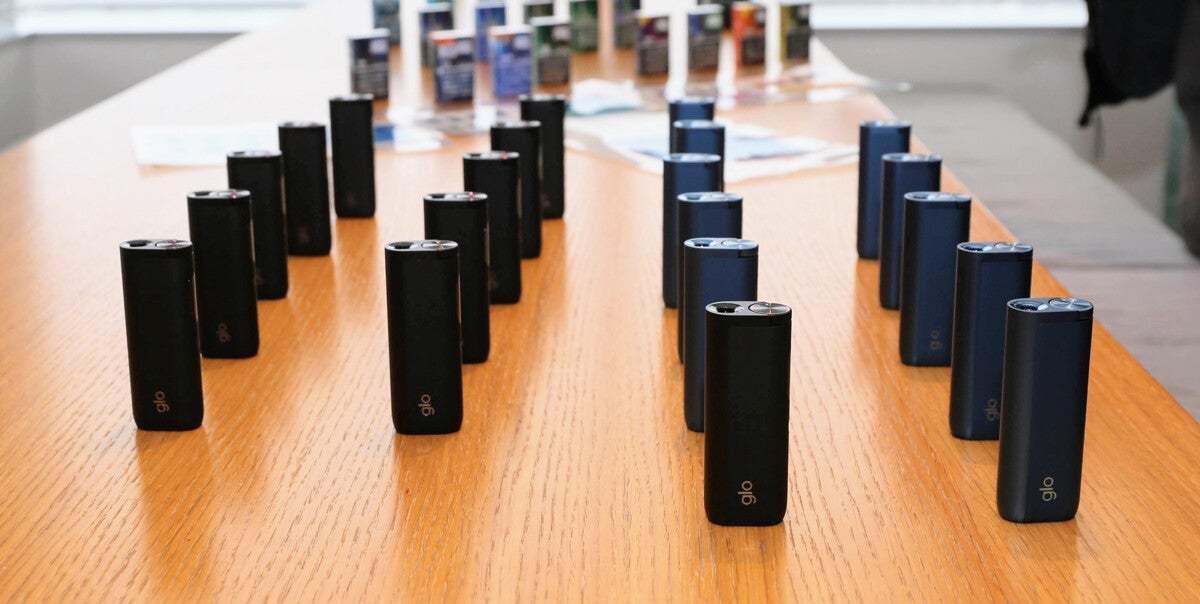
The newly released glo hyper pro device perfectly showcases the breakthrough in heated tobacco technology by British American Tobacco. This device has a maximum heat of 300°C, compared to the glo hyper X2 released in May last year which was only 250°C. The device also has a shortened activation time of 15 seconds. In terms of design, the newly developed StickSeal technology has been applied to the tobacco stick, effectively solving the issue of tobacco residue falling off. Additionally, the vaporizer also features innovation: with a simple twist, users can freely choose their heating mode based on personal preference.
According to Kritik, BAT has also played a significant role in promoting improvements to the cigarette stick.
Furthermore, the company plans to introduce more flavors of non-combustible tobacco products in the Japanese market in the near future. This tobacco product, which features new StickSeal technology, offers Japanese consumers a superior taste profile and better hygiene conditions.
Kretik said their goal is to enhance user experience through two methods: devices and e-cigarettes. The AMOLED display screen and TASTE SELECT knob are the two main focuses of the new device. The new organic EL display screen will allow users to more intuitively understand battery level, heating mode, and ignition status. Additionally, the device's charging efficiency has significantly improved, with 80% of the battery being able to be fully charged within 60 minutes.
We welcome news tips, article submissions, interview requests, or comments on this piece.
Please contact us at info@2firsts.com, or reach out to Alan Zhao, CEO of 2Firsts, on LinkedIn
Notice
1. This article is intended solely for professional research purposes related to industry, technology, and policy. Any references to brands or products are made purely for objective description and do not constitute any form of endorsement, recommendation, or promotion by 2Firsts.
2. The use of nicotine-containing products — including, but not limited to, cigarettes, e-cigarettes, nicotine pouchand heated tobacco products — carries significant health risks. Users are responsible for complying with all applicable laws and regulations in their respective jurisdictions.
3. This article is not intended to serve as the basis for any investment decisions or financial advice. 2Firsts assumes no direct or indirect liability for any inaccuracies or errors in the content.
4. Access to this article is strictly prohibited for individuals below the legal age in their jurisdiction.
Copyright
This article is either an original work created by 2Firsts or a reproduction from third-party sources with proper attribution. All copyrights and usage rights belong to 2Firsts or the original content provider. Unauthorized reproduction, distribution, or any other form of unauthorized use by any individual or organization is strictly prohibited. Violators will be held legally accountable.
For copyright-related inquiries, please contact: info@2firsts.com
AI Assistance Disclaimer
This article may have been enhanced using AI tools to improve translation and editorial efficiency. However, due to technical limitations, inaccuracies may occur. Readers are encouraged to refer to the cited sources for the most accurate information.
We welcome any corrections or feedback. Please contact us at: info@2firsts.com