Declining Sales of Combustible Products: BAT Malaysia May Shift Focus to NTPs including Vuse

BAT by 2FIRSTS.ai
Feb.16.2024
Declining Sales of Combustible Products: BAT Malaysia May Shift Focus to NTPs including Vuse
BAT faces challenging profit prospects due to declining cigarette market, struggling to maintain sales amid increased competition and price gaps.

According to a report from Malaysian business media outlet Business Times, British American Tobacco (BAT) still faces challenges in terms of its profit prospects. The main reason is the lack of strong revenue streams in its new areas of business, coupled with a declining trend in the combustible cigarette market.


A study by Hong Leong Investment Bank (HLIB) shows that in the fiscal year 2023 (FY23), sales volume for BAT experienced a significant decrease, dropping by 12.9% compared to a smaller decline of 1 percentage point for the industry benchmark.


The significant decline can be attributed to two main factors: ongoing downgrading activities affecting BAT's premium and AP sales, which contribute to approximately 70% of the group's combustible cigarette sales, and a decrease in sales following a price increase in September 2023. In particular, price hikes for BAT's Dunhill and Peter Stuyvesant brands have created a price gap with competitors like Philip Morris International (PMI) and Japan Tobacco International (JTI), putting pressure on the group's fourth-quarter cigarette sales. Unless JTI and PMI also raise prices, it is expected that this will continue to impact BAT's sales performance.


Faced with a declining trend in the flammable cigarette market, BAT has launched a new brand called Luckies to diversify its brand offerings and protect its market share. Leveraging BAT's extensive sales network and the competitive price point of Luckies, this new brand has garnered positive attention since its launch.


According to a survey by BAT, consumer awareness increased from 16% in the first week after launch to 44% in the fifth week. According to tracking, Luckies' market share has increased from 0.1% in August 2023 to 1.4% in December 2023.


Meanwhile, currently, sales generated by the e-cigarette brand Vuse account for less than two percent of BAT's total sales, the group's goal is to have the new category (Vuse and THP) reach 30% of total sales in the next three to five years. "The main focus will be on expanding the Vuse product line, which involves increasing product supply and expanding the sales network.


British American Tobacco (BAT) plans to increase sales coverage by stocking Vuse products in more retail and e-cigarette stores. Currently, Vuse products are only available in 6,600 retail stores and 1,100 e-cigarette stores, significantly less than the 45,000 sales points for BAT combustible cigarettes, indicating room for growth.


However, in the early stages, the contribution of the new tobacco sector will still be a drop in the bucket.


Currently, HLIB has a "hold" rating on the stock, with a target price unchanged at 9.22 ringgit.


We welcome news tips, article submissions, interview requests, or comments on this piece.

Please contact us at info@2firsts.com, or reach out to Alan Zhao, CEO of 2Firsts, on LinkedIn


Notice

1.  This article is intended solely for professional research purposes related to industry, technology, and policy. Any references to brands or products are made purely for objective description and do not constitute any form of endorsement, recommendation, or promotion by 2Firsts.

2.  The use of nicotine-containing products — including, but not limited to, cigarettes, e-cigarettes, nicotine pouchand heated tobacco products — carries significant health risks. Users are responsible for complying with all applicable laws and regulations in their respective jurisdictions.

3.  This article is not intended to serve as the basis for any investment decisions or financial advice. 2Firsts assumes no direct or indirect liability for any inaccuracies or errors in the content.

4.  Access to this article is strictly prohibited for individuals below the legal age in their jurisdiction.


Copyright


This article is either an original work created by 2Firsts or a reproduction from third-party sources with proper attribution. All copyrights and usage rights belong to 2Firsts or the original content provider. Unauthorized reproduction, distribution, or any other form of unauthorized use by any individual or organization is strictly prohibited. Violators will be held legally accountable.

For copyright-related inquiries, please contact: info@2firsts.com


AI Assistance Disclaimer


This article may have been enhanced using AI tools to improve translation and editorial efficiency. However, due to technical limitations, inaccuracies may occur. Readers are encouraged to refer to the cited sources for the most accurate information.

We welcome any corrections or feedback. Please contact us at: info@2firsts.com

Italy Proposes Earlier Vape and HTP Tax Hikes, New Rules for E-Liquid Pricing, Exclusive Deals and Distribution
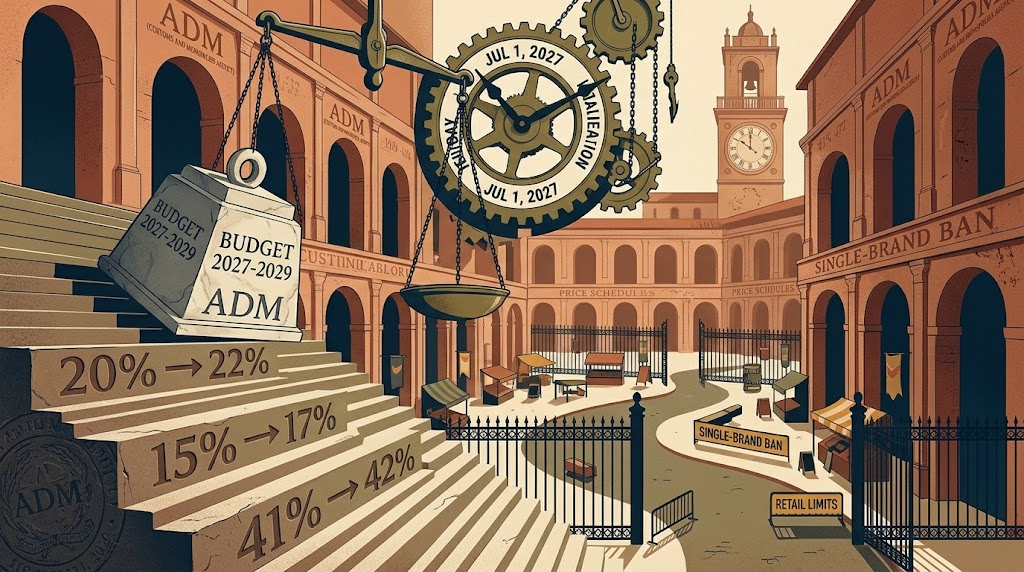
Italy's proposed 2027–2029 budget would bring forward scheduled tax increases for e-cigarette liquids and heated tobacco products from January 1, 2028, to July 1, 2027. The consumption tax coefficient for nicotine-containing e-liquids would rise from 20% to 22%, that for nicotine-free liquids and applicable flavorings from 15% to 17%, and the heated-tobacco coefficient from 41% to 42%. The bill would also introduce official retail price schedules for e-liquids, restrict exclusive agreements between retailers and suppliers, and limit single-brand-dominated displays, sales incentives and bundled offers. Importing, authorized warehousing and retailer sourcing arrangements would also change. The proposals remain subject to parliamentary approval and subsequent implementing regulations.
Regulations
Nov.04
EU Tobacco Tax Reform Stalls as Malta Withholds Support Despite Backing From 26 States
EU finance ministers failed to reach agreement on tobacco excise reform at the November 9, 2026 Economic and Financial Affairs Council (ECOFIN) meeting in Brussels. The Irish Council presidency's compromise secured support from 26 of the EU's 27 member states, but Malta withheld consent, preventing the Council from reaching a general approach requiring unanimity. The reform would raise minimum taxes on conventional tobacco and bring e-cigarette liquids, heated tobacco and nicotine pouches into a common EU minimum excise framework. Finland and Estonia accepted further concessions during the meeting, while the presidency proposed separating the inclusion of nicotine pouches in the framework from setting their precise minimum tax rates. Another compromise would allow ten qualifying member states until 2036 to meet certain tobacco excise requirements. Ireland intends to continue negotiations in December.
Regulations
Nov.11
German Customs Seize 115,800 Vapes in €1.4 Million Tax Case
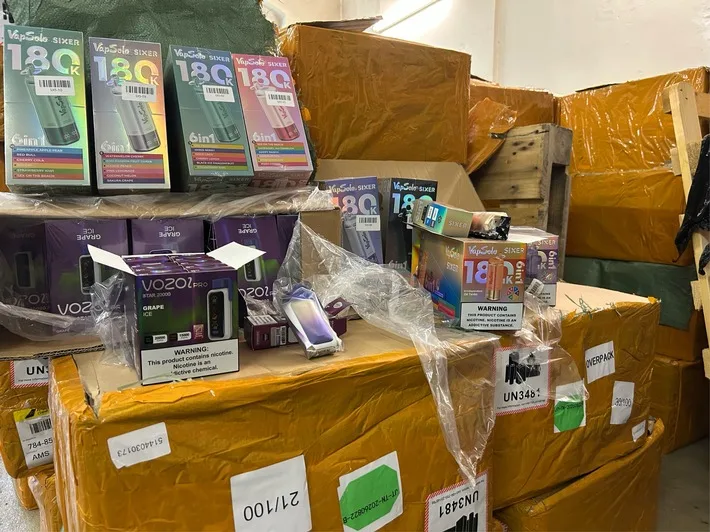
Germany's Magdeburg Main Customs Office seized 115,800 untaxed e-cigarettes containing a combined 4.366 million mL of e-liquid during four truck inspections between August 10 and September 4, 2026. The seizures prevented an estimated €1.397 million in tax losses and set a record for the customs office's jurisdiction. Criminal proceedings have been initiated against four truck drivers. The case follows a separate German investigation involving more than 7.6 million illicit vapes and an estimated €33.3 million in excise-tax losses.
Enforcement
Oct.13
Special Report|From CrossBar 20K to 6-Methyl Nicotine KUMI: Two Routes Into U.S. State Vape Directories?
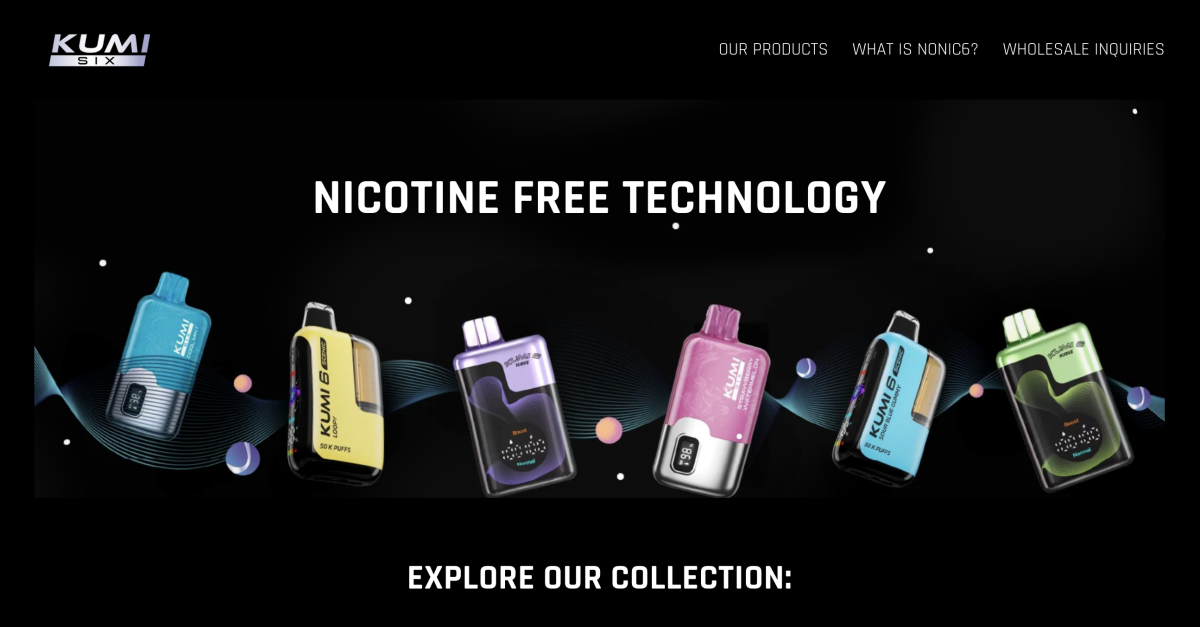
Several U.S. states have incorporated the September 9, 2020 PMTA filing deadline into eligibility rules for certain vaping products. CrossBar 20K drew attention after appearing on Pennsylvania's 163-entry directory. A broader 2Firsts investigation found that related registration businesses also listed KUMI and CROSSBAR SIX products, with 171 KUMI-related entries across Louisiana, Nebraska and Wisconsin. Corporate records link Scott Silverman to Blue Nine LLC and VR Products I LLC. PMTA compliance expert Mr. K said historical applications and nicotine-analogue products may offer two different approaches to state-directory access.
Regulations
Oct.26
Australia Adds 6-Methylnicotine to Schedule 9 Prohibited Substances, Effective October 1
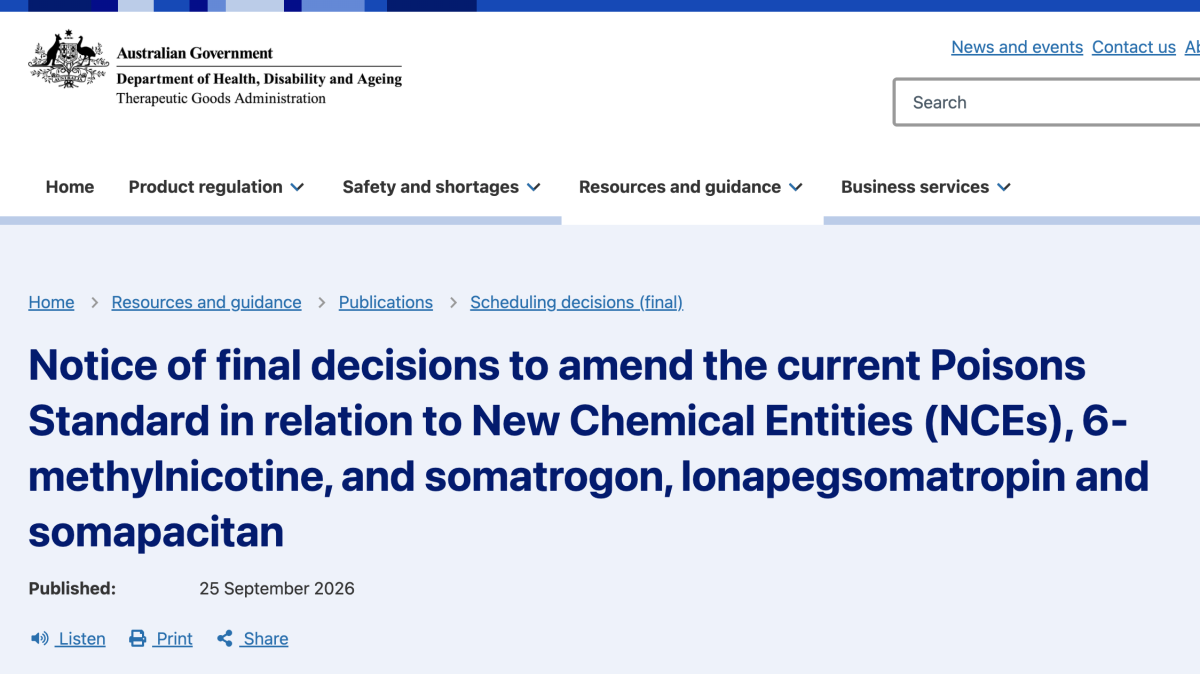
Australia's Therapeutic Goods Administration published a final decision on September 25 to classify 6-methylnicotine as a Schedule 9 prohibited substance under the Poisons Standard, effective October 1, 2026. TGA said the chemical has been reported in e-cigarette liquids sold in Australia and marketed as nicotine-free or nicotine alternatives, while evidence also indicates its use in preparations such as oral pouches. The government originally proposed a Schedule 7 classification but ultimately adopted the stricter Schedule 9 designation, citing acute toxicity, dependence risk, use in unapproved consumer products and misleading marketing.
News
Sep.29 by 2Firsts Perspectives
South Korea's Tobacco Plan Excludes 6-Methyl Nicotine as Customs Tightens Import Controls and Analog Liquid Imports Fall 83%
South Korea's government unveiled its first Tobacco Harm Management Basic Plan for 2027–2031 on October 29, 2026, proposing broader testing of vaping and heated tobacco products while excluding nicotine analogs such as 6-methyl nicotine. Synthetic nicotine came under tobacco regulation on April 24, and a June investigation found 6-methyl nicotine in 12 liquid inhalation products marketed as nicotine-free. Customs data released in September showed that imports of nicotine analog solutions fell 83.3%, from 12 metric tons in January–April to 2 metric tons in May–August. By September 20, imports had reached approximately 15 metric tons for the year, with 99.99% originating from China. Customs authorities have tightened pre-clearance testing and supply-chain documentation requirements, while the MFDS expects to complete its assessment of nicotine analog hazards by the end of 2026.
Regulations
Nov.04