Illegal Tobacco and E-cigarette Discovery in UK Retail Store

Regulations by 2FIRSTS.ai
Nov.24.2023
Illegal Tobacco and E-cigarette Discovery in UK Retail Store
UK Trading Standards seizes £50k worth of illegal tobacco and e-cigarette products in Stoke-on-Trent. Store sold to minors.

According to a report by BBC on November 23rd, the British Trading Standards Agency seized an illegal batch of tobacco and e-cigarette products worth £50,000 (approximately 450,000 yuan) at a tobacco retail store in Stoke-on-Trent.


It is alleged that these illegal products were discovered after Trade Standards Bureau officials reportedly assigned two 15-year-old children to purchase e-cigarettes.


The Trade Standards Bureau reports that despite being underage, these individuals were still sold e-cigarettes at this store. However, these e-cigarettes also exceed the legally allowed e-liquid capacity by 15 times (i.e. 30ml).


The Bureau of Trade Standards seized several products from the retail store, including counterfeit cigarettes from 11 different brands and disposable e-cigarettes from 7 brands. These e-cigarettes not only exceeded the allowed e-liquid capacity but also displayed inaccurate health warnings on the packaging.


Amjid Wazir, a member of parliament, has expressed deep concern about the prevalent illegal sale of tobacco and e-cigarettes in the community, particularly to underage buyers.


We welcome news tips, article submissions, interview requests, or comments on this piece.

Please contact us at info@2firsts.com, or reach out to Alan Zhao, CEO of 2Firsts, on LinkedIn


Notice

1.  This article is intended solely for professional research purposes related to industry, technology, and policy. Any references to brands or products are made purely for objective description and do not constitute any form of endorsement, recommendation, or promotion by 2Firsts.

2.  The use of nicotine-containing products — including, but not limited to, cigarettes, e-cigarettes, nicotine pouchand heated tobacco products — carries significant health risks. Users are responsible for complying with all applicable laws and regulations in their respective jurisdictions.

3.  This article is not intended to serve as the basis for any investment decisions or financial advice. 2Firsts assumes no direct or indirect liability for any inaccuracies or errors in the content.

4.  Access to this article is strictly prohibited for individuals below the legal age in their jurisdiction.


Copyright


This article is either an original work created by 2Firsts or a reproduction from third-party sources with proper attribution. All copyrights and usage rights belong to 2Firsts or the original content provider. Unauthorized reproduction, distribution, or any other form of unauthorized use by any individual or organization is strictly prohibited. Violators will be held legally accountable.

For copyright-related inquiries, please contact: info@2firsts.com


AI Assistance Disclaimer


This article may have been enhanced using AI tools to improve translation and editorial efficiency. However, due to technical limitations, inaccuracies may occur. Readers are encouraged to refer to the cited sources for the most accurate information.

We welcome any corrections or feedback. Please contact us at: info@2firsts.com

Special Report | Can Nicotine Be Replaced? 6-MN Is Already on the Market While Key Human Evidence Is Still Missing
Nicotine analogues such as 6-methylnicotine are already appearing in e-cigarettes and oral pouches, even as key human evidence remains limited. A new Nixodine-S study adds nonclinical data showing differences from nicotine in cytotoxicity and receptor activity, while independent studies point to a more complex toxicological picture. With supply-chain activity growing and FDA seeking clearer authority over nicotine analogues, the industry now faces a larger question: what evidence is needed before these substances can credibly replace nicotine?
SCIENCE
Sep.23
PMI Pushes Smoke-Free Business in Latin America as Argentina Lifts Heated Tobacco Ban, Mexico City Share Tops 7%
Philip Morris International (PMI) showcased IQOS heated tobacco systems and nicotine pouch products at Technovation 2026 in Buenos Aires on October 7–8, presenting research on consumer attitudes, regulatory developments and illicit cigarette trade across Latin America. PMI Chief Global Growth Officer Stefano Volpetti said smoke-free products accounted for more than 7% of the Mexico City market. Argentina repealed its heated tobacco ban in May 2026 and introduced registration requirements for tobacco and nicotine products, while local media reported nicotine pouch sales in Mendoza. A PMI-commissioned survey found that only 8% of respondents across four Latin American countries were familiar with nicotine pouches. A separate KPMG study estimated illicit cigarette consumption at 77 billion sticks across 11 markets in Latin America and Canada in 2025.
PMI
Oct.13
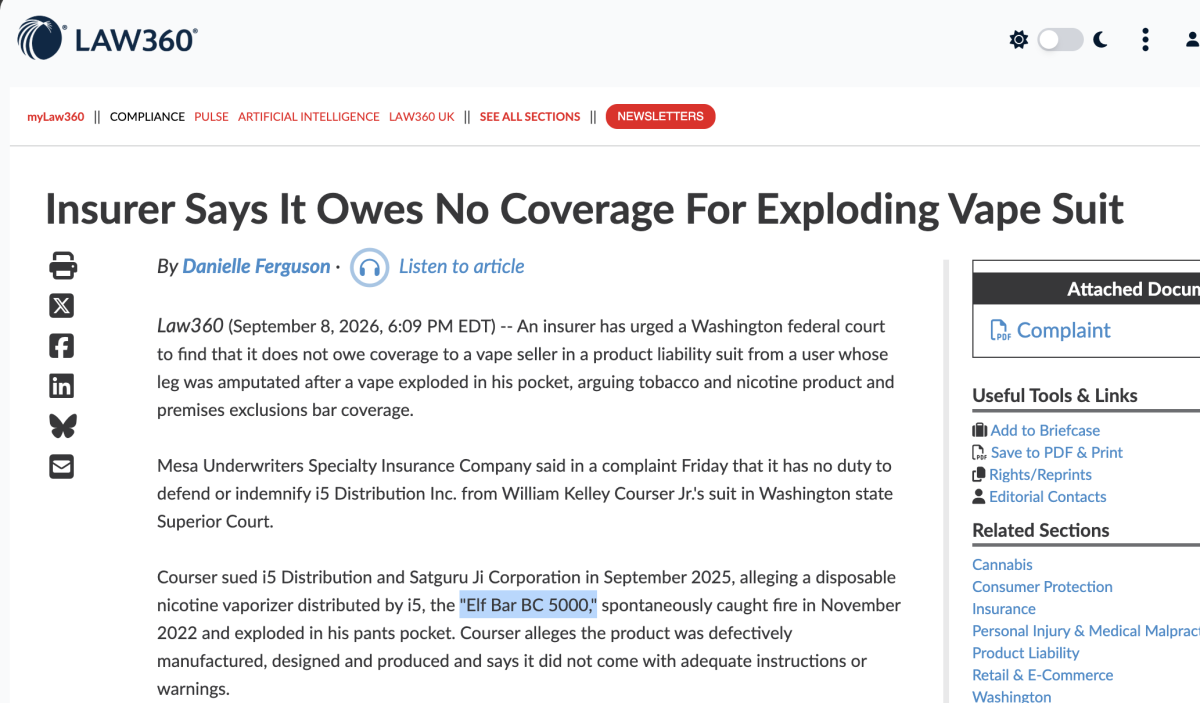
Elf Bar Vape Explosion and Amputation Claim Spurs Coverage Suit, U.S. Insurer MUSIC Seeks Ruling It Owes No Duty to Defend or Indemnify Distributor i5
Mesa Underwriters Specialty Insurance Company has asked a federal court in Washington to declare that it has no duty to defend or indemnify vape distributor i5 Distribution in a product liability case involving an Elf Bar BC5000. The plaintiff alleges that the disposable vape caught fire and exploded in his pocket, causing severe burns and ultimately requiring an above-the-knee amputation of his left leg. MUSIC is relying on a tobacco, nicotine or nicotine replacement products exclusion and a premises limitation endorsement. The court has not ruled on the coverage dispute.
News
Sep.10
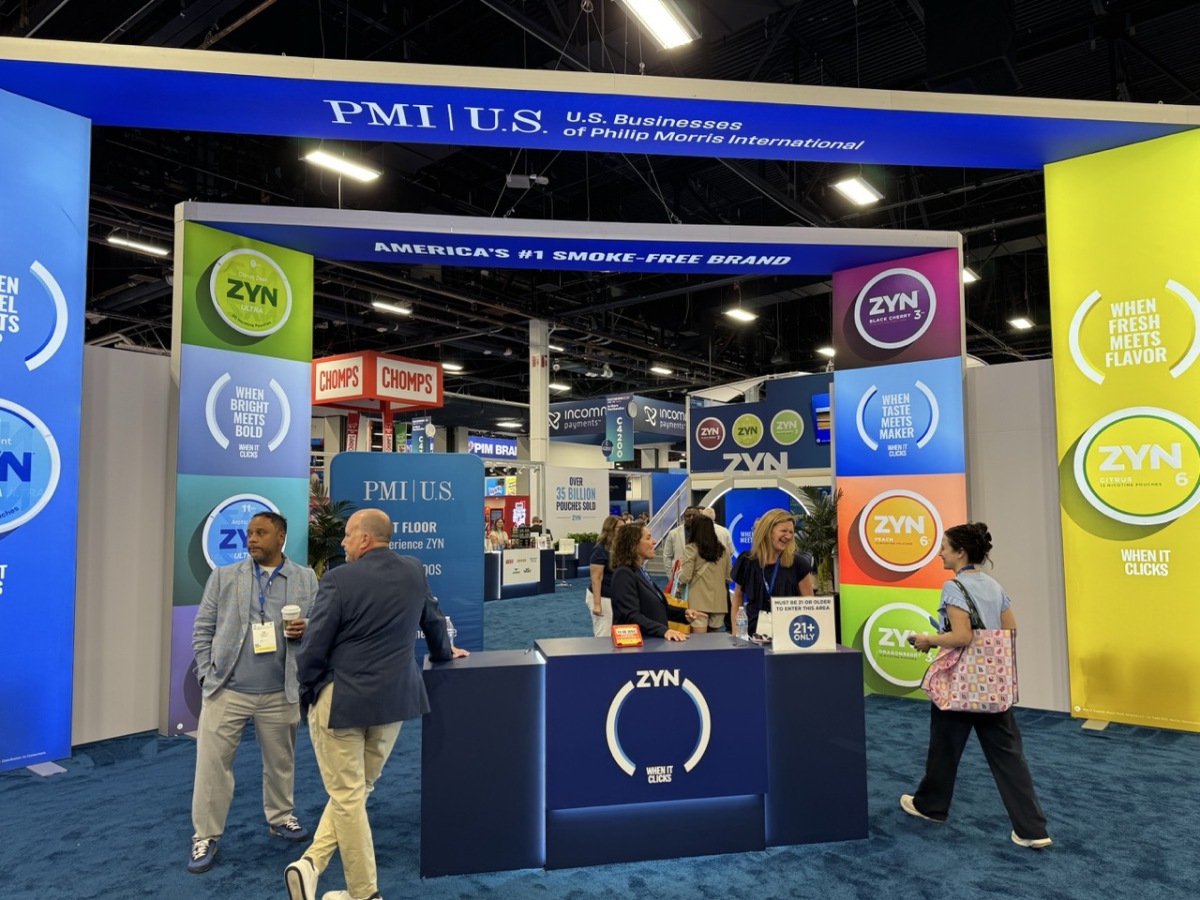
PMI Showcases ZYN, IQOS and U.S. Investments at NACS Show 2026
At the 2026 NACS Show in Las Vegas, Philip Morris International (PMI) showcased its ZYN nicotine pouches, IQOS heated tobacco products and U.S. investments. A 2Firsts review of FDA records found that several ZYN products displayed at the booth were not on the agency's marketing authorization list, including certain nicotine strengths and flavors. A PMI booth representative also confirmed that IQOS is currently sold in three U.S. states, while the newer IQOS ILUMA system remains under FDA review.
EXPO
Oct.10
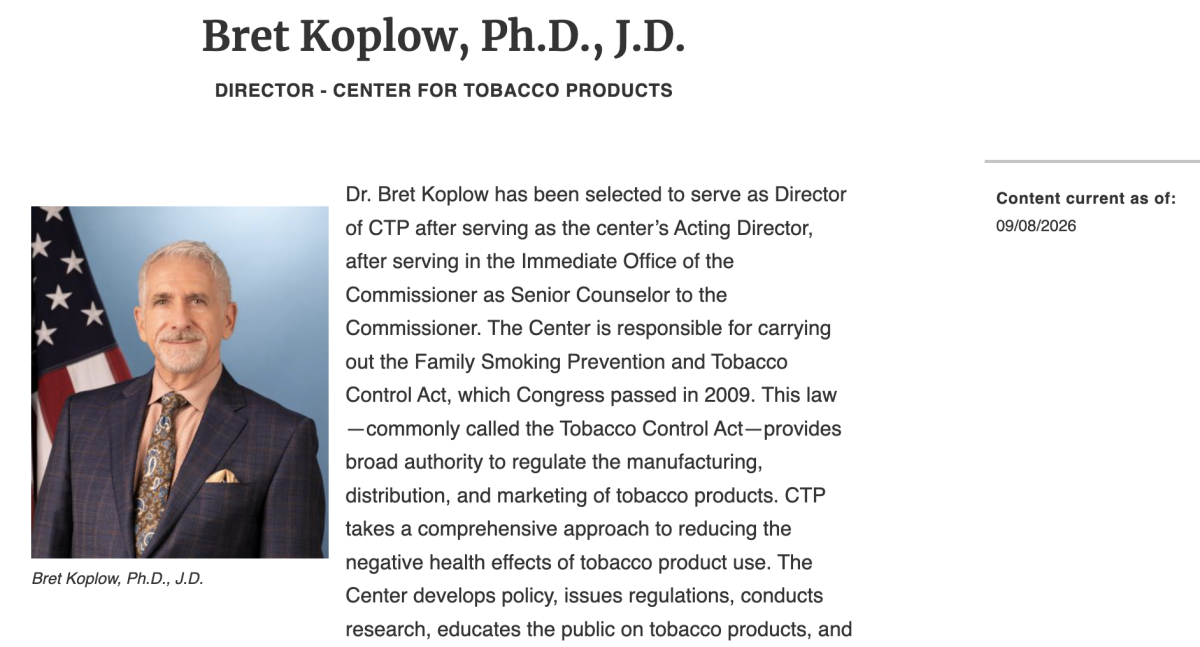
Bret Koplow Takes Permanent Charge of FDA Tobacco Center After Pushing Faster PMTA Reviews, as HHS Emphasizes Innovation and Access to Lower-Risk Alternatives
The U.S. Department of Health and Human Services has named Bret Koplow permanent director of the FDA’s Center for Tobacco Products, ending his period as acting chief. Koplow has spent years working on tobacco regulation, law and policy inside the FDA and, while serving as acting director, pushed for faster PMTA reviews and nicotine pouch review pilots. HHS also said CTP will prioritize innovation and access to less harmful alternatives for adult smokers while continuing efforts to protect youth.
Sep.09
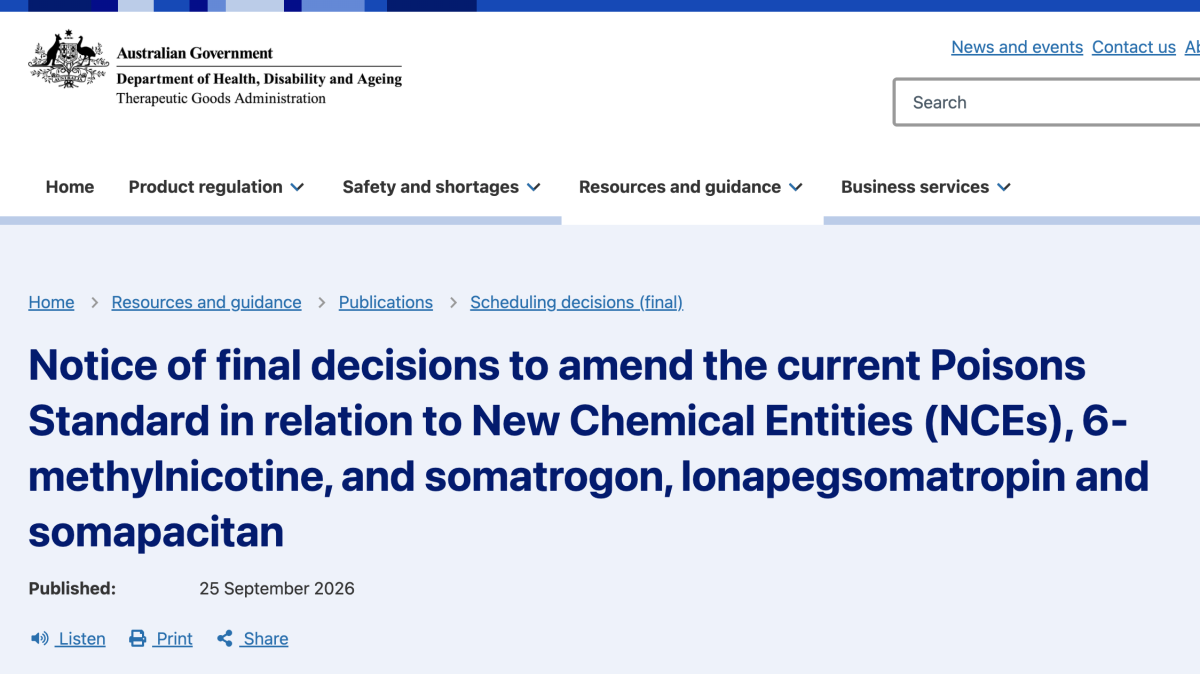
Australia Adds 6-Methylnicotine to Schedule 9 Prohibited Substances, Effective October 1
Australia's Therapeutic Goods Administration published a final decision on September 25 to classify 6-methylnicotine as a Schedule 9 prohibited substance under the Poisons Standard, effective October 1, 2026. TGA said the chemical has been reported in e-cigarette liquids sold in Australia and marketed as nicotine-free or nicotine alternatives, while evidence also indicates its use in preparations such as oral pouches. The government originally proposed a Schedule 7 classification but ultimately adopted the stricter Schedule 9 designation, citing acute toxicity, dependence risk, use in unapproved consumer products and misleading marketing.
News
Sep.29 by 2Firsts Perspectives