KT&G Expands Sales of New HNB Device "Lil Able 2.0"

Business by 2FIRSTS.ai
Jul.09.2024
KT&G Expands Sales of New HNB Device "Lil Able 2.0"
KT&G expands sales of new HNB device "Lil Able 2.0" to convenience stores in Seoul and national online store.

According to Hankooki's report on July 9th, KT&G of South Korea has announced that it will expand the sales outlets for its new HNB device, "Lil Able 2.0," to major convenience stores in Seoul, as well as nationwide Lil Stations and the Lil online store.


Lil Able 2.0" was first released on June 26 at six locations of the flagship store Lil Minimalism.


Starting from the 10th, sales outlets for "Lil Able 2.0" will expand to include 8510 major convenience stores in Seoul (GS25, CU, 7-11, and EMart 24) and 525 Reel stations nationwide. The product can also be purchased online.


The new product is equipped with three different types of cartridges, including "Real," "Granule," and "Vapor Stick," and two modes of use: Balance Mode and Classic Mode. The product is available in four different colors: "Cotton Blue," "Cozy Burgundy," "Space Black," and "Champagne Gold.


In addition, KT& will be holding a trade-in event for customers who own the "Lil Able 1.0," where they can enjoy a discount of 30,000 Korean won (approximately $21.67) when returning the device.


We welcome news tips, article submissions, interview requests, or comments on this piece.

Please contact us at info@2firsts.com, or reach out to Alan Zhao, CEO of 2Firsts, on LinkedIn


Notice

1.  This article is intended solely for professional research purposes related to industry, technology, and policy. Any references to brands or products are made purely for objective description and do not constitute any form of endorsement, recommendation, or promotion by 2Firsts.

2.  The use of nicotine-containing products — including, but not limited to, cigarettes, e-cigarettes, nicotine pouchand heated tobacco products — carries significant health risks. Users are responsible for complying with all applicable laws and regulations in their respective jurisdictions.

3.  This article is not intended to serve as the basis for any investment decisions or financial advice. 2Firsts assumes no direct or indirect liability for any inaccuracies or errors in the content.

4.  Access to this article is strictly prohibited for individuals below the legal age in their jurisdiction.


Copyright


This article is either an original work created by 2Firsts or a reproduction from third-party sources with proper attribution. All copyrights and usage rights belong to 2Firsts or the original content provider. Unauthorized reproduction, distribution, or any other form of unauthorized use by any individual or organization is strictly prohibited. Violators will be held legally accountable.

For copyright-related inquiries, please contact: info@2firsts.com


AI Assistance Disclaimer


This article may have been enhanced using AI tools to improve translation and editorial efficiency. However, due to technical limitations, inaccuracies may occur. Readers are encouraged to refer to the cited sources for the most accurate information.

We welcome any corrections or feedback. Please contact us at: info@2firsts.com

Australia Adds 6-Methylnicotine to Schedule 9 Prohibited Substances, Effective October 1
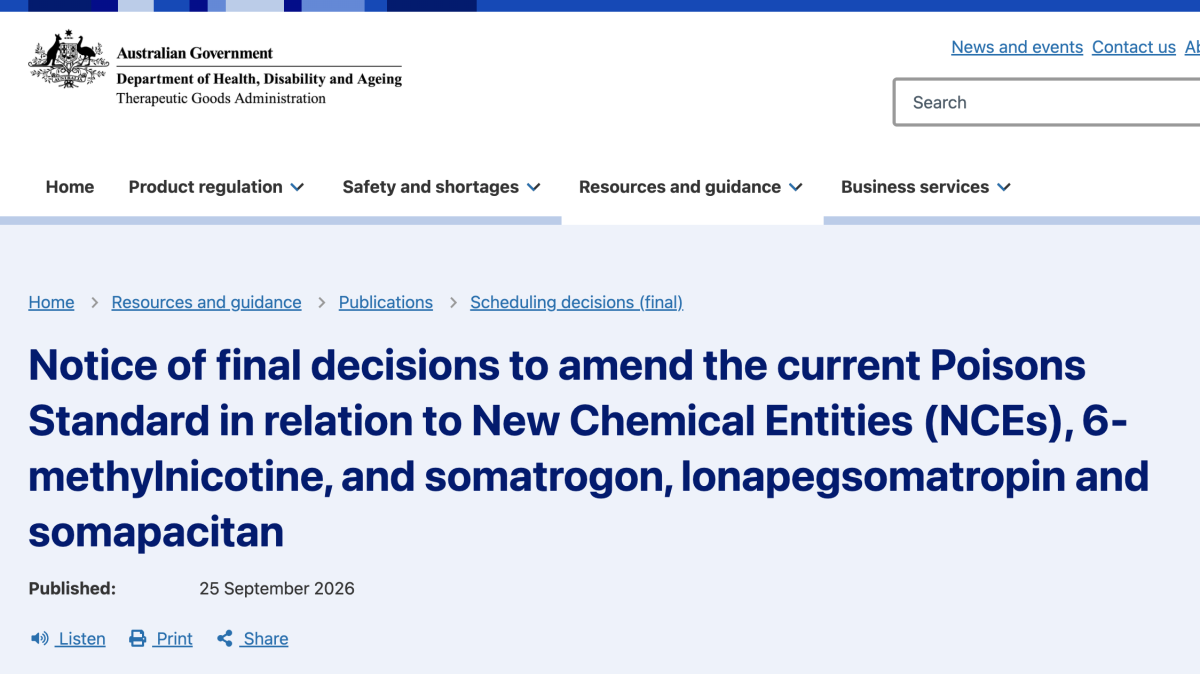
Australia's Therapeutic Goods Administration published a final decision on September 25 to classify 6-methylnicotine as a Schedule 9 prohibited substance under the Poisons Standard, effective October 1, 2026. TGA said the chemical has been reported in e-cigarette liquids sold in Australia and marketed as nicotine-free or nicotine alternatives, while evidence also indicates its use in preparations such as oral pouches. The government originally proposed a Schedule 7 classification but ultimately adopted the stricter Schedule 9 designation, citing acute toxicity, dependence risk, use in unapproved consumer products and misleading marketing.
News
Sep.29 by 2Firsts Perspectives
Philip Morris Malaysia Again Meets Religious Authority Over Cigarette Alternatives as Perlis Mufti Responds on Halal Criteria
Philip Morris Malaysia Managing Director Naeem Shahab Khan met Perlis Mufti Mohd Asri Zainul Abidin on September 17 and presented the company's shift from conventional cigarettes toward alternative products. The mufti said a product could be considered halal if it is clean, its side effects are not harmful or can be controlled, and it does not involve excessive waste. His remarks did not mention IQOS or any other specific PMI product and did not amount to a new product-specific religious ruling. It was at least the second publicly reported engagement between Philip Morris Malaysia and a Malaysian religious institution over cigarette alternatives within six months.
Regulations
Sep.18 by 2Firsts Perspectives
IKE Tech Launches IKE 2.0 Compliance Platform for Nicotine Products
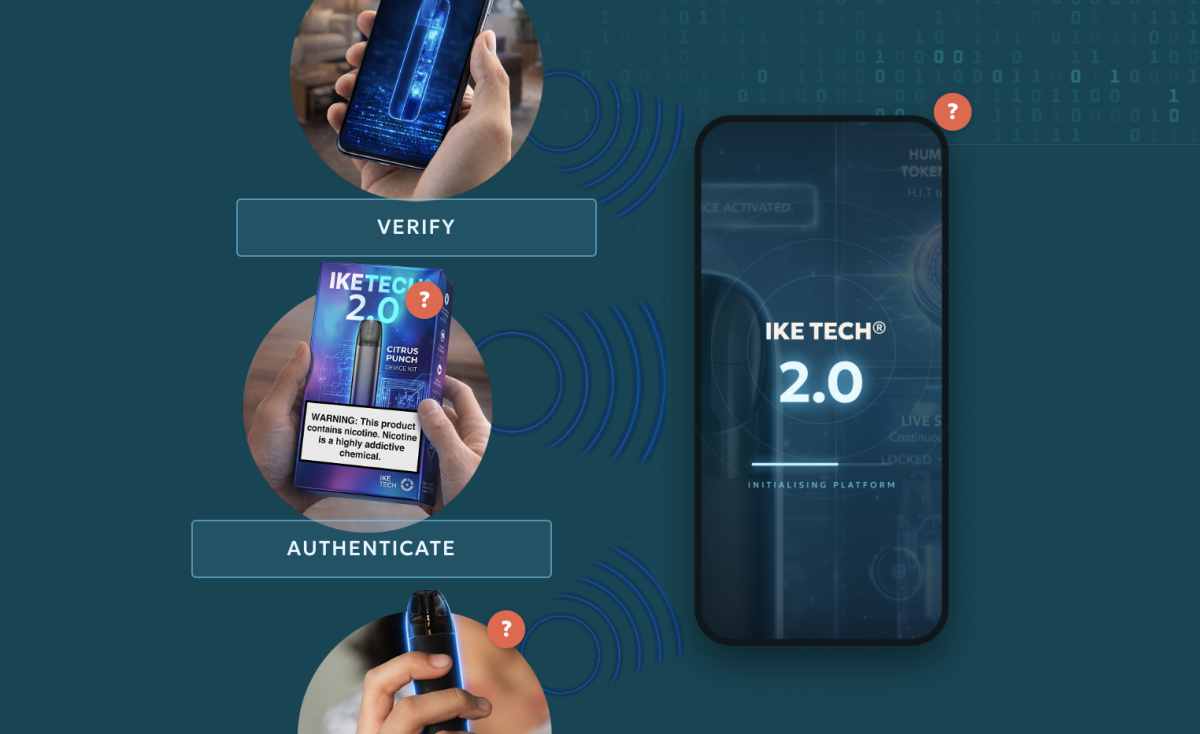
IKE Tech launched IKE 2.0 on September 28, initially targeting nicotine products with a platform that combines user identity verification, product authentication, configurable policy controls and data analytics. Products can be authenticated through direct device integration or NFC smart tags. IKE Tech was formed with participation from Ispire's Aspire North America, Berify and Chemular, with Ispire currently holding a 40% interest. Its age-verification component PMTA was accepted by the FDA in 2025 and remains under review. The company did not disclose customer names, commercial deployment volumes, pricing or revenue tied to IKE 2.0.
News
Sep.29 by 2Firsts Perspectives
U.S. Expands Illicit Vape Enforcement as ATF Brings PACT Act Powers Into Trade Fraud Task Force
The U.S. Bureau of Alcohol, Tobacco, Firearms and Explosives said on September 23 that it has joined the interagency Trade Fraud Task Force to strengthen enforcement against illegal, misdeclared and smuggled vape and tobacco products. ATF will bring its authority under the Prevent All Cigarette Trafficking Act into the task force, including registration, reporting, shipping and record-inspection requirements covering interstate sales of electronic nicotine delivery systems. ATF said the move will strengthen its ability to trace illicit products from U.S. points of entry through domestic trafficking and distribution networks.
News
Sep.28 by 2Firsts Perspectives
U.S. Rep. Krishnamoorthi Questions FDA Over Planned PMTA Rewrite, Seeks Communications With Altria and Reynolds
U.S. Rep. Raja Krishnamoorthi on Oct. 6 questioned the FDA over its plan to reassess and potentially replace the 2021 PMTA regulatory framework, asking the agency to identify provisions it may change or eliminate, state whether current scientific evidentiary standards will be maintained, and disclose communications with Altria, Reynolds and other parties challenging the rule. Krishnamoorthi led a congressional investigation into JUUL and youth vaping in 2019 and has since remained active on e-cigarette regulation and enforcement.
Regulations
Oct.08
South Korea's Tobacco Plan Excludes 6-Methyl Nicotine as Customs Tightens Import Controls and Analog Liquid Imports Fall 83%
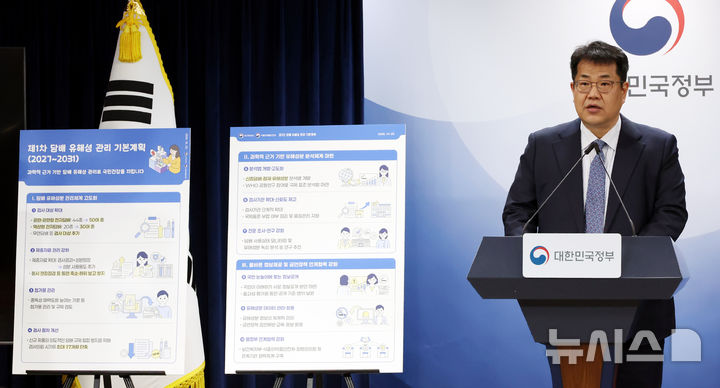
South Korea's government unveiled its first Tobacco Harm Management Basic Plan for 2027–2031 on October 29, 2026, proposing broader testing of vaping and heated tobacco products while excluding nicotine analogs such as 6-methyl nicotine. Synthetic nicotine came under tobacco regulation on April 24, and a June investigation found 6-methyl nicotine in 12 liquid inhalation products marketed as nicotine-free. Customs data released in September showed that imports of nicotine analog solutions fell 83.3%, from 12 metric tons in January–April to 2 metric tons in May–August. By September 20, imports had reached approximately 15 metric tons for the year, with 99.99% originating from China. Customs authorities have tightened pre-clearance testing and supply-chain documentation requirements, while the MFDS expects to complete its assessment of nicotine analog hazards by the end of 2026.
Regulations
Nov.04