South Korean Tobacco Company KT&G to Halt "ESSE Change Icefall"

Business by { "type": "", "title": "", "logo": "", "description": "", "auth": "", "seo_url": "" }
Jun.21.2024
South Korean Tobacco Company KT&G to Halt "ESSE Change Icefall"
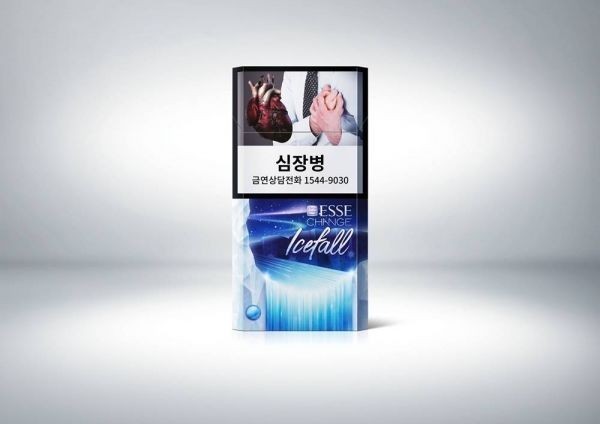
South Korean tobacco company KT&G to halt supply of ESSE Change Icefall due to declining sales, favoring e-cigarettes.

According to a report by N.News on June 21, the South Korean tobacco company KT&G plans to stop supplying the ultra-thin cigarette "ESSE Change Icefall" that has been on sale since March of last year.


The company has announced that the product will suspend supply to convenience stores starting from mid-month. It is reported that this decision to halt production is based on improving portfolio efficiency.


This strategy has emerged due to the declining sales of traditional cigarettes domestically, while the popularity of e-cigarettes is on the rise. According to data from the Ministry of Finance, as of last year, sales of cigarette-shaped e-cigarettes increased by 12.6% compared to the previous year, reaching 610 million packs. This data indicates a clear preference among consumers for cigarette-shaped e-cigarettes.


In the overall market, the market share of cigarette-style e-cigarettes has also increased to 16.8%, a 2% increase from the previous year.


On the contrary, sales of traditional cigarettes have been gradually decreasing since reaching a peak of 3.447 billion packs in 2017, dropping to 3.023 billion packs last year.


We welcome news tips, article submissions, interview requests, or comments on this piece.

Please contact us at info@2firsts.com, or reach out to Alan Zhao, CEO of 2Firsts, on LinkedIn


Notice

1.  This article is intended solely for professional research purposes related to industry, technology, and policy. Any references to brands or products are made purely for objective description and do not constitute any form of endorsement, recommendation, or promotion by 2Firsts.

2.  The use of nicotine-containing products — including, but not limited to, cigarettes, e-cigarettes, nicotine pouchand heated tobacco products — carries significant health risks. Users are responsible for complying with all applicable laws and regulations in their respective jurisdictions.

3.  This article is not intended to serve as the basis for any investment decisions or financial advice. 2Firsts assumes no direct or indirect liability for any inaccuracies or errors in the content.

4.  Access to this article is strictly prohibited for individuals below the legal age in their jurisdiction.


Copyright


This article is either an original work created by 2Firsts or a reproduction from third-party sources with proper attribution. All copyrights and usage rights belong to 2Firsts or the original content provider. Unauthorized reproduction, distribution, or any other form of unauthorized use by any individual or organization is strictly prohibited. Violators will be held legally accountable.

For copyright-related inquiries, please contact: info@2firsts.com


AI Assistance Disclaimer


This article may have been enhanced using AI tools to improve translation and editorial efficiency. However, due to technical limitations, inaccuracies may occur. Readers are encouraged to refer to the cited sources for the most accurate information.

We welcome any corrections or feedback. Please contact us at: info@2firsts.com

Lithuanian Schools Install Vape Detectors as Teen Vaping Surges
Over 30 Lithuanian schools have installed smart vape detectors to curb rising teen e-cigarette use. WHO data show Lithuania ranks worst among 44 countries, with 60% of 15-year-olds having tried vaping. The system alerts staff to smoke and noise changes, helping schools reduce on-campus vaping cases.
Oct.27 by { "username": "", "position": "", "avatar": "", "auth": "", "seo_url": "" }
Novosibirsk Governor: Targeted Vape Restrictions More Effective Than Full Ban
Novosibirsk Region Governor Andrey Travnikov said during a live Q&A session that local authorities have no plans to impose a full ban on the sale of vapes and disposable e-cigarettes. He argued that a regional ban would be ineffective and could encourage gray market activity and cross-border resale.
Dec.12 by { "username": "", "position": "", "avatar": "", "auth": "", "seo_url": "" }
Vietnam’s Health Ministry Proposes Including E-Cigarettes and Heated Tobacco in the Investment Law Ban List
Vietnam’s Ministry of Health has submitted a proposal to the Government Office recommending that “e-cigarettes and heated tobacco products” be added to the list of prohibited investment and business sectors in the amended Investment Law. The proposal aligns with National Assembly Resolution No. 173/2024/QH15, which bans the production, trade, import, and use of these products starting in 2025.
Nov.12 by { "username": "", "position": "", "avatar": "", "auth": "", "seo_url": "" }
Russian State Duma Passes Ban on Tobacco and Vape Sales at Public Transport Stops
Russia’s State Duma has approved, in its third reading, a law banning the sale of cigarettes and electronic cigarettes at public transport stops. The measure expands existing restrictions on tobacco sales at transport infrastructure facilities and aims to reduce accessibility, particularly among young people. The law includes an exemption for small settlements where such kiosks are the only sales points and will take effect on September 1, 2026.
Dec.18 by { "username": "", "position": "", "avatar": "", "auth": "", "seo_url": "" }
Russia Proposes Mandatory Labelling of E-cigarettes from April 1, 2026
Russia’s Ministry of Industry and Trade has proposed introducing mandatory labelling for electronic cigarettes and other electronic devices used to consume nicotine, starting April 1, 2026. The draft resolution has been published on the regulatory portal. Under the proposal, market participants would be required to register with the national monitoring system and label products accordingly, as part of efforts to enhance state oversight of production and circulation.
Dec.19 by { "username": "", "position": "", "avatar": "", "auth": "", "seo_url": "" }
Canadian Media Investigation: BAT’s Nicotine Pouch ZONNIC Sparks Ongoing Controversy as Regulatory Gaps in Canada Come Under Scrutiny
Canadian outlet Rebel News released a long-form video report examining Canada’s regulatory framework for nicotine pouches, market dynamics, and the approval process of ZONNIC, a product of BAT subsidiary Imperial Tobacco Canada. The report highlights issues involving youth access, regulatory gaps, black-market activity, retailer feedback, and company responses. This article summarizes key points based on the video.
Dec.02 by { "username": "", "position": "", "avatar": "", "auth": "", "seo_url": "" }