Philippine Customs Seizes $120M Worth of Smuggled e-Cigarettes

Oct.07.2024
Philippine Customs Seizes $120M Worth of Smuggled e-Cigarettes
Philippine customs seized smuggled e-cigarette products worth 6.5 billion pesos in 11 months, cracking down on illegal activities.

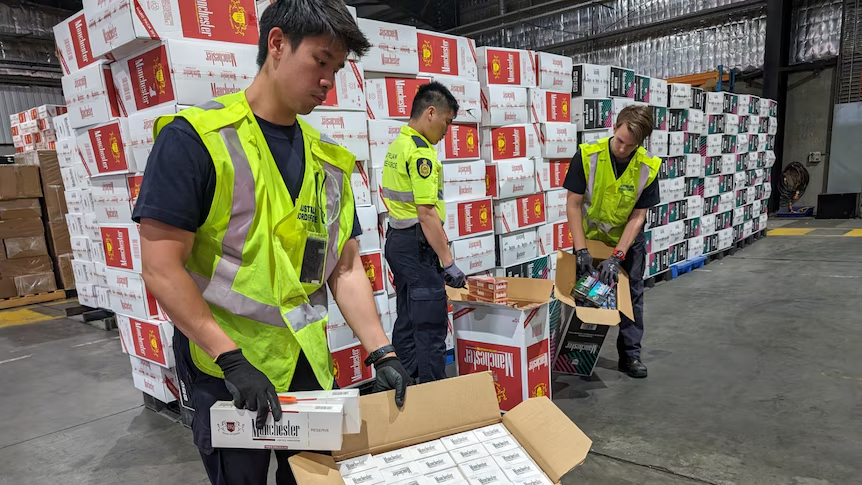
According to a report by Philstar on October 7th, the Philippine customs authorities seized smuggled e-cigarette products worth 6.5 billion pesos (approximately 120 million US dollars) within 11 months.


Leon Mogao Jr., head of the Customs Investigation Department, announced this Saturday (October 5th) that from October 2023 to August of this year, Philippine customs have conducted a total of 36 operations targeting illegal e-cigarette products. These operations were primarily carried out in Manila Port, Manila International Container Port, Clark Port, and Ninoy Aquino International Airport.


Customs Commissioner Bienvenido Rubio pointed out that these achievements demonstrate the agency's commitment to combating smuggling activities and protecting consumers from unregulated and potentially harmful products.


We welcome news tips, article submissions, interview requests, or comments on this piece.

Please contact us at info@2firsts.com, or reach out to Alan Zhao, CEO of 2Firsts, on LinkedIn


Notice

1.  This article is intended solely for professional research purposes related to industry, technology, and policy. Any references to brands or products are made purely for objective description and do not constitute any form of endorsement, recommendation, or promotion by 2Firsts.

2.  The use of nicotine-containing products — including, but not limited to, cigarettes, e-cigarettes, nicotine pouchand heated tobacco products — carries significant health risks. Users are responsible for complying with all applicable laws and regulations in their respective jurisdictions.

3.  This article is not intended to serve as the basis for any investment decisions or financial advice. 2Firsts assumes no direct or indirect liability for any inaccuracies or errors in the content.

4.  Access to this article is strictly prohibited for individuals below the legal age in their jurisdiction.


Copyright


This article is either an original work created by 2Firsts or a reproduction from third-party sources with proper attribution. All copyrights and usage rights belong to 2Firsts or the original content provider. Unauthorized reproduction, distribution, or any other form of unauthorized use by any individual or organization is strictly prohibited. Violators will be held legally accountable.

For copyright-related inquiries, please contact: info@2firsts.com


AI Assistance Disclaimer


This article may have been enhanced using AI tools to improve translation and editorial efficiency. However, due to technical limitations, inaccuracies may occur. Readers are encouraged to refer to the cited sources for the most accurate information.

We welcome any corrections or feedback. Please contact us at: info@2firsts.com

Chinese Disposable Brands OXBAR, LYCO Challenge Vuse and JUUL: Pennsylvania’s Pending List Offers a Glimpse of the Future Legal Vape Market
Pennsylvania’s June 26 ENDS Pending Certifications list previews the state’s future legal vape market, placing Vuse, JUUL and Logic alongside Chinese-linked disposable brands OXBAR and LYCO. Shaped by PMTA eligibility and state rules, the list shows competition shifting from market share to market access.
Special Report
Jul.06
FDA Grants MRTP Orders for 20 ZYN Nicotine Pouches
The U.S. Food and Drug Administration (FDA) has issued modified risk granted orders to Swedish Match USA for 20 ZYN nicotine pouch products, allowing the already-authorized products to be marketed with a specific claim that using ZYN instead of cigarettes lowers the risk of mouth cancer, heart disease, lung cancer, stroke, emphysema and chronic bronchitis.
Jul.01
FDA Foreign Tobacco Registration Proposal Could Strengthen ENDS Import Oversight, Azim Chowdhury Says
FDA’s proposed rule requiring foreign tobacco manufacturers to register establishments and list products is more than routine paperwork, Keller and Heckman LLP partner Azim Chowdhury told 2Firsts. He said it could strengthen FDA’s import enforcement, inspections and market surveillance. Chinese e-cigarette OEM/ODM manufacturers, specification developers, brand owners and component suppliers may need to review their roles, product data and U.S. market authorization status.
Special Report
Jun.29
Special Report | Russia, Ukraine and Belarus Launch Fresh Push to Rein in Vaping
Russia, Ukraine and Belarus are tightening vape regulation through different tools, from Ukraine’s stronger enforcement push and Belarus’s proposed advertising restrictions to Russia’s new GOST standard and regional sales-ban mechanism. As black-market concerns persist, some Russian experts argue that China’s tightly controlled but legalised model — built around licensing, traceability and taxation — may offer a more effective alternative to blanket prohibition.
Jul.15
UK Disposable Vape Ban Marks One Year as Adult Use Falls to 8% and Youth Use to 13%
One year after the UK ban on single-use disposable vapes took effect, YouGov data commissioned by Action on Smoking and Health shows that 13% of 11-17-year-old vapers and 8% of adult vapers now mainly use disposable products.
Jun.18
Bringing Tax and Insurance Into Nicotine Regulation: Insights From a Tobacco Harm-Reduction Report
A smoke-free nicotine policy report argues that tobacco harm reduction should move beyond product bans and health warnings into tax policy, insurance pricing and risk-based regulation. While some projections remain open to debate, the report highlights a wider challenge: nicotine products, technologies and consumer behavior have changed sharply over the past decade, and regulatory systems may need new tools to better align tobacco control with harm-reduction goals.
Jun.08