Philippine Airline bans Chinese passenger for smoking on flight

Sep.23.2024
Philippine Airline bans Chinese passenger for smoking on flight
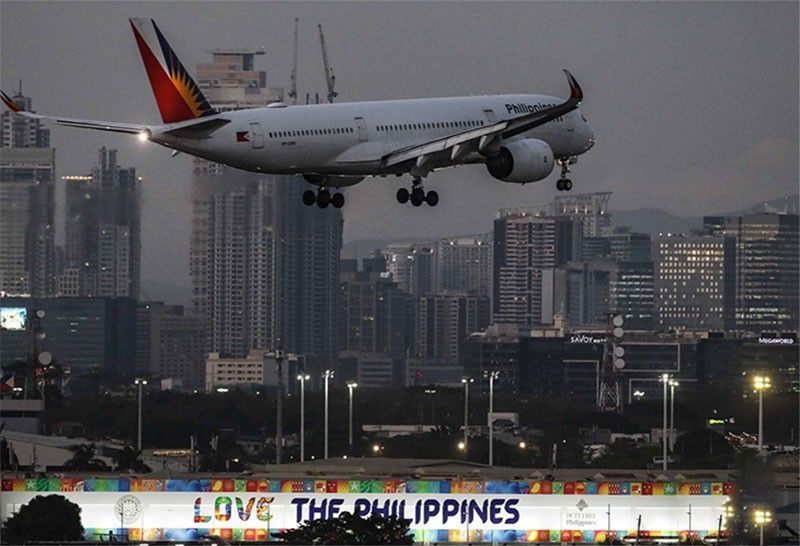
Chinese passenger banned from all Philippine Airlines flights for smoking on board flight to Hong Kong from Melbourne.

According to a report by Philstar on September 22, Philippine Airlines has permanently banned a Chinese business class passenger from Melbourne, Australia from boarding its flights. The passenger was found smoking on a flight to Hong Kong, China.


Upon arrival of flight PR 306 at Terminal 1 of Ninoy Aquino International Airport (NAIA), local authorities and personnel from Philippine Airlines conducted an investigation on Chinese passenger Zhong Yongqin, aged 64.


Ma. Antoinette Juan, the cabin manager of Philippine Airlines, stated that they intervened when Zhong Yongqin attempted to light a cigarette.


Airport authorities later questioned how Zhong Yongqin managed to bring a lighter through security at Melbourne Airport. According to regulations from Philippine Airlines, Zhong Yongqin has been banned for life from boarding any of the company's international and domestic flights.


The spokesperson of the Civil Aviation Authority of the Philippines (CAAP), Eric Apolonio, pointed out that smoking on aircraft, including e-cigarettes, is prohibited under Republic Act No. 9497 or the CAAP Act and Republic Act No. 8749 or the Clean Air Act.


The passenger was allowed to leave Ninoy Aquino International Airport after purchasing another plane ticket to Hong Kong, China.


We welcome news tips, article submissions, interview requests, or comments on this piece.

Please contact us at info@2firsts.com, or reach out to Alan Zhao, CEO of 2Firsts, on LinkedIn


Notice

1.  This article is intended solely for professional research purposes related to industry, technology, and policy. Any references to brands or products are made purely for objective description and do not constitute any form of endorsement, recommendation, or promotion by 2Firsts.

2.  The use of nicotine-containing products — including, but not limited to, cigarettes, e-cigarettes, nicotine pouchand heated tobacco products — carries significant health risks. Users are responsible for complying with all applicable laws and regulations in their respective jurisdictions.

3.  This article is not intended to serve as the basis for any investment decisions or financial advice. 2Firsts assumes no direct or indirect liability for any inaccuracies or errors in the content.

4.  Access to this article is strictly prohibited for individuals below the legal age in their jurisdiction.


Copyright


This article is either an original work created by 2Firsts or a reproduction from third-party sources with proper attribution. All copyrights and usage rights belong to 2Firsts or the original content provider. Unauthorized reproduction, distribution, or any other form of unauthorized use by any individual or organization is strictly prohibited. Violators will be held legally accountable.

For copyright-related inquiries, please contact: info@2firsts.com


AI Assistance Disclaimer


This article may have been enhanced using AI tools to improve translation and editorial efficiency. However, due to technical limitations, inaccuracies may occur. Readers are encouraged to refer to the cited sources for the most accurate information.

We welcome any corrections or feedback. Please contact us at: info@2firsts.com

The Volume Illusion: Measuring the Future of Nicotine with the Tools of the Past
As next-generation nicotine products become economically central rather than marginal, traditional volume-based metrics are increasingly unable to explain consumption, risk, and value. Units designed for a cigarette-based economy struggle to describe systems defined by delivery speed, pharmacokinetics, and adaptive user behavior. Drawing on financial reporting, regulation, and nicotine science, a fundamental question: can the future of nicotine still be measured using the tools of its past?
Feb.09 by Alan Zhao | 2Firsts Perspectives
Azerbaijan Imposes Comprehensive E-Cigarette Ban Covering Import, Export, Sales and Use, Effective April 1
Azerbaijan has approved amendments to its tobacco law that introduce a comprehensive ban on e-cigarettes and their components, covering import, export, production, storage, wholesale and retail sales, and use. Nicotine-containing e-cigarettes are classified as tobacco products under the revised framework. The law takes effect on April 1, 2026.
Jan.27 by 2FIRSTS.ai
Metal Body + AMOLED Screen: KT&G Launches New Heated Tobacco Device Lil Aible 3.0
KT&G said it will launch the heated tobacco device Lil Aible 3.0 at four stores in South Korea on February 28. The device shortens charging and preheating time while keeping features such as pausing during use, mode switching, and three consecutive uses. It adopts a metal body and an AMOLED display, comes in four colors, and will expand to Seoul-area convenience stores and the online mall in April, and nationwide convenience stores in May.
Feb.27 by 2FIRSTS.ai
Malaysia’s Perak Health Department says seized vape-related items valued at RM2,738 during two-week operation
Malaysia’s Perak State Health Department said it carried out a two-week joint enforcement operation from January 1 to 14, 2026, in line with the state government’s policy prohibiting renewals of vape sales licences effective January 1.
Jan.20 by 2FIRSTS.ai
South Korea Postal Service Launches Heated Tobacco Device Recycling Program Through Nationwide Post Offices and Mailboxes
Korean postal system launches nationwide heated tobacco device recycling through post offices and mailboxes, aiming to increase recycling rates.
Feb.10 by 2FIRSTS.ai
KT&G to cancel 10.866 mln treasury shares, about 9.5% of shares outstanding
KT&G said it plans to cancel all treasury shares it holds, totaling 10,866,189 shares, representing about 9.5% of shares outstanding, in line with Korea’s third amendment to the Commercial Act requiring companies to cancel repurchased shares within one year. The company also disclosed progress on its shareholder-return plan and multiple agenda items for next month’s shareholders meeting.
Feb.26