Police Crack Down on Illegal E-Cigarette Trade Including IGET in Western Australia

Regulations by 2FIRSTS.ai
Jul.15.2024
Police Crack Down on Illegal E-Cigarette Trade Including IGET in Western Australia
Police seize thousands of illegal cigarettes and e-cigarette products in Western Australia, prompting calls for crackdown on black market trade.

According to a report by ABC News on July 15th, an anti-smoking advocate stated that authorities have seized tens of thousands of dollars worth of illegal tobacco and e-cigarette products across various locations in Western Australia. They emphasized the need for additional measures to combat the black market trade in the state.


Last week, the police seized thousands of cigarettes and e-cigarettes in raids in Banbury, Mangemup and Geraldton.


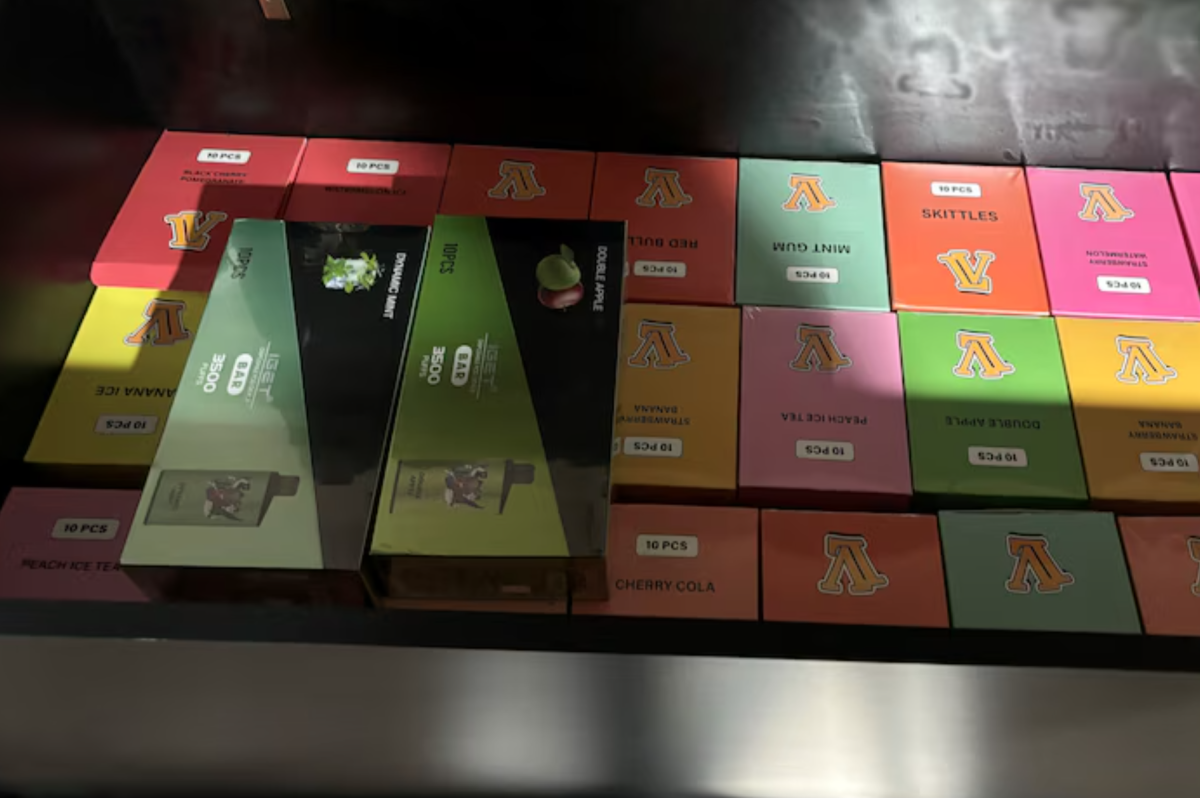
An organized crime group seized over 200,000 cigarettes, 16,000 e-cigarettes, 162 kilograms of illegal tobacco, and $55,950 in cash during a raid operation. Among the confiscated e-cigarette products were those of the brand IGET.


The police stated that the investigation into the seized items is still ongoing. Libby Jardine, Manager of "Make Smoking History" in Western Australia, told ABC that it is a positive step to see the government cracking down on illegal operators, but more work still needs to be done.


Due to comprehensive measures such as plain packaging, smoke-free zones, and increasing tobacco prices, the smoking rate in Western Australia continues to decline. However, more work is needed to discover and prosecute those selling illegal tobacco and e-cigarettes.


A series of new e-cigarette regulations will come into effect across all of Australia from July 1st.


From now until September, individuals who wish to purchase e-cigarettes for medical treatment purposes can only do so with a prescription.


Starting from October 1st, individuals over the age of 18 will be able to purchase e-cigarettes containing nicotine directly from pharmacies without a prescription. Those under the age of 18 will still require a prescription.


Jiading stated that the bill will play a crucial role in ensuring that e-cigarettes are not easily accessible.


It conveys to young people the message that e-cigarettes should only be used for therapeutic purposes in specific situations, and should not be considered socially acceptable behavior.


Therefore, strong enforcement action will be intensified to issue warnings to e-cigarette and illegal tobacco retailers.


We welcome news tips, article submissions, interview requests, or comments on this piece.

Please contact us at info@2firsts.com, or reach out to Alan Zhao, CEO of 2Firsts, on LinkedIn


Notice

1.  This article is intended solely for professional research purposes related to industry, technology, and policy. Any references to brands or products are made purely for objective description and do not constitute any form of endorsement, recommendation, or promotion by 2Firsts.

2.  The use of nicotine-containing products — including, but not limited to, cigarettes, e-cigarettes, nicotine pouchand heated tobacco products — carries significant health risks. Users are responsible for complying with all applicable laws and regulations in their respective jurisdictions.

3.  This article is not intended to serve as the basis for any investment decisions or financial advice. 2Firsts assumes no direct or indirect liability for any inaccuracies or errors in the content.

4.  Access to this article is strictly prohibited for individuals below the legal age in their jurisdiction.


Copyright


This article is either an original work created by 2Firsts or a reproduction from third-party sources with proper attribution. All copyrights and usage rights belong to 2Firsts or the original content provider. Unauthorized reproduction, distribution, or any other form of unauthorized use by any individual or organization is strictly prohibited. Violators will be held legally accountable.

For copyright-related inquiries, please contact: info@2firsts.com


AI Assistance Disclaimer


This article may have been enhanced using AI tools to improve translation and editorial efficiency. However, due to technical limitations, inaccuracies may occur. Readers are encouraged to refer to the cited sources for the most accurate information.

We welcome any corrections or feedback. Please contact us at: info@2firsts.com

KT&G’s Lil Strengthens Market Lead in Korea as Heated Tobacco Share Reaches 47.4%
According to South Korea’s UpKorea, KT&G’s heated tobacco brand Lil reached a 47.4% share of Korea’s heated tobacco stick market in the first quarter of 2026. The company is expanding its next-generation products (NGP) business through product development, technology investment and overseas growth. KT&G reported NGP sales of 890.1 billion won (approximately US$650 million) in 2025, up significantly from 279.3 billion won in 2020. Lil products are now available in 34 markets, while KT&G continues building its technology portfolio through patents and multiple product platforms.
Jul.23
Germany Expands Take-Back Rules for Disposable Vapes From July 1
Germany has expanded take-back obligations for disposable vapes from July 1, 2026, requiring consumers to be able to return used devices at stores that sell such products, including kiosks, petrol stations and vape shops, as e-cigarette regulation extends from sales to waste management and lithium-battery safety.
Market
Jul.06 by 2Firsts Perspectives
Indiana’s Foreign-Made Vape Ban Takes Effect, Forcing Brands and Retailers to Adjust Supply Chains
A new Indiana law restricting the sale of foreign-made vape products has taken effect, requiring retailers to adjust inventory and sourcing practices. According to The Sun, WDRB and other reports, some local vape shops are reviewing product origins and supplier information to comply with the new requirements. The measure represents a broader shift in U.S. vape regulation, with oversight expanding beyond product authorization and sales rules toward manufacturing origin and supply-chain management.
Jul.24
Research | Swedish Study Finds Oral Lesions in 79% of Examined Nicotine Pouch Users, With Distinct Tissue Responses
A new Swedish study found oral mucosal lesions in 79% of examined nicotine pouch users and 89% of tobacco-derived snus users, with different tissue-response patterns between the two categories. For manufacturers and regulators, the findings shift attention toward product formulation, flavouring, pouch materials and local oral exposure, not only whether a product contains tobacco. The study found no higher prevalence of caries or periodontal disease, but it could not establish causality, long-term outcomes or differences between individual products or designs.
Special Report
Jul.27
Special Report | Russia, Ukraine and Belarus Launch Fresh Push to Rein in Vaping
Russia, Ukraine and Belarus are tightening vape regulation through different tools, from Ukraine’s stronger enforcement push and Belarus’s proposed advertising restrictions to Russia’s new GOST standard and regional sales-ban mechanism. As black-market concerns persist, some Russian experts argue that China’s tightly controlled but legalised model — built around licensing, traceability and taxation — may offer a more effective alternative to blanket prohibition.
Jul.15
Putin Signs Russia’s Tobacco and Nicotine Product Licensing Law, Banning Unlicensed Sales From 2027
Russian President Vladimir Putin has signed a law introducing mandatory licensing for wholesale and retail trade in tobacco and nicotine-containing products, with the system taking effect on October 1, 2026, and unlicensed operations banned from March 1, 2027, while vape and e-liquid retail may also face uncertainty from temporary regional sales-ban powers.
Jul.01