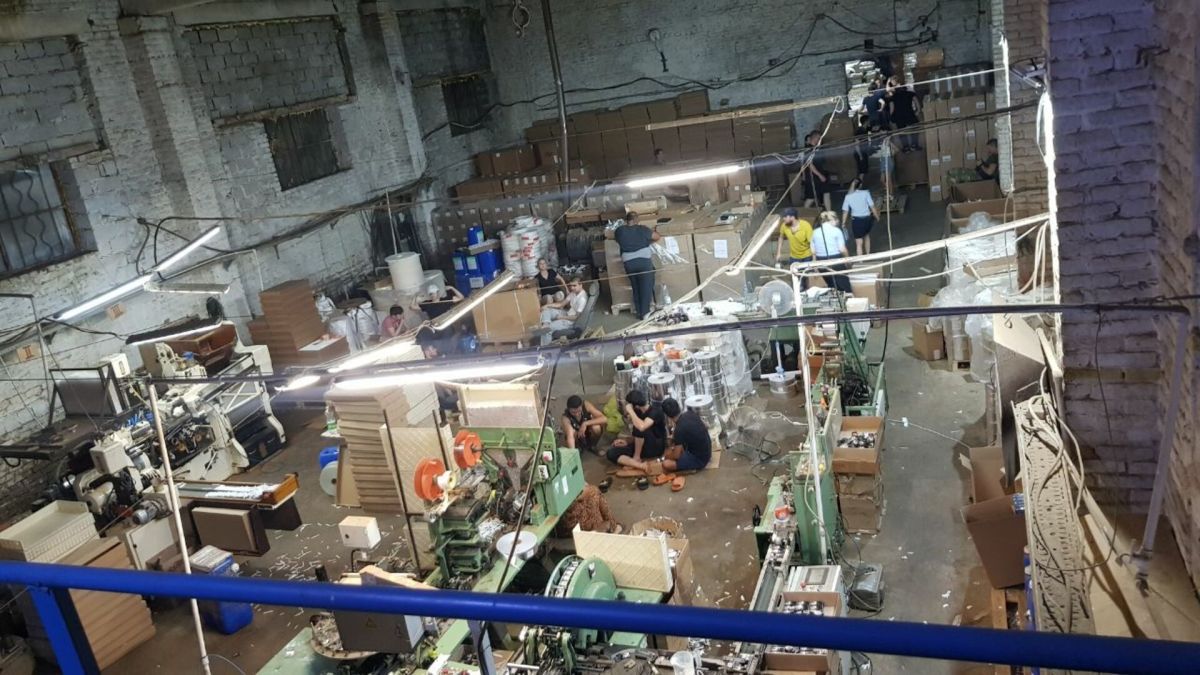
According to the Russian media outlet Newsland.com, on May 12, the Russian government has cracked down on the tobacco market over the past five years, successfully closing approximately 45 illegal tobacco factories and fully implementing a tobacco product labeling system. This is to strengthen market supervision and ensure the legal production and sale of tobacco products.
The operator of the "Honesty Label" tagging system stated that in the context of introducing labels, increasing tax revenues, and legal production quantities in the industry, Russia has closed about 45 illegal tobacco factories in the past five years.
Mikhail Dubin, head of the Advanced Technology Development Center, stated in an interview with the Russian News Agency that the labeling of tobacco products in the Russian market began in 2019. The labeling codes apply to cigarettes, e-cigarettes, disposable e-cigarettes, and other products. During this period, the budget revenue from tobacco products has "more than doubled.
During the implementation of this system, the country closed 45 illegal tobacco factories and legalized 18 production facilities. In addition, Russia today may be one of the very few (if not the only) countries in the world where all tobacco factories have been legalized. Tobacco products are labeled strictly according to the recommendations of the World Health Organization," Düben said.
We welcome news tips, article submissions, interview requests, or comments on this piece.
Please contact us at info@2firsts.com, or reach out to Alan Zhao, CEO of 2Firsts, on LinkedIn
Notice
1. This article is intended solely for professional research purposes related to industry, technology, and policy. Any references to brands or products are made purely for objective description and do not constitute any form of endorsement, recommendation, or promotion by 2Firsts.
2. The use of nicotine-containing products — including, but not limited to, cigarettes, e-cigarettes, nicotine pouchand heated tobacco products — carries significant health risks. Users are responsible for complying with all applicable laws and regulations in their respective jurisdictions.
3. This article is not intended to serve as the basis for any investment decisions or financial advice. 2Firsts assumes no direct or indirect liability for any inaccuracies or errors in the content.
4. Access to this article is strictly prohibited for individuals below the legal age in their jurisdiction.
Copyright
This article is either an original work created by 2Firsts or a reproduction from third-party sources with proper attribution. All copyrights and usage rights belong to 2Firsts or the original content provider. Unauthorized reproduction, distribution, or any other form of unauthorized use by any individual or organization is strictly prohibited. Violators will be held legally accountable.
For copyright-related inquiries, please contact: info@2firsts.com
AI Assistance Disclaimer
This article may have been enhanced using AI tools to improve translation and editorial efficiency. However, due to technical limitations, inaccuracies may occur. Readers are encouraged to refer to the cited sources for the most accurate information.
We welcome any corrections or feedback. Please contact us at: info@2firsts.com