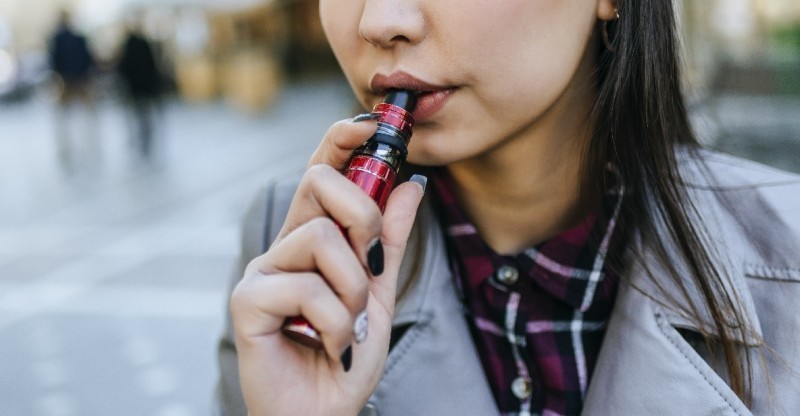
According to a report by South Korean media NEWS on April 29th, a recent study has shown that e-cigarettes may lower the chances of women becoming pregnant, similar to traditional cigarettes. The British women's health professional company "Heertility" collected and studied blood samples from 8340 women of various ages, and found that women who use either traditional cigarettes or e-cigarettes have lower levels of anti-Müllerian hormone (AMH).
Anti-Müllerian hormone is a marker used to assess ovarian reserve, indicating how many egg cells are stored in the ovaries and how many ovulations they can produce. It is also used to assess the likelihood of pregnancy. Specifically, women aged 36 to 40 who smoke have been found to have anti-Müllerian hormone levels around 20% lower than non-smokers of the same age.
The lead researcher of the study, Dr. Helen O'Neill, a lecturer in molecular genetics at University College London and founder of "Heterty," emphasized that in order to increase the likelihood of pregnancy, all potential obstacles should be avoided, including drugs, alcohol, and tobacco. She further emphasized that "it's not just about reducing the amount or frequency, completely quitting these bad habits is necessary to increase the chances of pregnancy."
However, even though e-cigarettes have less impact on health compared to traditional cigarettes, it does not necessarily mean that e-cigarettes can be used as a means to quit smoking. Recent research results have shown that e-cigarette users have a higher risk of heart disease compared to non-smokers.
We welcome news tips, article submissions, interview requests, or comments on this piece.
Please contact us at info@2firsts.com, or reach out to Alan Zhao, CEO of 2Firsts, on LinkedIn
Notice
1. This article is intended solely for professional research purposes related to industry, technology, and policy. Any references to brands or products are made purely for objective description and do not constitute any form of endorsement, recommendation, or promotion by 2Firsts.
2. The use of nicotine-containing products — including, but not limited to, cigarettes, e-cigarettes, nicotine pouchand heated tobacco products — carries significant health risks. Users are responsible for complying with all applicable laws and regulations in their respective jurisdictions.
3. This article is not intended to serve as the basis for any investment decisions or financial advice. 2Firsts assumes no direct or indirect liability for any inaccuracies or errors in the content.
4. Access to this article is strictly prohibited for individuals below the legal age in their jurisdiction.
Copyright
This article is either an original work created by 2Firsts or a reproduction from third-party sources with proper attribution. All copyrights and usage rights belong to 2Firsts or the original content provider. Unauthorized reproduction, distribution, or any other form of unauthorized use by any individual or organization is strictly prohibited. Violators will be held legally accountable.
For copyright-related inquiries, please contact: info@2firsts.com
AI Assistance Disclaimer
This article may have been enhanced using AI tools to improve translation and editorial efficiency. However, due to technical limitations, inaccuracies may occur. Readers are encouraged to refer to the cited sources for the most accurate information.
We welcome any corrections or feedback. Please contact us at: info@2firsts.com