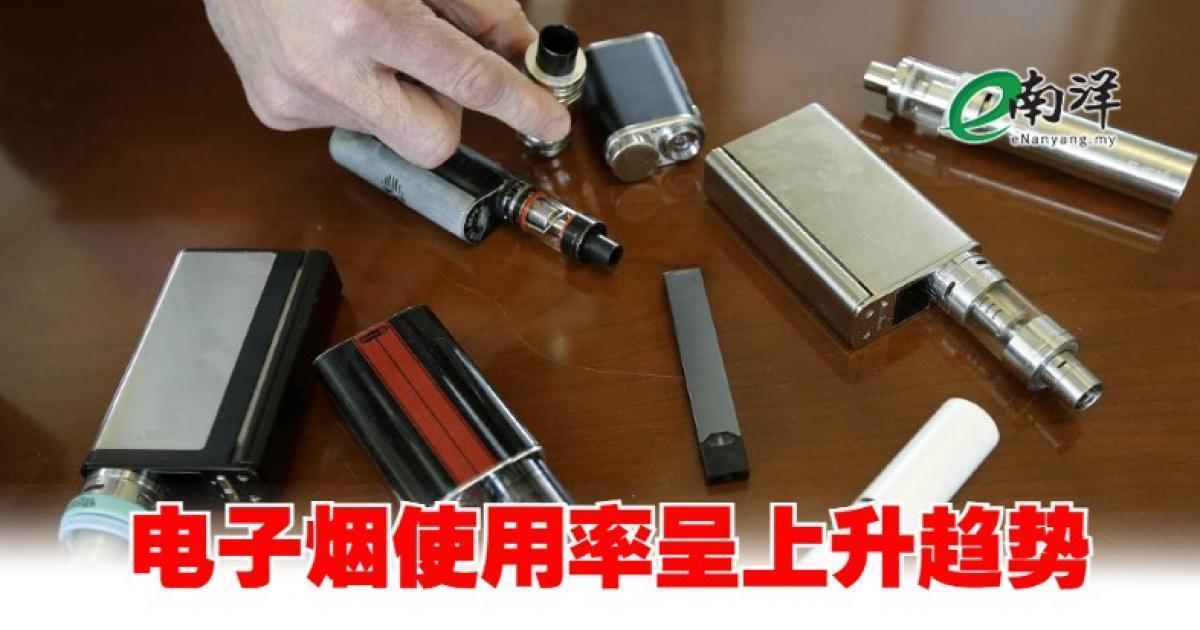
Increasing Trend of E-Cigarette Usage in Malaysia, Especially among Women

Market by 2FIRSTS.ai
Mar.14.2024
Increasing Trend of E-Cigarette Usage in Malaysia, Especially among Women
Malaysia's Health Ministry study shows rising e-cigarette usage, including among women. Ministry plans packaging regulations to combat trend.

According to a report by Sinarharian on March 14th, a new study released by the Malaysian Ministry of Health shows that the use of e-cigarettes in Malaysia is on the rise. It is notable that this trend also includes the female population.


Deputy Minister of Health Lukanisman Awangshoni stated that "Popularity data indicates that the use of e-cigarettes has increased, with e-cigarettes being seen as an increasingly popular product. At the same time, we have found that the number of female e-cigarette enthusiasts is also on the rise. Data from 2017 showed that the popularity rate among women was only 2.8%, but by 2022, the rate had increased by 6.2%."


The government is currently developing a packaging scheme that will be implemented based on the standards for the sale of tobacco and e-cigarette products, emphasized Lucanisman.


For example, the Ministry of Health issues regulations on e-cigarettes, industry-approved sales materials, and promotional activities (to combat smoking and e-cigarette use), in collaboration with the Ministry of Education. By promoting awareness in the early stages of education, children can be empowered to reject smoking and e-cigarette use.


The official stated that the Ministry of Health has had 129 interactions with non-governmental organizations and local authorities (PBT) to discuss appropriate enforcement policies.


We welcome news tips, article submissions, interview requests, or comments on this piece.

Please contact us at info@2firsts.com, or reach out to Alan Zhao, CEO of 2Firsts, on LinkedIn


Notice

1.  This article is intended solely for professional research purposes related to industry, technology, and policy. Any references to brands or products are made purely for objective description and do not constitute any form of endorsement, recommendation, or promotion by 2Firsts.

2.  The use of nicotine-containing products — including, but not limited to, cigarettes, e-cigarettes, nicotine pouchand heated tobacco products — carries significant health risks. Users are responsible for complying with all applicable laws and regulations in their respective jurisdictions.

3.  This article is not intended to serve as the basis for any investment decisions or financial advice. 2Firsts assumes no direct or indirect liability for any inaccuracies or errors in the content.

4.  Access to this article is strictly prohibited for individuals below the legal age in their jurisdiction.


Copyright


This article is either an original work created by 2Firsts or a reproduction from third-party sources with proper attribution. All copyrights and usage rights belong to 2Firsts or the original content provider. Unauthorized reproduction, distribution, or any other form of unauthorized use by any individual or organization is strictly prohibited. Violators will be held legally accountable.

For copyright-related inquiries, please contact: info@2firsts.com


AI Assistance Disclaimer


This article may have been enhanced using AI tools to improve translation and editorial efficiency. However, due to technical limitations, inaccuracies may occur. Readers are encouraged to refer to the cited sources for the most accurate information.

We welcome any corrections or feedback. Please contact us at: info@2firsts.com

Charlie’s Says 30 PACHA Vape SKUs Tentatively Identified for FDA’s Non-Priority Enforcement Public List
Charlie’s Holdings said the U.S. Food and Drug Administration notified the company on June 23, 2026, that 30 PACHA vape SKUs with submitted PMTAs had been tentatively identified for inclusion on a planned public-facing FDA webpage. Under enforcement guidance issued by FDA in May, the webpage is intended to identify certain unauthorized products for which the agency generally does not intend to prioritize enforcement of premarket authorization requirements. Charlie’s disclosed the development alongside second-quarter revenue of $3.8 million, up 116% year over year.
Aug.25
Special Report|AIR H1 Revenue Rises 3.7% as Shisha Volumes Fall 9%, Testing Its Shift Beyond Traditional Hookah
AIR’s first half-year results as a listed company offer a new test of how far a traditional hookah business can transform. H1 2026 revenue rose 3.7%, even as Flavored Shisha Molasses shipments fell 9%, with pricing and mix supporting growth. Traditional shisha still generates almost all revenue, while OOKA, Crown Switch, Greentank and U.S. regulatory spending point to accelerating diversification. The next test is whether those investments can become a second business of meaningful scale and profitability.
Capital Markets
Aug.21
Philippines Customs Seizes PHP11.68 Billion($200 Million) in Illegal Tobacco and Vapes in First Seven Months of 2026
Philippines Customs data showed that illegal cigarettes and vape products seized during the first seven months of 2026 were valued at about PHP11.68 billion, exceeding the PHP2.516 billion recorded for the full year of 2025. The figures were disclosed by a Bureau of Customs official during a House Committee on Ways and Means hearing on tobacco excise tax reforms. Vape-related seizures were valued at about PHP1.65 billion, with most cases recorded at the Manila International Container Port. Customs officials said enforcement against illicit tobacco trade would continue.
Aug.26
After Apple Business Decline, South Korea’s ITM Semiconductor Expands KT&G Vape Supply Chain as Vape Revenue Rises 24.8%
South Korean electronics component supplier ITM Semiconductor is reshaping its business portfolio after a decline in Apple-related protection circuit business, expanding its supply of vape devices and cartridges to KT&G. According to News1 on August 18, 2026, ITM’s vape-related revenue rose 24.8% year on year to 75.5 billion won in the first half of 2026. The company began mass production of vape devices at its Cikarang, Indonesia facility in January 2026, strengthening export manufacturing capacity. Meanwhile, Samsung-related protection circuit sales continued to grow, providing support during the transition.
Aug.20
BAT’s Velo Study Finds 61% of Nicotine Users Feel More Comfortable Expressing Themselves When Others Do the Same
British American Tobacco’s (BAT) nicotine pouch brand Velo has released a global consumer study and launched its “Echoes of Tomorrowland” campaign with electronic music festival brand Tomorrowland. The research surveyed 2,009 nicotine users across the UK, Spain, Pakistan, Poland and Austria. Velo said 61% of respondents feel more comfortable expressing themselves when they see others doing the same, while 39% said building meaningful connections becomes harder with age. The campaign reflects how nicotine pouch brands are increasingly using music, communities and lifestyle marketing to build consumer engagement.
Aug.10
Malaysia Withdraws Appeal Against Liquid Nicotine Ruling as Vape Regulation Framework Enters New Phase
Malaysia’s government has withdrawn its appeal against a High Court ruling concerning the regulatory status of liquid nicotine used in vape and e-cigarette products, according to reports by New Straits Times, Free Malaysia Today and CodeBlue on August 18, 2026. The Kuala Lumpur High Court ruled on May 15 that the government’s decision to remove liquid nicotine from the scheduled poisons list under the Poisons Act 1952 was irrational and made without proper consultation with the Poisons Board. The withdrawal ends the government’s appeal process, while the future regulatory framework for nicotine vape products remains under discussion.
Aug.21