According to a report by Talking Retail on September 13th, the UK e-cigarette advocacy group "We Vape" conducted tests in the constituencies of the Prime Minister and Health Secretary to discover whether illegal and unregulated e-cigarettes were being sold.
The founder of "We Vape," Mark Oates, stated that he was able to purchase e-cigarettes with a nicotine concentration of 5% in the constituencies of Keir Starmer's Holborn & St Pancras and Wes Streeting's Ilford North, which is more than double the 2% limit.
Oates also mentioned that the Tottenham constituency of Foreign Secretary David Lammy is a "hotbed" for illegal e-cigarettes, as he was able to purchase five of them in less than 30 minutes.
Otts said that this highlights the shocking failure of the Trade Standards Bureau when the Prime Minister is ready to announce the final Tobacco and E-Cigarette Act.
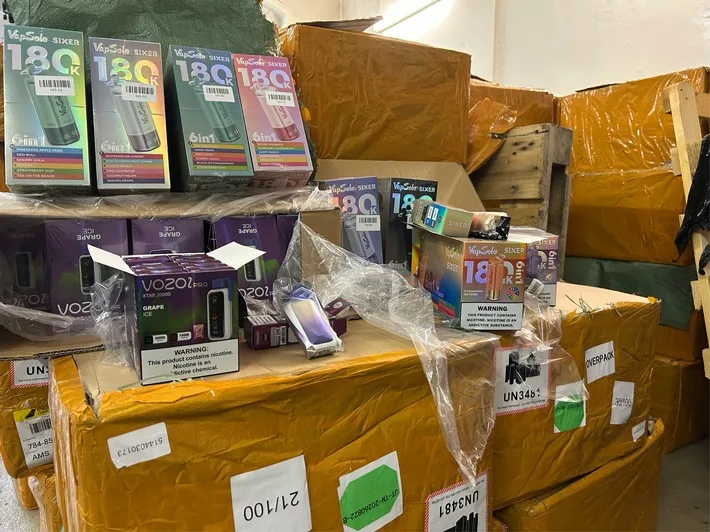
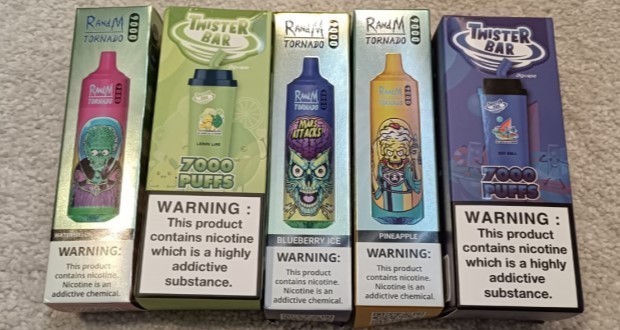
Our investigation has uncovered that the e-cigarette e-liquid tanks have a capacity that exceeds the 2ml limit by more than six times, with some capable of providing up to 7000 puffs. A regulated e-cigarette can typically deliver 600 to 1000 puffs.
We Vape" calls on the UK government to make three commitments:
The Medicines and Healthcare products Regulatory Agency (MHRA) conducts pre-market checks on all e-cigarettes before they are released to ensure they comply with UK laws and prevent illegal e-cigarettes from appearing on shelves first. We need a self-funded licensing system where retailers must pay a fee to sell e-cigarettes, with funds used to support trading standards. This model is similar to the alcohol industry, meaning hefty fines or closure will be imposed on repeat offenders selling illegal products or selling to minors. To protect flavors, which we know help smokers transition from traditional cigarettes to e-cigarettes, experts at the University of Bristol believe that nearly 39% of smokers would "smoke more or not quit" when switching to e-cigarettes, and 14% of former smokers would "revert back to smoking" if their preferred flavors were restricted.
I was able to easily purchase illegal e-cigarettes in the Prime Minister and Health Secretary's own constituencies, which is shocking and suggests that more needs to be done to prevent them from being sold in the first place.
All e-cigarettes should be legally required to undergo testing and certification before being allowed for sale, in order to comply with UK law. To be honest, the fact that this is not currently the case is truly unbelievable.
The pre-sale certification will give wholesalers and retailers peace of mind that the e-cigarettes they are selling are legal and will allow those that are illegal to be taken off the shelves. In addition to the licensing system for e-cigarette retailers, it will ensure that businesses selling illegal e-cigarettes or caught selling to children can have their licenses revoked. Incorporating these measures into the Tobacco and E-Cigarette Act will ensure that e-cigarettes remain an effective way to quit smoking while protecting e-cigarette users, retailers, and parents.
Otz continued by adding,
I am able to walk into one store after another and ask for the most powerful e-cigarette, only to be sold some already illegal items. This happens all day long. Most vendors hardly even hide it, becoming so bold due to the lack of enforcement of trading standards.
The Tobacco and E-cigarette Act promises to impose more restrictions on e-cigarettes, which will be meaningless in London's rampant black market industry and only fuel the black market. Removing products does not remove demand, and dealers are eager for further bans. The Labour Party must understand that e-cigarettes are an important tool to help people quit smoking, but illegal products and children's access must be stopped through enforcing existing laws, rather than creating more laws to help illegal traders and reduce smokers' attempts to quit.
We welcome news tips, article submissions, interview requests, or comments on this piece.
Please contact us at info@2firsts.com, or reach out to Alan Zhao, CEO of 2Firsts, on LinkedIn
Notice
1. This article is intended solely for professional research purposes related to industry, technology, and policy. Any references to brands or products are made purely for objective description and do not constitute any form of endorsement, recommendation, or promotion by 2Firsts.
2. The use of nicotine-containing products — including, but not limited to, cigarettes, e-cigarettes, nicotine pouchand heated tobacco products — carries significant health risks. Users are responsible for complying with all applicable laws and regulations in their respective jurisdictions.
3. This article is not intended to serve as the basis for any investment decisions or financial advice. 2Firsts assumes no direct or indirect liability for any inaccuracies or errors in the content.
4. Access to this article is strictly prohibited for individuals below the legal age in their jurisdiction.
Copyright
This article is either an original work created by 2Firsts or a reproduction from third-party sources with proper attribution. All copyrights and usage rights belong to 2Firsts or the original content provider. Unauthorized reproduction, distribution, or any other form of unauthorized use by any individual or organization is strictly prohibited. Violators will be held legally accountable.
For copyright-related inquiries, please contact: info@2firsts.com
AI Assistance Disclaimer
This article may have been enhanced using AI tools to improve translation and editorial efficiency. However, due to technical limitations, inaccuracies may occur. Readers are encouraged to refer to the cited sources for the most accurate information.
We welcome any corrections or feedback. Please contact us at: info@2firsts.com