Innovative Age Verification System for British E-Cigarette Retailers

Regulations by 2FIRSTS.ai
Sep.12.2024
Innovative Age Verification System for British E-Cigarette Retailers
British e-cigarette shops to use innovative AI app for accurate age estimation, reducing risk of fines up to £1500.

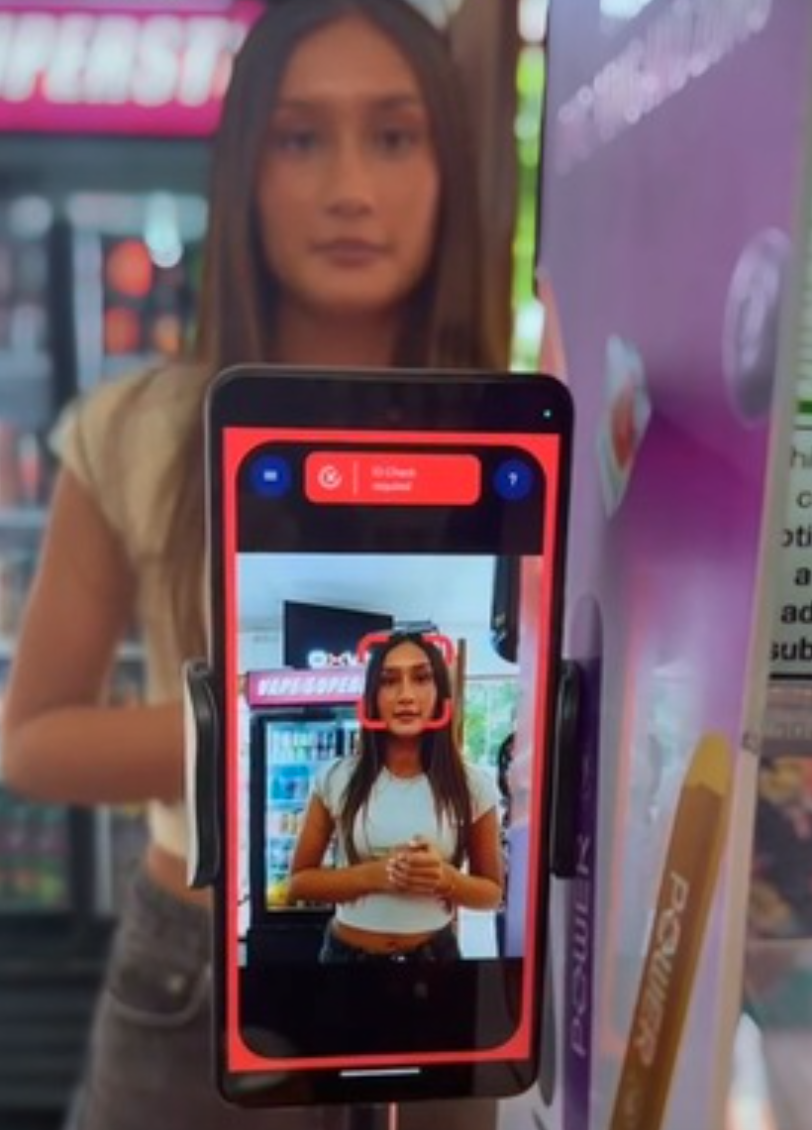
According to Response Source on September 12th, hundreds of independent e-cigarette stores in the UK will be using an innovative artificial intelligence application. This application reportedly provides automatic and highly accurate facial age estimation, eliminating guesswork in age verification and reducing the risk of fines up to £1500 for non-compliance.


Advocacy group OVA has partnered with British security technology company Privately SA to offer Privately's AgeAI age estimation system. The company claims that the AgeAI system is completely anonymous, does not transmit or store any images, and is certified under the UK's General Data Protection Regulation (GDPR). Its highly accurate age estimation capabilities help avoid costly fines, protect store employees by reducing unnecessary ID checks on adults, and mitigate conflict risks.


James Van Aalst of OVA stated that,


We hope to proactively ensure that our members make every effort to avoid selling e-cigarettes to minors. Privately, AgeAI is the ideal solution in our industry. The customized version of AgeAI that we offer is industry-leading and specifically designed for e-cigarette retailers. It operates at a very fast speed during checkout, significantly reducing friction between employees and customers, and is very easy to set up. AgeAI also automates 'decline registration,' making compliance monitoring for stores more convenient.


AgeAI has also received approval from the Peterborough City Council, including EAL3 certification and compliance testing with UK GDPR, and has also undergone trials in Europe and the United States.


Deepak Tewari, the CEO of Privately SA, stated that


The e-cigarette industry is currently highly fragmented and receiving significant attention, with an urgent need to crack down on sales to minors. Members of the OVA can now rest assured that they have an automated, accurate, and fast solution, allowing store employees to avoid conflicts that may arise from ID requests or customer refusals.


Automatic age verification is the first step in achieving online safety and providing a user experience appropriate for the age group. Currently, minors are easily able to access adult content, gambling websites, or purchase restricted products such as e-cigarettes, fireworks, alcohol, and cigarettes. This situation can happen with just a few clicks online, while in physical retail stores, ID checks and fake IDs can cause constant friction. Automation is an effective solution to these problems, and our technology is applicable to a wide range of scenarios - whether online or offline.


We welcome news tips, article submissions, interview requests, or comments on this piece.

Please contact us at info@2firsts.com, or reach out to Alan Zhao, CEO of 2Firsts, on LinkedIn


Notice

1.  This article is intended solely for professional research purposes related to industry, technology, and policy. Any references to brands or products are made purely for objective description and do not constitute any form of endorsement, recommendation, or promotion by 2Firsts.

2.  The use of nicotine-containing products — including, but not limited to, cigarettes, e-cigarettes, nicotine pouchand heated tobacco products — carries significant health risks. Users are responsible for complying with all applicable laws and regulations in their respective jurisdictions.

3.  This article is not intended to serve as the basis for any investment decisions or financial advice. 2Firsts assumes no direct or indirect liability for any inaccuracies or errors in the content.

4.  Access to this article is strictly prohibited for individuals below the legal age in their jurisdiction.


Copyright


This article is either an original work created by 2Firsts or a reproduction from third-party sources with proper attribution. All copyrights and usage rights belong to 2Firsts or the original content provider. Unauthorized reproduction, distribution, or any other form of unauthorized use by any individual or organization is strictly prohibited. Violators will be held legally accountable.

For copyright-related inquiries, please contact: info@2firsts.com


AI Assistance Disclaimer


This article may have been enhanced using AI tools to improve translation and editorial efficiency. However, due to technical limitations, inaccuracies may occur. Readers are encouraged to refer to the cited sources for the most accurate information.

We welcome any corrections or feedback. Please contact us at: info@2firsts.com

Malaysia Reviews Possible Refund of $92 Million in Vape Taxes After Court Rules 2023 Nicotine Exemption Unlawful
Malaysia's Ministry of Finance said in a written parliamentary reply on November 17, 2026, that it was examining whether a court ruling concerning the country's 2023 liquid-nicotine exemption affected the legal basis for vape excise duties already collected. Royal Malaysian Customs Department records show that the government has collected RM377.08 million (approximately $92 million) in vape-related excise duties since May 2023, with the proceeds transferred to the federal Consolidated Fund. In May, the Kuala Lumpur High Court ruled that the 2023 decision to exempt liquid and gel nicotine used in vaping products from the Poisons List was unlawful. The government withdrew its appeal in August but has not decided whether the taxes should be refunded. The Finance Ministry is also seeking the Health Ministry's position on future vaping regulation.
Regulations
Nov.19
Japan's Heated Tobacco Use Rises From 0.1% to 14.9% Over a Decade as Growth Extends Beyond Cigarette Switching
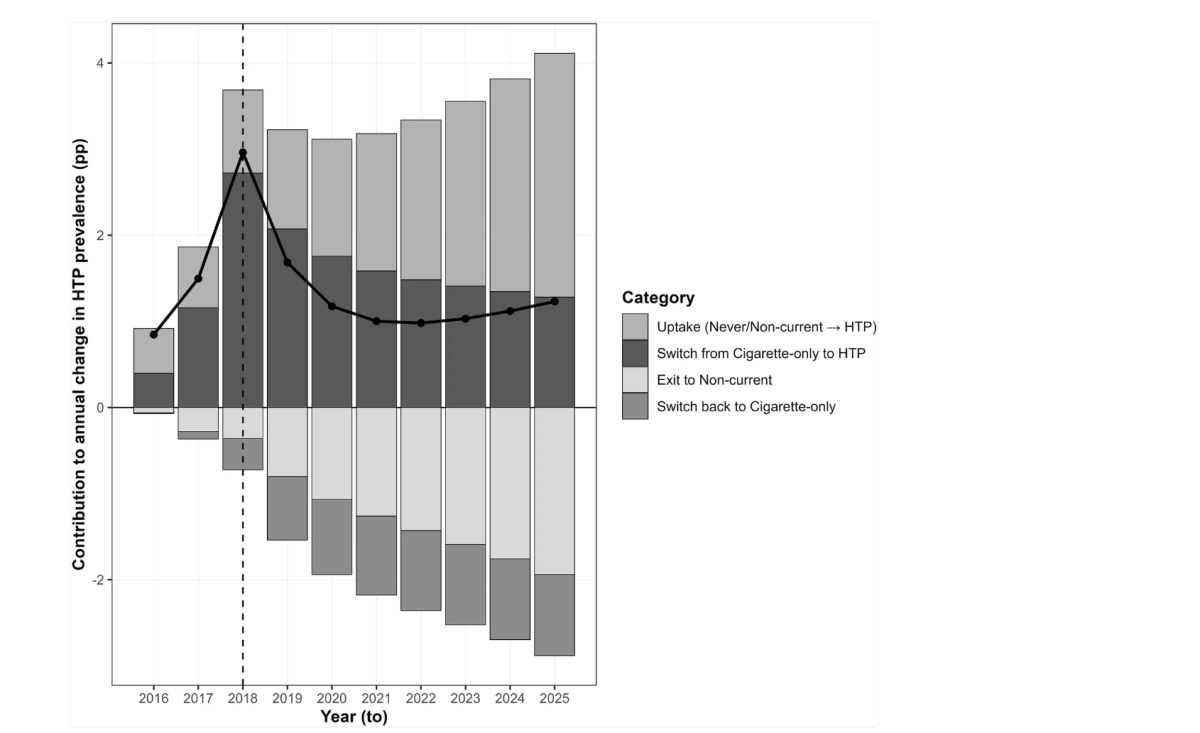
A decade-long study published in The Lancet Regional Health – Western Pacific found that heated tobacco product use in Japan increased from 0.1% in 2015 to 14.9% in 2025, although growth slowed after 2018. Switching from conventional cigarettes remained an important source of HTP uptake, while the contribution from previously non-current users increased. Approximately 56% of HTP users also smoked conventional cigarettes in 2025. Separate industry data show that Japan's heated tobacco sales reached 73.4 billion units in fiscal 2025, approaching conventional cigarette sales of 78.2 billion units.
SCIENCE
Nov.10
Russia's Vape Ban Decisions Reach 17 Regions With 39 More Considering Laws, Putting Over 3,000 St. Petersburg Retail Outlets in Focus
Russia's regional vape retail restrictions are expanding. State Duma Speaker Vyacheslav Volodin said on November 7 that 17 regions had adopted decisions to ban vape sales, while another 39 were preparing or considering similar legislation. On November 12, lawmakers in Leningrad Oblast and the Republic of Karelia adopted bans scheduled to begin on March 1, 2027. A day earlier, St. Petersburg unanimously approved a five-year ban proposal in its first reading. The city has 615 specialist vape shops and more than 2,400 other retail outlets selling vaping products alongside other goods. Under Federal Law No. 186-FZ, enacted in June 2026, Russian regions may prohibit retail sales of electronic nicotine delivery systems and related liquids between March 2027 and March 2032. The legislation also restricts licensed suppliers from delivering covered products to retail premises in regions where bans apply.
Regulations
Nov.13
Russia's State Duma Passes Tobacco and Nicotine Ingredient Disclosure Bill, Targeting 2027 End to Trade-Secret Protection for Certain Harmful Ingredient Data
Russia's State Duma passed a government-sponsored amendment on November 11, 2026, by 414 votes to none, seeking to prevent businesses from classifying information on the presence and number of types of certain harmful ingredients in tobacco and nicotine-containing products as trade secrets. The measure covers ingredients capable of increasing nicotine dependence or exhibiting toxic, carcinogenic, mutagenic or reproductive toxicity, including substances that acquire such properties during heating or smoldering. Bill No. 1286415-8 would amend Article 5 of Federal Law No. 98-FZ on Commercial Secrets and is scheduled to take effect on January 1, 2027. The bill has cleared all three readings in the State Duma but has not completed the remaining legislative procedures.
Regulations
Nov.12 by 2Firsts Perspectives
PMI Expands Its Second Global and First Asian Business Services Hub in the Philippines, Serving 160 Markets and Scaling Up AI Capabilities
Philip Morris International's PMI Business Solutions Philippines has expanded its global business services hub in Makati and plans to add more than 80 positions. Established in 2021 primarily to provide finance and IT support to about 20 markets, the center now employs 519 professionals delivering roughly 600 services across 160 markets. Its functions now span finance, human resources, IT, commercial operations, data analytics, supply chain and project management. PMI says the hub's next phase will focus on AI-enabled and higher-value work. The company did not disclose the size or investment cost of the expansion.
Sep.24
South Korea Extends Vape Rules to Unmanned Stores After Bringing Synthetic Nicotine Under Tobacco Law
South Korea's Ministry of Gender Equality and Family said on September 14 that it plans to designate unmanned e-cigarette stores as businesses where minors are prohibited from entering or working. Operators would be required to verify customers' ages and display notices restricting access by minors. The proposal is open for public comment through October 6. The move follows an April expansion of South Korea's statutory tobacco definition that brought products made with natural or synthetic nicotine under the Tobacco Business Act. Nicotine-free liquids and products using nicotine analogues such as 6-methylnicotine, however, remain an emerging regulatory issue.
Sep.21