India survey shows 92% back smoke-free public spaces

Oct.30.2024
India survey shows 92% back smoke-free public spaces
India survey shows 92% support smoke-free zones in public spaces, including airports and upscale restaurants, prompting the government to consider legal revisions in response to public demand.

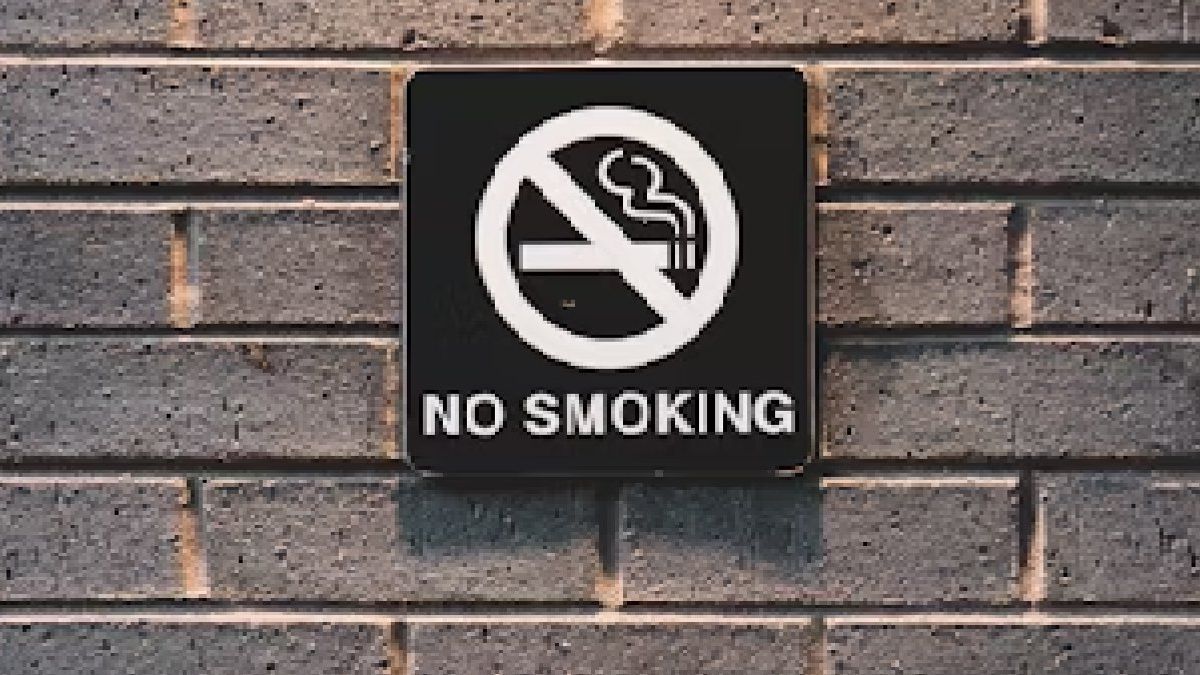
A major survey conducted by Smoke-Free India with over 65,000 respondents revealed that 92% of Indians support the implementation of smoke-free areas in public places, including airports and upscale restaurants, according to an October 29 Oneindia report.


Dr. Uma Kumar, Head of the Department of Rheumatology at the All India Institute of Medical Sciences in New Delhi, pointed out important shortcomings in current public health policy.


She noted that while the Cigarettes and Other Tobacco Products Act (COTPA) of 2003 bans smoking in public places, it still allows designated smoking areas in airports, hotels with more than thirty rooms, and restaurants with more than thirty seats. Although railway stations are completely smoke-free, 97% of survey respondents would like to see airports go completely smoke-free.


The Ministry of Health and Family Welfare has taken note of the public's opposition to smoking areas and is considering revising COTPA to completely eliminate these zones.
 

We welcome news tips, article submissions, interview requests, or comments on this piece.

Please contact us at info@2firsts.com, or reach out to Alan Zhao, CEO of 2Firsts, on LinkedIn


Notice

1.  This article is intended solely for professional research purposes related to industry, technology, and policy. Any references to brands or products are made purely for objective description and do not constitute any form of endorsement, recommendation, or promotion by 2Firsts.

2.  The use of nicotine-containing products — including, but not limited to, cigarettes, e-cigarettes, nicotine pouchand heated tobacco products — carries significant health risks. Users are responsible for complying with all applicable laws and regulations in their respective jurisdictions.

3.  This article is not intended to serve as the basis for any investment decisions or financial advice. 2Firsts assumes no direct or indirect liability for any inaccuracies or errors in the content.

4.  Access to this article is strictly prohibited for individuals below the legal age in their jurisdiction.


Copyright


This article is either an original work created by 2Firsts or a reproduction from third-party sources with proper attribution. All copyrights and usage rights belong to 2Firsts or the original content provider. Unauthorized reproduction, distribution, or any other form of unauthorized use by any individual or organization is strictly prohibited. Violators will be held legally accountable.

For copyright-related inquiries, please contact: info@2firsts.com


AI Assistance Disclaimer


This article may have been enhanced using AI tools to improve translation and editorial efficiency. However, due to technical limitations, inaccuracies may occur. Readers are encouraged to refer to the cited sources for the most accurate information.

We welcome any corrections or feedback. Please contact us at: info@2firsts.com

Earnings Analysis | CTIHK H1 2026 Revenue Falls 26.9% as Core Businesses Diverge and New Growth Drivers Remain to Be Proven
China Tobacco International (HK) reported a 26.9% revenue decline in H1 2026, while gross profit fell only 9.5%, revealing sharp divergence across its businesses. Tobacco leaf imports contracted, while leaf exports and Brazil operations expanded strongly. Cigarette exports faced China duty-free market transition, and new tobacco products remained small. Meanwhile, CTIHK continues to strengthen its role as an investment and financing platform, though major external deals have yet to emerge. 2Firsts examines what these shifts mean for its next growth drivers.
Capital Markets
Aug.24
Trump Picks White House Health Policy Aide Heidi Overton to Lead FDA, Pending Senate Confirmation
U.S. President Donald Trump has chosen White House health policy aide Heidi Overton to lead the Food and Drug Administration, Bloomberg reported, citing a person familiar with the matter. Overton currently works on health policy at the White House and previously held a senior role at the America First Policy Institute. If confirmed by the Senate, she would take over an FDA that has experienced months of senior-level turnover. The agency regulates products representing roughly one-fifth of U.S. consumer spending, including e-cigarettes, drugs, vaccines and much of the food supply.
News
Aug.19
BAT Regional Director Fred Monteiro Supports Spain’s Nicotine Rules but Opposes 0.99mg Nicotine Pouch Limit
Spanish newspaper El Confidencial interviewed Fred Monteiro, Regional Director for Americas and Europe at British American Tobacco (BAT). Monteiro said BAT supports setting regulatory limits for nicotine products but opposes Spain’s proposed 0.99mg nicotine-per-pouch limit, arguing that such a restriction could affect adult smokers’ transition to alternatives. He said nicotine regulation should be based on scientific evidence and harm reduction principles. Monteiro also said smoke-free products now account for around 25% of BAT’s Americas and Europe business and nearly 30% of its Europe business
BAT
Jul.30
BAT Expands ITC Infotech Partnership Across Poland, Romania and India to Advance AI
ITC Infotech has expanded its multi-year strategic technology partnership with British American Tobacco (BAT), providing technology services across Poland, Romania and India while continuing to support BAT's newly launched Future Capabilities Centre in India and existing technology hubs in Malaysia and Mexico. The companies said the agreement will focus on AI-enabled innovation, technology capability building and greater operational efficiency. The partnership also aligns with BAT's broader Fit2Win transformation programme, under which the group is expanding the use of external technology and business-services partners to simplify its global operating model.
Aug.13
South Korea Vape Strategies Diverge as BAT Reconsiders Exit and PMI Takes VEEV to About 14,000 Stores
BAT Rothmans says it previously considered exiting South Korea's vaping market because of competitive pressure from unregulated products, but is now reassessing conditions following changes to the country's nicotine regulatory framework. Vuse and other BAT vaping products remain available through existing distribution channels. The statement followed a South Korean media report that interpreted BAT's broader withdrawal from selected Vapour markets as a full exit from South Korea. Meanwhile, Philip Morris International launched VEEV inPRIME in the country in June and began expanding distribution to around 14,000 convenience stores and other retail channels in July. The contrasting moves highlight differing investment strategies as South Korea's regulated vaping market evolves.
Aug.14
Florida Governor DeSantis Expands TANF Restrictions, Blocking Welfare Benefits From Buying Tobacco and Vapes
Florida Governor Ron DeSantis announced an expansion of Temporary Assistance for Needy Families (TANF) restrictions that would prohibit Electronic Benefit Transfer (EBT) funds from being used to purchase tobacco and vaping products. The state will amend its TANF State Plan and submit the changes for federal approval. Florida officials said the restrictions would not affect eligibility for temporary cash assistance or the amount of benefits received, but would change how funds can be spent.
Aug.25