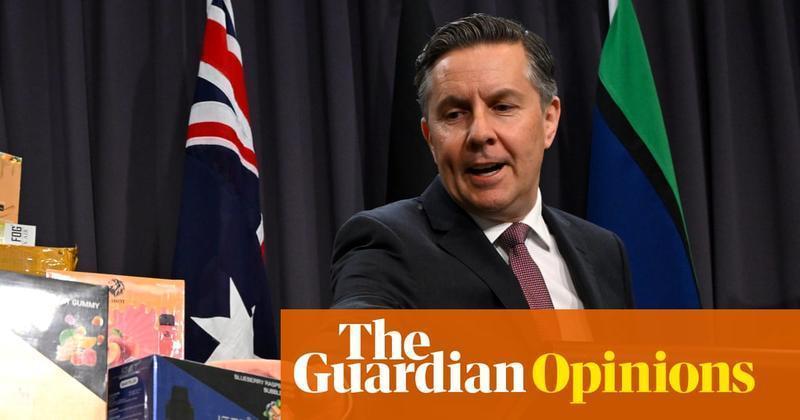
According to The Guardian on May 26th, the Australian Medical Association is pushing for parliament in Canberra to pass legislation to combat e-cigarette use. The bill is expected to be voted on in June. The ban proposed by the Australian Labor Party on the import and commercial ownership of e-cigarettes is facing obstacles.
According to reports, the Australian National Party is hoping to legislate similar restrictions on e-cigarette behavior as tobacco, without the need for a prescription, while also enforcing the same regulations on packaging and taxes. The Australian Liberal Party sometimes allows its smaller coalition partners to dictate the course, and Peter Dutton has expressed dissatisfaction with the ban. However, the party's Minister for Market Education, Sarah Henderson, and others have publicly criticized e-cigarette behavior, describing it as a "menace" in schools.
Overall, crossing party lines and working with the Greens is often the safest route in the Senate. In May of this year, the Greens' health spokesperson Jordon Steele-John agreed with a recent survey report that the bill should be passed. However, he cautioned in other comments that the Greens do not "support banning e-cigarettes for adults."
This may include revising laws to ensure that individuals are not criminalized for possession, providing adequate support for smoking cessation, and restricting advertising of e-cigarettes to doctors. The party will decide on its stance in the next two weeks.
According to reports, the President of the Australian Medical Association, Steve Robson, has given a direct message to lawmakers who "seem more willing to listen to tobacco lobbying groups and political donors than to parents, health departments, and children." He stated, "We hope to encourage the opposition party and others to do the right thing, not listen to donors, and protect Australia's children from the dangers of e-cigarettes.
He expressed being "shocked" and "disappointed" to reporters in Canberra, as the National Party is seeking to tax e-cigarettes instead of banning non-prescription e-cigarettes. He also posed serious questions to the Greens party.
He believes, "The Green Party is a political party that places the future of the next generation at the core of its policies, which is obviously something they should support, if they truly prioritize the health and well-being of children.
Robson asked Health Minister Mark Butler if the regulation of e-cigarettes is stricter than tobacco, despite the latter being more harmful. In order to prevent this situation, is it possible that restrictions on tobacco based on birth year, similar to what New Zealand has attempted, may be implemented.
Butler said at the National Press Club conference in May 2023 that the difference is that "tobacco has been with us for too long," while e-cigarettes are still "relatively new." He said, "If we knew then what we know now about the introduction of tobacco, I hope the government would have taken immediate action, just as I now want to tackle e-cigarettes. We have an opportunity now, with e-cigarettes becoming so widespread, accepted, and normalized...to seize this moment before taking any action becomes extremely difficult.
Everyone agrees that children should not use e-cigarettes, but that does not mean burdening legislation with the most stringent possible methods. If the goal is not to criminalize a particular group of individuals, then the relevant laws should be revised to ensure that this does not happen. If we had known the current situation when introducing tobacco, the government may have immediately banned tobacco, just as it is now aiming to address e-cigarettes.
We welcome news tips, article submissions, interview requests, or comments on this piece.
Please contact us at info@2firsts.com, or reach out to Alan Zhao, CEO of 2Firsts, on LinkedIn
Notice
1. This article is intended solely for professional research purposes related to industry, technology, and policy. Any references to brands or products are made purely for objective description and do not constitute any form of endorsement, recommendation, or promotion by 2Firsts.
2. The use of nicotine-containing products — including, but not limited to, cigarettes, e-cigarettes, nicotine pouchand heated tobacco products — carries significant health risks. Users are responsible for complying with all applicable laws and regulations in their respective jurisdictions.
3. This article is not intended to serve as the basis for any investment decisions or financial advice. 2Firsts assumes no direct or indirect liability for any inaccuracies or errors in the content.
4. Access to this article is strictly prohibited for individuals below the legal age in their jurisdiction.
Copyright
This article is either an original work created by 2Firsts or a reproduction from third-party sources with proper attribution. All copyrights and usage rights belong to 2Firsts or the original content provider. Unauthorized reproduction, distribution, or any other form of unauthorized use by any individual or organization is strictly prohibited. Violators will be held legally accountable.
For copyright-related inquiries, please contact: info@2firsts.com
AI Assistance Disclaimer
This article may have been enhanced using AI tools to improve translation and editorial efficiency. However, due to technical limitations, inaccuracies may occur. Readers are encouraged to refer to the cited sources for the most accurate information.
We welcome any corrections or feedback. Please contact us at: info@2firsts.com