Brazilian Authorities Crack Down on Illegal E-Cigarette Sales Operation

Nov.12.2024
Brazilian Authorities Crack Down on Illegal E-Cigarette Sales Operation
Brazilian police crack down on illegal e-cigarette sales in joint operation in Cuiabá and Várzea Grande, seizing products and making arrests.

According to a report by Circuitomt on November 11th, Brazilian police conducted a joint operation on Monday (the 11th) in Cuiabá and Várzea Grande through the Consumer Protection Special Department (Decon) and the consumer protection agency of Mato Grosso (Procon) aimed at cracking down on the illegal sale of e-cigarette devices.
 

Brazilian Authorities Crack Down on Illegal E-Cigarette Sales Operation
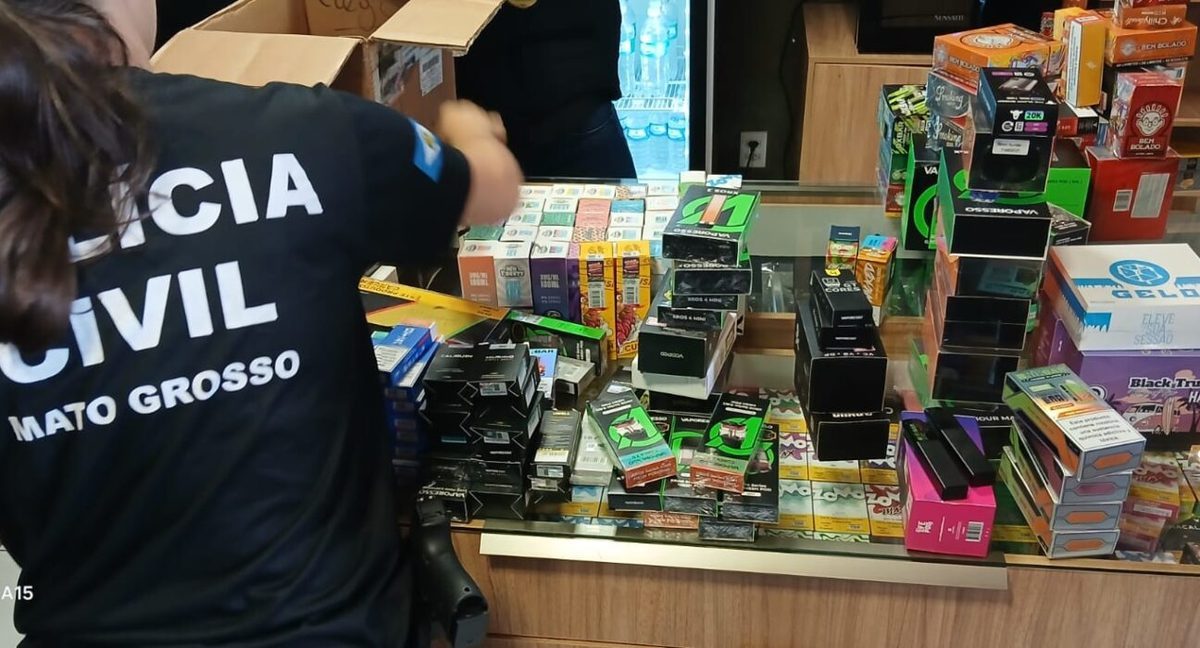
Brazilian police seized hundreds of illegal e-cigarette devices. | Image source: Circuitomt


Brazilian Authorities Crack Down on Illegal E-Cigarette Sales Operation
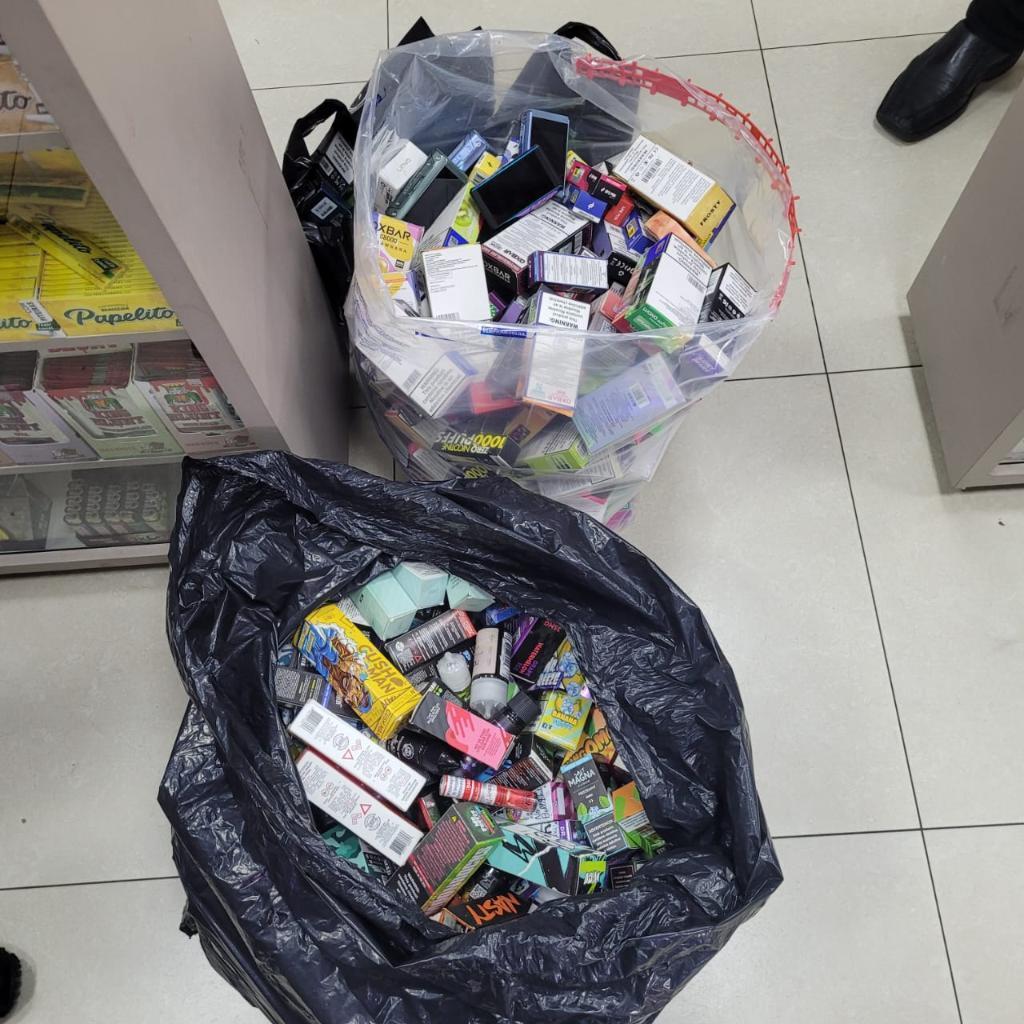
Brazilian police have seized related e-liquid and accessories. |Image Source: Circuitomt


Brazilian Authorities Crack Down on Illegal E-Cigarette Sales Operation
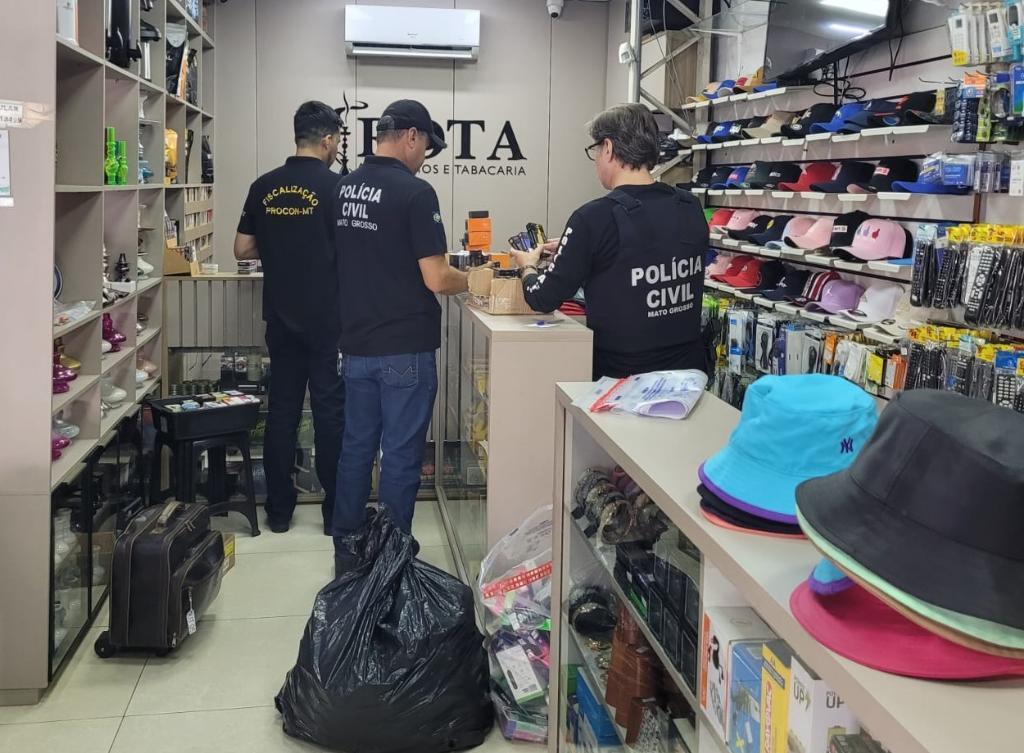
Brazilian police are conducting a law enforcement operation at a store. (Source: Circuitomt)


Police have discovered that five stores in Kuyaba and one store in Valzea Grande are selling e-cigarettes, pods, and other devices, as well as related e-liquids and accessories. Authorities confiscated hundreds of e-cigarettes, e-liquids, and related accessories, and arrested four individuals engaged in illegal sales activities on the spot. The seized products include e-cigarettes from the brand "VAPORESSO".


The head of Decon, Rogério Ferreira, stated that the police have initiated a criminal investigation against the owners and managers of the shops under inspection. He pointed out that those responsible for illegal commercial activities could face up to 5 years in prison and fines, while state consumer protection agencies have also imposed administrative penalties on these businesses.


We welcome news tips, article submissions, interview requests, or comments on this piece.

Please contact us at info@2firsts.com, or reach out to Alan Zhao, CEO of 2Firsts, on LinkedIn


Notice

1.  This article is intended solely for professional research purposes related to industry, technology, and policy. Any references to brands or products are made purely for objective description and do not constitute any form of endorsement, recommendation, or promotion by 2Firsts.

2.  The use of nicotine-containing products — including, but not limited to, cigarettes, e-cigarettes, nicotine pouchand heated tobacco products — carries significant health risks. Users are responsible for complying with all applicable laws and regulations in their respective jurisdictions.

3.  This article is not intended to serve as the basis for any investment decisions or financial advice. 2Firsts assumes no direct or indirect liability for any inaccuracies or errors in the content.

4.  Access to this article is strictly prohibited for individuals below the legal age in their jurisdiction.


Copyright


This article is either an original work created by 2Firsts or a reproduction from third-party sources with proper attribution. All copyrights and usage rights belong to 2Firsts or the original content provider. Unauthorized reproduction, distribution, or any other form of unauthorized use by any individual or organization is strictly prohibited. Violators will be held legally accountable.

For copyright-related inquiries, please contact: info@2firsts.com


AI Assistance Disclaimer


This article may have been enhanced using AI tools to improve translation and editorial efficiency. However, due to technical limitations, inaccuracies may occur. Readers are encouraged to refer to the cited sources for the most accurate information.

We welcome any corrections or feedback. Please contact us at: info@2firsts.com

Ohio Supreme Court Weighs Whether State Consumer Law Can Restrict Flavored Vape Sales
The Ohio Supreme Court is hearing a case involving flavored vape sales and whether state authorities can use consumer protection laws to take action against retailers selling unauthorized vape products. Ohio officials argue that selling unauthorized flavored vapes may constitute consumer deception, while retailers argue that tobacco product regulation falls under federal Food and Drug Administration (FDA) authority and that states cannot impose additional restrictions through consumer laws. The case could affect the scope of state-level vape regulation across the United States.
Aug.06
Kantar Study Finds More Than 93% of Vape Products in Ukraine Fail Regulatory Requirements
According to Interfax-Ukraine, a study conducted by market research firm Kantar Ukraine at the request of major tobacco companies found that more than 93% of vape products in Ukraine did not fully comply with regulatory requirements. The research examined product categories, brand distribution and consumer purchasing channels, showing that pod systems and disposable vapes represent major segments of the market, while offline retail remains the dominant purchasing channel. The findings highlight ongoing compliance challenges in Ukraine’s vape market.
Aug.26
FDA Authorizes Four More Nicotine Pouches as Review Pilot Expands Beyond Initial Decisions
The FDA has authorized four additional on! nicotine pouches, bringing the U.S. total to 30. The decision marks another outcome of the agency’s nicotine pouch review pilot, whose communication and review practices are now being applied more broadly across the category. It also extends Helix’s authorized portfolio from on! PLUS to the earlier on! line. Yet all FDA-authorized nicotine pouches still come from subsidiaries of PMI or Altria, underscoring how concentrated U.S. regulatory access remains.
Aug.05
Product | JT Refreshes Ploom CUBE Design and Expands Japan Retail Distribution, Targeting Younger Men and Female Users
Japan Tobacco (JT) launched a refreshed Ploom CUBE design in Japan on September 8, 2026, with broader convenience-store and tobacco-retail distribution planned from October 13. The updated device retains the existing Rounded Cube form and heating platform while replacing four previous body colors with Pebble White and Cobalt Black. JT is also introducing new Front Panels and Fabric Back Covers, although the new accessories are not compatible with the previous Ploom CUBE design. The company says the update is intended to broaden appeal among younger male and female users.
Sep.09
Australian Coalition Taskforce Calls for 80% Tobacco Tax Cut to Combat Illicit Market
According to SGST on August 26, 2026, Australia’s Coalition Illegal Tobacco Taskforce released a report recommending an up to 80% cut in tobacco excise to reduce the appeal of the illicit tobacco market. The report claimed organised crime groups now control about 80% of Australia’s tobacco market and argued that high excise rates have widened the price gap between legal and illegal products. The recommendation remains a policy proposal and has not been adopted by the Australian government, which said its focus remains on enforcement, compliance and additional resources.
Aug.27
CCPIT Says Trade Friction Index for China-Related Electronics Sector Remains High, With Vape Products Among Areas of Focus
China Council for the Promotion of International Trade (CCPIT) held its July regular press conference on July 31, 2026, releasing the May 2026 Global Economic and Trade Friction Index. CCPIT spokesperson Yang Fan said the global trade friction index stood at 95 in May, remaining at a medium-to-high level. By industry, the electronics sector recorded the highest trade friction index among 13 monitored industries. In China-related trade frictions, the index stood at 93, with electronics products including drones, chips and vape products among areas where friction remained elevated.
Aug.03