Brazilian Police Crack Down on Illegal E-Cigarette Sales in Santa Catarina

Sep.11.2024
Brazilian Police Crack Down on Illegal E-Cigarette Sales in Santa Catarina
Brazilian police in Santa Catarina crackdown on illegal e-cigarette sales, seizing over 1,700 devices and arresting 17 individuals.

According to Click Camboriu on September 10th, the police of Santa Catarina state in Brazil, along with the Criminal Investigation Police (DIC) of Balneário Camboriú and Itajaí, have joined forces in an operation aimed at combating the illegal sale of e-cigarettes in the region.


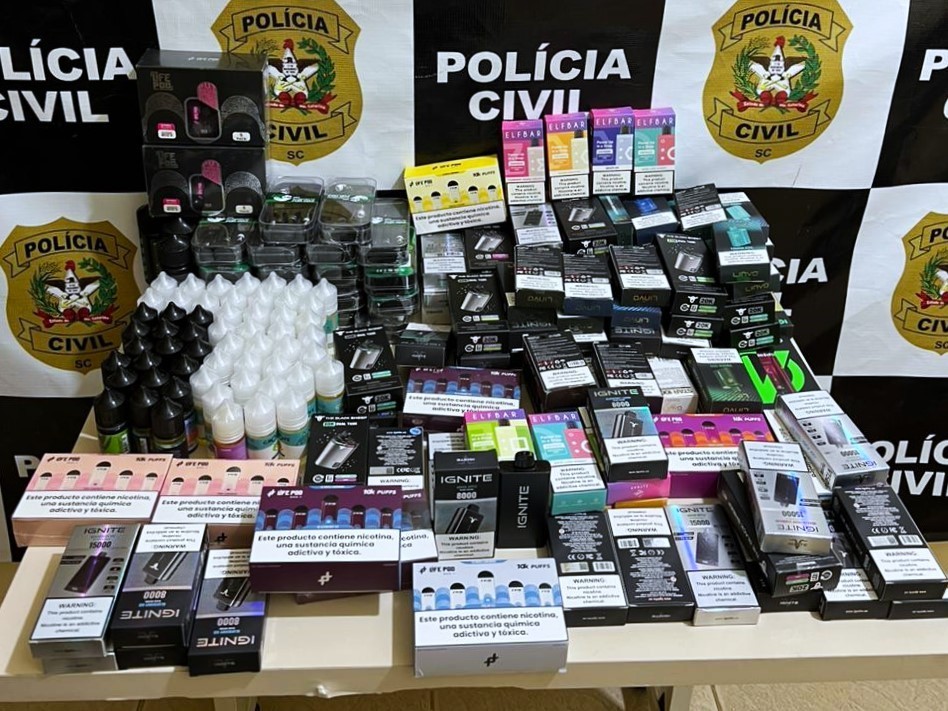
The first operation took place on September 6th in a nightclub on Brava Beach, where a total of 98 e-cigarettes were confiscated and 6 people were arrested. The second operation, which occurred on September 10th in Balneário Camboriú, resulted in the seizure of 1,663 e-cigarettes, 363 e-cigarette refills, and a firearm. Additionally, 11 individuals were arrested. Among the confiscated e-cigarette products were those bearing multiple brand logos, including "ELFBAR" and "IGNITE.


The arrested individual was charged on the spot for violating laws related to consumer relations, and has since been sent to the prison system awaiting judicial processing.


We welcome news tips, article submissions, interview requests, or comments on this piece.

Please contact us at info@2firsts.com, or reach out to Alan Zhao, CEO of 2Firsts, on LinkedIn


Notice

1.  This article is intended solely for professional research purposes related to industry, technology, and policy. Any references to brands or products are made purely for objective description and do not constitute any form of endorsement, recommendation, or promotion by 2Firsts.

2.  The use of nicotine-containing products — including, but not limited to, cigarettes, e-cigarettes, nicotine pouchand heated tobacco products — carries significant health risks. Users are responsible for complying with all applicable laws and regulations in their respective jurisdictions.

3.  This article is not intended to serve as the basis for any investment decisions or financial advice. 2Firsts assumes no direct or indirect liability for any inaccuracies or errors in the content.

4.  Access to this article is strictly prohibited for individuals below the legal age in their jurisdiction.


Copyright


This article is either an original work created by 2Firsts or a reproduction from third-party sources with proper attribution. All copyrights and usage rights belong to 2Firsts or the original content provider. Unauthorized reproduction, distribution, or any other form of unauthorized use by any individual or organization is strictly prohibited. Violators will be held legally accountable.

For copyright-related inquiries, please contact: info@2firsts.com


AI Assistance Disclaimer


This article may have been enhanced using AI tools to improve translation and editorial efficiency. However, due to technical limitations, inaccuracies may occur. Readers are encouraged to refer to the cited sources for the most accurate information.

We welcome any corrections or feedback. Please contact us at: info@2firsts.com

Smoking Rate Drops to 17.9%, Vaping Rate Climbs to 9.3% in South Korea
The Korea Disease Control and Prevention Agency (KDCA) released its 2025 Community Health Survey results covering more than 230,000 adults. Traditional cigarette smoking dropped to 17.9%, down 1 percentage point from last year, while e-cigarette use increased to 9.3%, up 0.6 points. Overall tobacco product use stood at 22.1%, a slight decline from 2024 but still 0.5 points higher than 2019.
Dec.08 by 2FIRSTS.ai
South Korea Implements Law Requiring Full Disclosure of Tobacco Harmful Substances
South Korea has enacted the Tobacco Harm Management Act, effective November 1, 2025, requiring tobacco manufacturers and importers to test and report harmful substances in their products every two years. Results for all tobacco types—including combustible cigarettes, heated tobacco, and e-cigarettes—will be publicly available from mid-2026.
Nov.04 by 2FIRSTS.ai
Tasmania, Australia Will Introduce New Laws Targeting Illegal Vape and Tobacco Retailers
Tasmania will introduce new laws next year to tackle the illegal trade in tobacco and vapes. The legislation will strengthen penalties, allow inspectors to issue on-the-spot fines and shut down non-compliant retailers, and enhance coordination between police and health authorities.
Nov.11 by 2FIRSTS.ai
Philippines’ DTI Proposes Mandatory Advertising Permits for Vape Products
The Philippine Department of Trade and Industry (DTI) has released a draft Department Administrative Order (DAO) seeking public feedback on a new permitting system for advertising and promoting vaporized nicotine and non-nicotine products.
Dec.08 by 2FIRSTS.ai
WHO MOP4 Focuses on Justice and Prosecution to Combat Illicit Tobacco Trade
The Fourth Meeting of the Parties (MOP4) to the Protocol to Eliminate Illicit Trade in Tobacco Products opened in Geneva on November 24, 2025. With 60 Parties participating, the meeting focuses on strengthening legal action and international cooperation to combat illicit trade, which accounts for about 11% of the global tobacco market and costs governments billions in lost tax revenue.
Nov.25 by 2FIRSTS.ai
Washington Policy Media Flags Surge: China’s Monthly Vape Exports Jump from 2.2M Kg to 14.8M Kg; Crackdown Effectiveness Questioned
The Washington Examiner on December 9, 2025, reported: China's vape export volume to the U.S. rebounded sharply from 2.2 million kilograms to 14.8 million kilograms despite the crackdown. This volatility, confirming the annual multi-billion dollar trade gap, is the "Bullwhip Effect" in action. It transfers massive inventory to the U.S. market, putting the working capital of Chinese manufacturers and the supply chain at severe risk of lock-up and failure. Regulatory escalation is now imminent.
News
Dec.11